Nattokinase is a serine protease enzyme extracted from natto, a traditional Japanese food made by fermenting soybeans with Bacillus subtilis. Because it degrades fibrin directly and upregulates the body’s own plasminogen activators, it produces measurable fibrinolytic activity in human plasma — meaning it actively works to break down blood clots. That mechanism is precisely why many people take it, and precisely why its side effect profile deserves careful attention.
Interest in nattokinase as a cardiovascular supplement has grown steadily, but human clinical evidence remains limited to small, short-term trials. The FDA has not evaluated nattokinase for treating, curing, or preventing any disease, and this article is informational only — not a substitute for medical advice. If you are considering nattokinase, the information below can help you understand the realistic risks before speaking with a physician.
Key Takeaways
- Nattokinase degrades fibrin and stimulates plasminogen activators, giving it real fibrinolytic potency — and a genuine bleeding risk that must be taken seriously.
- Never combine nattokinase with warfarin, heparin, aspirin, clopidogrel, direct oral anticoagulants, or other blood-thinning agents without physician supervision.
- Discontinue nattokinase at least one week before any surgical or invasive procedure to reduce perioperative bleeding risk.
- Clinical human evidence is limited to small, short-term trials; [1] found no serious adverse events in a mixed-ingredient study, but nattokinase-specific long-term safety data remain sparse.
- People who are pregnant, breastfeeding, have bleeding disorders, or are managing active cardiovascular events should avoid nattokinase without explicit medical approval.
How Nattokinase Works — and Why That Creates Risk
Understanding nattokinase side effects starts with its mechanism. As a serine protease, nattokinase cleaves fibrin — the structural protein of blood clots — directly. It also stimulates production of tissue plasminogen activator (tPA) and urokinase plasminogen activator, two endogenous enzymes that dissolve clots. This dual action gives nattokinase genuine fibrinolytic potency.
The same mechanism that makes nattokinase appealing for cardiovascular support is what makes excessive or unsupervised use dangerous. Any agent that degrades fibrin and enhances plasminogen activation can tip the body’s delicate clotting balance toward excessive bleeding, particularly in people who are already taking medications that affect coagulation or platelet function.
Most of the existing human research involves small sample sizes and short study durations, which limits what can be confidently concluded about long-term safety. One randomized, double-blinded, placebo-controlled trial examined a multi-ingredient mixture containing nattokinase alongside aronia, red ginseng, and shiitake mushroom in prediabetic adults and reported no serious adverse events during the study period [1], though the mixed-ingredient design makes it impossible to attribute safety findings specifically to nattokinase alone.
Bleeding Risk: The Most Serious Concern
Bleeding is the primary safety concern with nattokinase. Because the enzyme promotes fibrinolysis, there is a theoretical and pharmacologically plausible risk of prolonged bleeding time, especially after cuts, dental procedures, or injury. In healthy individuals with no other bleeding risk factors, low-to-moderate doses may not cause noticeable bleeding problems, but this has not been rigorously established in large, long-term human trials.
The risk escalates significantly when nattokinase is combined with other anticoagulant or antiplatelet agents. Warfarin works by blocking vitamin K-dependent clotting factors; adding a fibrinolytic enzyme on top of that creates an additive or potentially synergistic bleeding hazard. The same logic applies to heparin, low-molecular-weight heparins, direct oral anticoagulants (such as apixaban or rivaroxaban), aspirin, clopidogrel, and other antiplatelet drugs. This combination should not occur without direct physician oversight.

There are also theoretical concerns about intracerebral hemorrhage in individuals with cerebrovascular disease or poorly controlled hypertension. Anyone with a history of stroke, transient ischemic attack, bleeding disorders, or active peptic ulcer should treat nattokinase with significant caution and discuss its use with a physician before starting.

Reported Adverse Events and Tolerability
In the limited clinical literature available, nattokinase has generally been described as well-tolerated at the doses studied. The randomized trial evaluating a mixture containing nattokinase in prediabetic adults did not report significant adverse events attributable to the regimen [1]. However, because that study used a multi-ingredient combination and enrolled a relatively small number of participants, it cannot establish a comprehensive safety profile for nattokinase used in isolation or at higher doses.
Anecdotally, some users report mild gastrointestinal symptoms including nausea, loose stools, or stomach discomfort, particularly when nattokinase is taken on an empty stomach. These effects appear to be dose-dependent and often resolve when the supplement is taken with food or at a lower dose. Headache has also been mentioned informally, though systematic data on this are lacking.
Because nattokinase is derived from soy fermentation, individuals with soy allergies should exercise caution. The fermentation process alters many soy proteins, but trace allergens may persist in some products. Always review a supplement’s manufacturing process and allergen disclosures if soy sensitivity is a concern.
Drug Interactions That Warrant Medical Supervision
Nattokinase’s fibrinolytic and antiplatelet activity creates a specific and meaningful interaction risk with a broad class of medications. The interactions below are not merely theoretical — they follow directly from the enzyme’s known mechanism of action.
Anticoagulants including warfarin, heparin, enoxaparin, apixaban, rivaroxaban, dabigatran, and edoxaban all reduce clot formation through various pathways. Adding nattokinase creates cumulative anticoagulant pressure that has not been adequately studied in humans and could increase bleeding risk substantially. Antiplatelet agents — aspirin, clopidogrel, prasugrel, ticagrelor, and dipyridamole — similarly lower the threshold for bruising and hemorrhage when combined with a fibrinolytic supplement.
Nattokinase may also interact with non-steroidal anti-inflammatory drugs (NSAIDs) such as ibuprofen or naproxen, which themselves carry some antiplatelet effect. Fish oil, vitamin E at high doses, garlic extract, and ginkgo biloba are among the supplements that may further compound bleeding tendency. If you take any prescription or over-the-counter agent that affects blood clotting or platelet function, discuss nattokinase with your prescribing physician before use.
Who Should Avoid Nattokinase Entirely or Use It Only Under Medical Supervision
Certain populations face meaningfully elevated risk and should avoid nattokinase without explicit physician guidance. These include: people taking anticoagulant or antiplatelet medications (see above); individuals with hemophilia, von Willebrand disease, or other inherited bleeding disorders; those with a recent history of stroke, particularly hemorrhagic stroke; people with active gastrointestinal bleeding or peptic ulcer disease; individuals with severe liver disease, which may already impair clotting factor production; and those scheduled for any surgical or invasive dental procedure.

Pregnancy and breastfeeding represent another area of caution. No adequate safety data exist for nattokinase in pregnant or nursing individuals, and the fibrinolytic mechanism raises theoretical concerns about placental bleeding. In the absence of safety data, avoidance is the prudent default. Children and adolescents have also not been studied, so nattokinase is generally not recommended for pediatric use.
Individuals with a recent heart attack, pulmonary embolism, or deep vein thrombosis who are under active anticoagulation therapy should be particularly cautious. In these settings, nattokinase use without physician oversight could disrupt a carefully calibrated anticoagulation regimen with serious consequences.
Pre-Surgery Discontinuation and Practical Safety Guidance
Because nattokinase has measurable fibrinolytic activity, it should be discontinued at least one week before any elective surgical procedure, including dental surgeries, endoscopies, and other invasive procedures. Failing to do so may increase intraoperative or postoperative bleeding risk. Some practitioners recommend a longer washout period of two weeks for major surgery, though no definitive guidance from regulatory bodies currently exists.
Practically speaking, anyone who wants to try nattokinase should: disclose it to every physician and dentist involved in their care; start at the lowest available dose to assess individual tolerance; avoid combining it with other fibrinolytic or antiplatelet supplements without professional guidance; and stop use immediately if unusual bruising, prolonged bleeding from minor cuts, blood in urine or stool, or unexpected nosebleeds occur.
Supplement quality also matters. Because the FDA does not regulate dietary supplements with the same rigor as pharmaceuticals, the fibrinolytic unit (FU) count on labels may not always reflect the actual enzymatic activity in the product. Choosing brands that provide third-party testing certificates (USP, NSF, or Informed Sport) reduces the risk of dose variability or contamination.
🛒 Where to Buy Nattokinase
- Doctor’s Best Nattokinase 2,000 FULab-tested / studied
capsules, 100 mg NSK-SD per vcap (2,000 FU) — Most widely referenced brand in clinical and integrative medicine contexts; uses Japan Bio Science Laboratory NSK-SD ingredient; vegetarian capsules; 90 count - NOW Foods Nattokinase 100 mg
capsules, 100 mg per vcap (2,000 FU) — Mainstream GMP-certified brand; affordable entry-level option; 90 vcaps; widely available - Source Naturals Nattokinase 100 mg
capsules, 100 mg per tablet (2,000 FU) — Long-established supplement brand; competitive pricing at 60 tablets; good for budget-conscious buyers familiar with the brand - Healthy Origins Nattokinase 2,000 FU
capsules, 100 mg per vcap (2,000 FU) — Best cost-per-serving option on Amazon; 180 vcap bottle; uses NSK-SD ingredient; popular bulk buy for long-term users
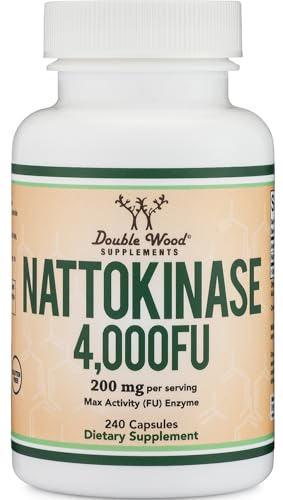
As an Amazon Associate we earn from qualifying purchases. Nattokinase is sold on an enzymatic activity claim, and independent testing has repeatedly found bottles delivering well under their labelled potency. Check that the label states fibrinolytic units (FU) per capsule rather than milligrams alone, and prefer a brand that will supply a batch-specific certificate of analysis showing the measured FU result for that lot, since GMP certification alone does not verify it.

A Note on the Evidence
The human clinical evidence base for nattokinase is currently small and short-term, and the FDA has not evaluated this enzyme for any therapeutic use; individuals with bleeding disorders, those taking any anticoagulant or antiplatelet medication, pregnant or breastfeeding individuals, and anyone facing surgery should consult a physician before using nattokinase. This article is informational only and does not constitute medical advice.
Frequently Asked Questions
What is the most serious side effect of nattokinase?
The most serious risk is abnormal or excessive bleeding. Because nattokinase degrades fibrin and enhances plasminogen activation, it can prolong bleeding after injury or surgery and may cause internal bleeding when combined with anticoagulant or antiplatelet medications. Anyone with a clotting disorder or on blood thinners should not use it without physician guidance.

Can nattokinase be taken safely with aspirin?
Combining nattokinase with aspirin is not recommended without medical supervision. Both aspirin and nattokinase reduce platelet aggregation and clot formation through different mechanisms, and their combined effect on bleeding risk has not been adequately studied in humans. If you take daily aspirin for cardiovascular protection, consult your doctor before adding nattokinase.
Is there clinical evidence that nattokinase is safe?
Short-term trial data are generally reassuring at modest doses. One randomized, double-blinded, placebo-controlled trial in prediabetic adults that included nattokinase as part of a multi-ingredient mixture reported no serious adverse events [1]. However, this was a single small trial using a combination product, so it cannot provide a comprehensive safety profile for nattokinase alone or at higher doses over longer periods.
How long before surgery should I stop taking nattokinase?
At minimum, nattokinase should be discontinued one week before any elective surgical or invasive dental procedure. Some clinicians recommend stopping two weeks before major surgery to allow complete washout of fibrinolytic activity. Always inform your surgeon and anesthesiologist that you have been taking it, even after stopping.
Can people with a soy allergy take nattokinase?
Nattokinase is derived from soy fermented with Bacillus subtilis, and while fermentation alters many soy proteins, trace allergens may remain. Individuals with a diagnosed soy allergy should review the specific product’s manufacturing process and allergen disclosures carefully, and may want to consult an allergist before use.
Does nattokinase interact with vitamin K or vitamin K-rich foods?
Unlike warfarin, nattokinase does not work through the vitamin K pathway, so dietary vitamin K intake does not directly interact with its mechanism. However, if you are taking warfarin and nattokinase together — which should only occur under physician supervision — vitamin K intake still affects your warfarin dosing and INR stability independently.
References
- Park S et al. Efficacy and Safety of Aronia, Red Ginseng, Shiitake Mushroom, and Nattokinase Mixture on Insulin Resistance in Prediabetic Adults: A Randomized, Double-Blinded, Placebo-Controlled Trial. Foods (Basel, Switzerland) (2021). PMID 34359426
These statements have not been evaluated by the Food and Drug Administration. This information is not intended to diagnose, treat, cure, or prevent any disease. Content is for informational purposes only and is not medical advice; consult a qualified healthcare provider before starting any supplement. As an Amazon Associate we earn from qualifying purchases.
