Nattokinase gets recommended in hearing-loss and tinnitus forums on a specific logic: sudden sensorineural hearing loss is linked to poor blood flow in the inner ear, nattokinase improves blood flow, therefore nattokinase should help. The first half of that reasoning maps onto a real and actively researched pathway. The second half has never been tested. Here is where the actual evidence stops.
Key Takeaways
- There are no clinical trials testing nattokinase for sudden sensorineural hearing loss (SSNHL) or tinnitus. Any recommendation you encounter is mechanistic extrapolation, not trial evidence.
- The underlying hypothesis is real. Disturbed cochlear microcirculation is discussed as a final common pathway of several inner ear diseases, and hyperfibrinogenemia raising plasma viscosity is a proposed contributor to critical reductions in cochlear blood flow.
- Reducing plasma fibrinogen through fibrinogen and LDL apheresis has shown benefit in clinical studies, and a guinea pig model showed hyperfibrinogenemia reducing cochlear blood flow and producing hearing loss.
- The fibrinolytic agents actually trialed for SSNHL are ancrod and batroxobin, not nattokinase. The randomized placebo-controlled ancrod study was published under a title referring to ‘the lessons learned,’ which is not the framing of a clear success.
- In one longitudinal study of 85 ears with sudden deafness, ears without tinnitus or vestibular crisis recovered more hearing at six months and showed significant improvement in blood rheology measures that patients with those findings did not show.
- Sudden hearing loss is a medical emergency. Delaying evaluation to try a supplement can cost the treatment window in which standard therapy works best.
This post contains affiliate links. As an Amazon Associate, NattokinaseHub earns from qualifying purchases at no extra cost to you.
The Part of the Hypothesis That Is Real
The inner ear is supplied by a single terminal artery with essentially no collateral circulation, which makes the cochlea unusually vulnerable to anything that impedes blood flow. Disturbance of cochlear microcirculation is discussed in the literature as a final common pathway of various inner ear diseases, and elevated plasma fibrinogen is one of the specific mechanisms proposed. Fibrinogen raises plasma viscosity and promotes aggregation of red cells and platelets, and hyperfibrinogenemia has been identified as a risk factor for sudden hearing loss. Increased blood viscosity in SSNHL patients has been confirmed as a potential etiopathological factor and discussed as a promising therapeutic target.

There is supporting interventional evidence for the pathway itself. Reducing plasma fibrinogen via fibrinogen and LDL apheresis was beneficial in clinical studies, and a guinea pig model demonstrated that inducing hyperfibrinogenemia reduced cochlear blood flow and produced hearing loss. Related work on lipids points the same direction, with hyperlipidemia proposed to contribute to cochlear ischemia through increased blood viscosity. One important structural caveat runs through all of this: inner ear microcirculation cannot be directly investigated in living humans, so a lot of this pathway is inferred from animal models and peripheral blood measurements rather than observed at the cochlea.
The Part That Has Never Been Tested
Given a viscosity and fibrinogen hypothesis, a fibrinolytic enzyme is an obvious thing to try. Researchers agreed, and they tried it, but not with nattokinase. The agents that made it into trials are ancrod, a defibrinogenating agent tested in a randomized placebo-controlled study, and batroxobin, a snake-venom-derived fibrinolytic enzyme investigated for improving inner ear blood flow by reducing blood viscosity. Notably, the ancrod trial was published under a title referring to the lessons learned, which is the vocabulary researchers use when a study did not deliver what was hoped for.
Research note: In a 2016 trial, the between-group difference in von Willebrand factor at 8 weeks was only a statistical trend (P<0.09), so that result is suggestive rather than confirmed [4].
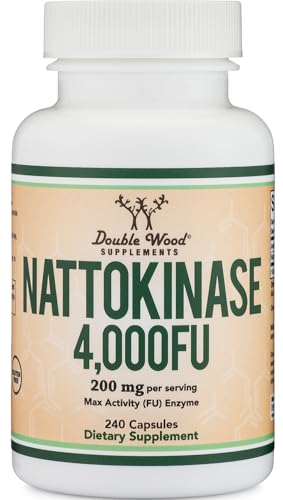
Nattokinase has not been tested for either condition. No randomized trial, no controlled observational study, no published case series that establishes an effect on hearing thresholds or tinnitus severity. That absence is the single most important fact on this page, and it is the one that supplement marketing built on the viscosity mechanism consistently omits. A plausible mechanism is a reason to run a study, not a substitute for having run one. Ancrod is the cautionary example: a targeted defibrinogenating agent, aimed directly at the proposed mechanism, and the trial still did not deliver a clean win.
The fibrinogen premise for nattokinase is itself uncertain. An uncontrolled 2-month study in 15 healthy volunteers saw fibrinogen fall by 9%, but a 3-year randomized trial in 265 healthy adults found no significant effect of nattokinase on any laboratory measure tested [6][5].
What Tinnitus Actually Predicts in the Viscosity Data
There is one finding in this literature specifically about tinnitus that is worth understanding, because it cuts against the intuitive framing. A longitudinal study of 85 ears with sudden deafness examined viscoelastic blood properties alongside treatment response. Among ears that recovered more than 75 percent of hearing, representing 48 percent of the study group, researchers observed an increase in whole blood filtration and a decrease in the erythrocyte rigidity index. Critically, ears without tinnitus or vestibular crisis recovered more hearing at six months and showed significant improvement in those rheologic measures, improvements that were not detected among patients who did have tinnitus or vestibular symptoms.
In other words, in this dataset the presence of tinnitus marked a group whose blood-rheology picture did not improve alongside recovery. That is the opposite of evidence that tinnitus is a viscosity problem waiting for a fibrinolytic solution. It is more consistent with tinnitus signalling a different or more severe underlying injury. Chronic tinnitus in particular is generally understood as involving central auditory processing changes, not simply a circulation deficit in the ear, which is part of why circulation-targeted interventions have a poor track record for it.

The Timing Issue That Matters More Than the Supplement Question
Sudden sensorineural hearing loss is treated as an otologic emergency. Standard care centers on corticosteroids, and outcomes are strongly time-dependent, with the best results when treatment starts within the first days rather than weeks. This is the practical reason the supplement question is secondary. Someone who experiences sudden hearing loss and spends a week ordering and trying a supplement before seeing an ENT may have spent the window in which the treatment with actual evidence behind it works best. If hearing drops suddenly, in one ear or both, the correct action is urgent medical evaluation, not a supplement decision.
Frequently Asked Questions
Does nattokinase help tinnitus?
There is no clinical trial evidence that it does. No randomized or controlled study has tested nattokinase for tinnitus. The recommendations you find are extrapolated from its fibrinolytic mechanism plus the separate research linking blood viscosity to inner ear problems, which is a hypothesis rather than a demonstrated effect.
Can nattokinase treat sudden sensorineural hearing loss?
It has never been tested for it. The fibrinolytic agents that have been trialed for SSNHL are ancrod and batroxobin. Sudden hearing loss requires urgent evaluation by a physician, because standard treatment is time-sensitive and delay reduces the chance of recovery.
Is the blood viscosity theory of hearing loss legitimate?
Yes, as a research hypothesis it is well established in the literature. Hyperfibrinogenemia has been identified as a risk factor for sudden hearing loss, fibrinogen apheresis has shown clinical benefit, and animal models support the mechanism. What does not follow is that any given over-the-counter fibrinolytic supplement therefore treats the condition.
Why do people recommend nattokinase for hearing problems if there is no evidence?
Because the mechanism sounds right, and mechanistic plausibility spreads faster than trial data. Nattokinase has shown fibrinolytic changes in people and mixed blood pressure results [2][3][4][5], and the inner ear does have a documented microcirculation vulnerability.[1] Connecting those two facts into a treatment claim is an inference nobody has verified.
These statements have not been evaluated by the FDA. This product is not intended to diagnose, treat, cure, or prevent any disease. Sudden hearing loss is a medical emergency. If your hearing changes suddenly, seek urgent evaluation from a physician or ENT specialist rather than trying a supplement first.
References
- Nattokinase: An Oral Antithrombotic Agent for the Prevention of Cardiovascular Disease. International Journal of Molecular Sciences (2017). PMID 28264497
- Yuko Kurosawa et al. A single-dose of oral nattokinase potentiates thrombolysis and anti-coagulation profiles. Scientific Reports (2015). PMID 26109079
- Kim JY et al. Effects of nattokinase on blood pressure: a randomized, controlled trial. Hypertension research : official journal of the Japanese Society of Hypertension (2008). PMID 18971533
- Jensen GS et al. Consumption of nattokinase is associated with reduced blood pressure and von Willebrand factor, a cardiovascular risk marker: results from a randomized, double-blind, placebo-controlled, multicenter North American clinical trial. Integrated blood pressure control (2016). PMID 27785095
- Hodis HN et al. Nattokinase atherothrombotic prevention study: A randomized controlled trial. Clinical hemorheology and microcirculation (2021). PMID 33843667
- European Food Safety Authority (EFSA NDA Panel) Safety of fermented soybean extract NSK-SD as a novel food pursuant to Regulation (EC) No 258/97. European Food Safety Authority (EFSA NDA Panel) (2016). source
These statements have not been evaluated by the Food and Drug Administration. This information is not intended to diagnose, treat, cure, or prevent any disease. Content is for informational purposes only and is not medical advice; consult a qualified healthcare provider before starting any supplement. As an Amazon Associate we earn from qualifying purchases.
