Every nattokinase supplement starts the same way: bacterial fermentation of soybeans. But the specific fermentation method, strain, and purification process a manufacturer uses has a direct effect on the enzyme activity you actually get in a capsule, and the industry still lacks a single standardized way to measure that activity. Understanding the production process explains why FU (Fibrinolytic Unit) numbers on two labels are not always directly comparable.
Key Takeaways
- Commercial nattokinase is produced by fermenting Bacillus subtilis (the natto strain) using either solid-state fermentation (closer to traditional natto production) or liquid-state fermentation (more common in large-scale industrial production).
- Liquid fermentation is easier to scale but harder to purify; solid-state fermentation is more traditional and cost-effective but has historically been harder to scale to industrial volumes.
- There is no single industry-standard method for measuring nattokinase’s fibrinolytic activity, which means FU ratings from different manufacturers using different assay methods are not always directly comparable.[1]
- The NSK-SD extract, made by Japan Bio Science Laboratory, is a branded form used in several human trials. The maker says its production and purification process is patented and standardized (a vendor statement), which is why it is often used as a reference point for comparing other nattokinase products [3][4].
- Manufacturing steps after fermentation, extraction, purification, drying, and quality testing, all affect the final potency and stability of the enzyme that reaches a capsule.
This post contains affiliate links. As an Amazon Associate, NattokinaseHub earns from qualifying purchases at no extra cost to you.
From Natto to Supplement: The Basic Process
Nattokinase does not occur as a standalone compound in nature. It is an enzyme produced by Bacillus subtilis var. natto during fermentation of soybeans, the same bacterial fermentation process used to make traditional Japanese natto. For supplement production, manufacturers ferment soybeans (or, increasingly, alternative low-cost growth media) with a natto-producing Bacillus strain, then extract, filter, and purify the resulting enzyme away from the bacterial culture and soybean solids, dry it into a stable powder, and encapsulate it. Each of these steps, strain selection, fermentation conditions, purification method, and drying process, affects the final product’s potency and stability.
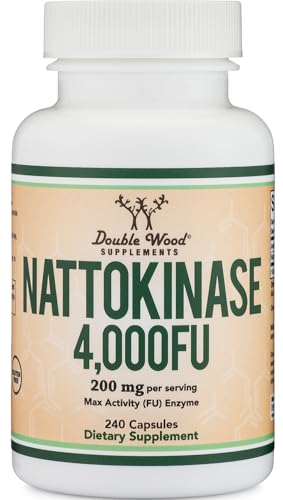
Solid-State vs. Liquid-State Fermentation
Industrial nattokinase production uses one of two fermentation approaches. Solid-state fermentation more closely mirrors traditional natto-making: the bacteria grow on a solid substrate, such as soybeans, wheat bran, or other grain-based media, at controlled temperature and humidity. This approach is generally cost-effective and energy-efficient, but has historically been harder to scale to large industrial volumes with consistent yield. Liquid-state fermentation, by contrast, grows the bacteria in a liquid nutrient broth under controlled pH, temperature, and oxygen conditions, which scales more readily to large fermenters but produces a more dilute product that is harder to separate and purify, and generates more processing waste. Recent research has focused on optimizing liquid fermentation for industrial-scale bioreactors, including a 2025 scale-up study that achieved substantial nattokinase activity gains moving from lab-scale shake flasks to 20-liter and 200-liter pilot fermenters through careful oxygen and feed-rate control.
Research note: In a lab study, both commercial nattokinase and a crude extract of B. subtilis G8 from Indonesian natto dissolved whole blood and euglobulin clots [7].
Why There Is No Single Potency Standard
This is the part of nattokinase manufacturing most relevant to shoppers: there is currently no single, universally adopted industry-standard assay for measuring nattokinase’s fibrinolytic activity. Different manufacturers can use different testing methodologies to arrive at their FU (Fibrinolytic Unit) rating, which means a 4,000 FU claim from one brand and a 4,000 FU claim from another are not guaranteed to represent identical real-world enzymatic activity unless both are using the same validated assay.[2] This is a genuine, documented gap in the supplement industry’s standardization, not a conspiracy theory, and it is one reason independent third-party testing (covered in our separate testing and certification article) matters more for nattokinase than for supplements with simpler, universally standardized potency measures.
Why NSK-SD Is the Reference Point
NSK-SD is a specific, standardized nattokinase extract that was used in some of the published human trials, including an 8-week US blood pressure trial in which 74 adults completed treatment. EFSA assessed it as a novel food at a maximum of 100 mg a day [3][5]. Its production process, including a specific purification method that removes vitamin K2 (relevant for people combining nattokinase with anticoagulant therapy, since vitamin K2 can counteract blood-thinning medications) The maker says the process is consistent across batches, which is a vendor statement we cannot check. Consistency matters because study results are only meaningful if the product tested is reproducible [4]. Generic nattokinase extracts that have not undergone this same standardization process have not necessarily been tested in the clinical trials that establish nattokinase’s evidence base, even if their label lists a comparable FU number.
Being the reference extract does not make it proven. EFSA, which assessed NSK-SD as a novel food, judged the human studies supplied for it too low-powered and inconsistent to conclude on its safety [5].

What This Means When You Are Comparing Products
Because FU numbers are not perfectly standardized across brands, and because clinical evidence is specifically tied to certain standardized extracts like NSK-SD, the FU number alone should not be the only factor in a purchase decision. Third-party testing certification, transparency about the specific extract and fermentation process used, and whether the manufacturer discloses its assay methodology are all relevant signals of a more rigorously produced product.
Frequently Asked Questions
Does a higher FU number always mean a more potent nattokinase product?
Not necessarily. Because there is no single standardized assay for measuring fibrinolytic activity across the industry, FU numbers from different manufacturers using different testing methods are not guaranteed to be directly comparable.
What is the difference between solid-state and liquid-state fermentation for nattokinase?
Solid-state fermentation mirrors traditional natto production and is cost-effective but historically harder to scale industrially. Liquid-state fermentation scales more easily to large bioreactors but is harder to purify and generates more processing waste.
Why do so many studies use NSK-SD specifically?
NSK-SD is a patented, standardized nattokinase extract with a consistent production and purification process, which makes clinical trial results reproducible. Several of the published human trials used this specific extract rather than generic nattokinase, and some of those trials were funded by its maker or distributor [6][3].
These statements have not been evaluated by the FDA. This product is not intended to diagnose, treat, cure, or prevent any disease. Always talk to your doctor before starting nattokinase, especially if you take blood thinners or have an upcoming surgery.
References
- Nattokinase: An Oral Antithrombotic Agent for the Prevention of Cardiovascular Disease. International Journal of Molecular Sciences (2017). PMID 28264497
- Nattokinase: production and application. Applied Microbiology and Biotechnology (2014). PMID 25348469
- Jensen GS et al. Consumption of nattokinase is associated with reduced blood pressure and von Willebrand factor, a cardiovascular risk marker: results from a randomized, double-blind, placebo-controlled, multicenter North American clinical trial. Integrated blood pressure control (2016). PMID 27785095
- Japan Bio Science Laboratory (NSK-SD maker) About NSK-SD Nattokinase. Japan Bio Science Laboratory (NSK-SD maker) (2026). source
- European Food Safety Authority (EFSA NDA Panel) Safety of fermented soybean extract NSK-SD as a novel food pursuant to Regulation (EC) No 258/97. European Food Safety Authority (EFSA NDA Panel) (2016). source
- Kim JY et al. Effects of nattokinase on blood pressure: a randomized, controlled trial. Hypertension research : official journal of the Japanese Society of Hypertension (2008). PMID 18971533
- Pinontoan R et al. Fibrinolytic characteristics of Bacillus subtilis G8 isolated from natto. Bioscience of microbiota, food and health (2021). PMID 34285859
These statements have not been evaluated by the Food and Drug Administration. This information is not intended to diagnose, treat, cure, or prevent any disease. Content is for informational purposes only and is not medical advice; consult a qualified healthcare provider before starting any supplement. As an Amazon Associate we earn from qualifying purchases.
