If you react badly to fermented foods, aged cheese, or red wine, nattokinase deserves a closer look before you start it. The enzyme itself is not the issue. The issue is what else comes out of a Bacillus subtilis soybean fermentation, and how well your body clears it. This is a genuinely under-discussed angle, and it now has at least one published clinical observation behind it.
Key Takeaways
- Nattokinase itself has no histaminergic properties. The concern is co-produced biogenic amines (histamine, tyramine, beta-phenylethylamine) generated during Bacillus subtilis fermentation.
- A published case report describes a 56-year-old woman with low diamine oxidase (DAO) activity whose histamine intolerance symptoms worsened after starting a nattokinase supplement, and who improved on a low-histamine diet plus DAO supplementation.
- A survey of 21 natto products sold in Korea found 9 of them carried beta-phenylethylamine or tyramine above the toxic dose defined for each amine, and every bacterial strain isolated was Bacillus subtilis and highly capable of producing both.[2]
- Tyramine matters specifically for people taking MAO inhibitors, because MAOIs impair tyramine metabolism and dose-related blood pressure spikes are the known consequence.
- Amine content is not fixed. It varies by fermentation strain, hygiene, raw material quality, and freshness, so one brand’s experience does not predict another’s.
- The evidence base here is a single case report plus food-chemistry data, not clinical trials. That is enough to warrant caution in specific populations, not enough to warn everyone off.
This post contains affiliate links. As an Amazon Associate, NattokinaseHub earns from qualifying purchases at no extra cost to you.
What Histamine Intolerance Actually Is
Histamine intolerance is not an allergy. It is a mismatch between how much histamine enters or accumulates in the body and how quickly the body can break it down. That breakdown is handled primarily by diamine oxidase (DAO), an enzyme concentrated in the gut lining. When DAO activity is low, histamine from food and from bacterial byproducts is cleared too slowly, and the result can look like a strange mix of unrelated symptoms: flushing, headaches, gastrointestinal discomfort, low blood pressure, palpitations, nasal congestion, and anxiety. Because the symptom picture is so scattered, it is frequently missed, and people often spend a long time cycling through supplements without realizing that fermented products are a common thread in their bad days.

The Published Case Report
A clinical case report[1] documents a 56-year-old woman whose histamine intolerance symptoms, including gastrointestinal discomfort, flushing, hypotension, and anxiety, worsened after she began using a nattokinase supplement. Her measured DAO level was 11.7 IU/mL against a reference range of 14 to 33 IU/mL, placing her in the deficient range. She improved after adopting a low-histamine diet combined with DAO supplementation.
Research note: A Health Canada licence for a nattokinase capsule warns against use with soy allergy because the product is derived from soy [3].
The author’s mechanistic explanation is the important part. Nattokinase is a fibrinolytic serine protease produced during the fermentation of soybeans by Bacillus subtilis. The enzyme molecule itself has no histaminergic activity. But fermentation is a microbial process, and depending on the strain used and the production conditions, it can generate biogenic amines including histamine as byproducts that travel along with the enzyme into the finished product. In someone with normal DAO activity, that load is cleared without incident. In someone with impaired histamine degradation, it can push them over their tolerance threshold. The practical recommendation drawn from the case was that clinicians should be cautious about recommending fermented products to patients suspected of having histamine degradation problems.
One case report is one case report. It establishes plausibility and a mechanism worth knowing about, not incidence or causation. What makes it worth taking seriously is that the food-chemistry literature independently supports the mechanism.

The Tyramine Finding and Why MAOI Users Should Care
A food-chemistry survey analysed 21 natto products distributed in Korea. Nine of the 21, about 43 percent, carried beta-phenylethylamine or tyramine above the toxic dose defined for each amine (30 mg/kg and 100 mg/kg respectively), although none exceeded the harmful threshold for total biogenic amines. Eighty bacterial strains were isolated from four of the products; all were identified as Bacillus subtilis, and all were highly capable of producing beta-phenylethylamine and tyramine.[2] Tyramine is the amine behind the classic dietary restriction given to patients on monoamine oxidase inhibitors. MAOIs impair the body’s capacity to metabolize monoamines like tyramine, and the result is dose-related blood pressure elevation, which at the extreme end is the hypertensive reaction that made MAOI dietary counseling standard practice.
Two honest caveats belong here. First, the broader dietary MAOI literature has moved toward a less alarmist position, because modern food production and hygiene standards have substantially reduced tyramine concentrations in most foods compared to the era when those warnings were written. Second, the study above measured amine-producing capability of the isolated bacteria and the amine content of natto as a food, which is not the same as measuring the amine content of a purified nattokinase capsule. A concentrated enzyme extract and a bowl of whole fermented soybeans are not interchangeable. The reasonable position is that if you are on an MAOI, this is a question for your prescriber rather than something to resolve from a product label.
Why Brand and Batch Matter More Here Than Usual
Biogenic amine formation is not a fixed property of natto or of nattokinase. It depends on how much precursor amino acid is available, whether decarboxylase-producing microbes are present, and the growth conditions during fermentation. Research on fermentation strategy found that mixed-strain fermentation reduced several biogenic amines in natto compared with single-strain fermentation, including tyramine, cadaverine, spermine, and spermidine, although histamine rose slightly. Good raw material quality, hygienic processing, and the use of histidine-decarboxylase-negative starter cultures all reduce amine formation.
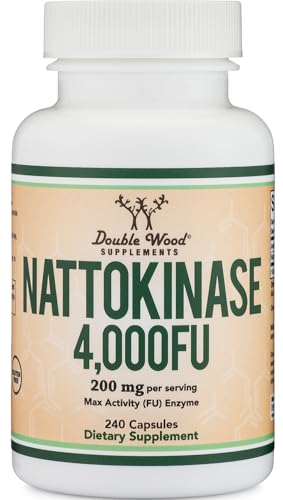
The practical consequence is that a person with histamine intolerance who reacts to one nattokinase product has not necessarily learned anything about a different one made with a different strain and process. It also means this is another argument for buying from manufacturers who publish specifications and third-party testing rather than the cheapest available bulk product, since amine content is exactly the kind of variable that unregulated production does not control for.
Frequently Asked Questions
Is nattokinase high in histamine?
The enzyme itself contains no histamine and has no histaminergic activity. Histamine and other biogenic amines can be generated as byproducts of the Bacillus subtilis fermentation used to produce it, and the amount varies substantially by strain, hygiene, and production conditions. There is no standardized amine testing across nattokinase supplements.
Can I take nattokinase if I have histamine intolerance?
There is one published case report of nattokinase aggravating histamine intolerance in a person with documented DAO deficiency.[1] That is not enough evidence to say nobody with histamine intolerance can tolerate it, but it is enough to justify caution, a discussion with the clinician managing your histamine intolerance, and starting cautiously if you proceed at all.
Does nattokinase interact with MAO inhibitors?
Not through the enzyme itself. The theoretical concern is tyramine co-produced during fermentation, since Bacillus subtilis strains isolated from natto have been shown to be highly capable of producing tyramine and beta-phenylethylamine.[2] If you take an MAOI, raise this with your prescriber before starting any fermented supplement.
Would a low-histamine diet plus DAO supplements let me take nattokinase?
That combination is what resolved symptoms in the published case, but the patient discontinued the trigger as part of the intervention. There is no research testing whether DAO supplementation makes nattokinase tolerable for histamine-intolerant people, so treat that as an untested idea rather than a workaround.
References
- Nattokinase-Related Aggravation of Histamine Intolerance in Diamine Oxidase Deficiency: A Rare Clinical Observation. Journal of the College of Physicians and Surgeons Pakistan (2026). PMID 41792082
- Kim B, Byun BY, Mah JH. Biogenic amine formation and bacterial contribution in Natto products. Food Chemistry (2012). PMID 22953951
- Health Canada Licensed Natural Health Product NPN 80089299: Nattokinase 100 mg. Health Canada (2026). source
These statements have not been evaluated by the FDA. This product is not intended to diagnose, treat, cure, or prevent any disease. If you have diagnosed histamine intolerance, DAO deficiency, or take an MAO inhibitor, talk to your clinician before starting nattokinase or any fermented supplement.
These statements have not been evaluated by the Food and Drug Administration. This information is not intended to diagnose, treat, cure, or prevent any disease. Content is for informational purposes only and is not medical advice; consult a qualified healthcare provider before starting any supplement. As an Amazon Associate we earn from qualifying purchases.
