Bromelain, the protease blend extracted from pineapple stem, shows up alongside nattokinase in circulation-support stacks often enough that it’s worth asking whether the two actually do the same thing, or something different that happens to complement each other. The honest answer is: they’re structurally different enzymes with overlapping but non-identical fibrinolytic mechanisms, and the most interesting data on the pair isn’t about either one alone, it’s about what happens when you combine them.
Key Takeaways
- In a standardized fibrin-clot (Astrup) assay, nattokinase alone measured roughly 18.9 FU/ml of fibrinolytic action and bromelain alone measured roughly 11.5 FU/ml.
- Mixed in a 1:1 ratio, the combination measured roughly 97.8 FU/ml, a synergy patent researchers described as clearly more than additive.
- This synergy data comes from a fibrinolytic-composition patent (bromelain + nattokinase for phlebothrombotic conditions), not a peer-reviewed randomized human trial.
- Nattokinase has separately accumulated a larger, more clinically-oriented human evidence base (blood pressure trials, a 1,062-participant atherosclerosis study) than bromelain has for cardiovascular endpoints specifically.
What Each Enzyme Actually Does
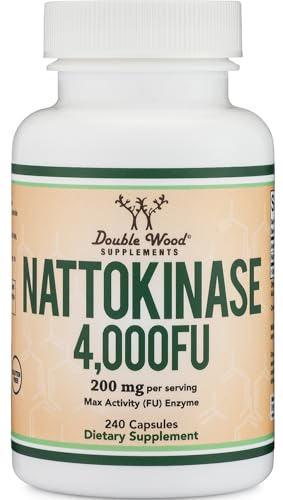
Nattokinase is a serine protease produced during the fermentation of soybeans into natto. Its fibrinolytic mechanism is multi-pronged: it directly hydrolyzes fibrin, converts endogenous pro-urokinase into active urokinase, degrades plasminogen activator inhibitor-1 (PAI-1), and increases tissue plasminogen activator (tPA) activity. Bromelain is a different protease mixture from pineapple stem, historically used for its anti-inflammatory and mucolytic properties, but it also shows measurable fibrinolytic activity in laboratory clot-degradation assays, meaning it isn’t purely an anti-inflammatory compound.

The Synergy Data
A fibrinolytic-composition patent testing both enzymes head-to-head in the Astrup fibrin-plate model found nattokinase alone produced approximately 18.9 ± 3.3 FU/ml of fibrinolytic action, while bromelain alone produced approximately 11.5 ± 2.5 FU/ml[1]. When the two were mixed at a 1:1 ratio, the combined fibrinolytic action jumped to approximately 97.8 ± 13.3 FU/ml, far exceeding what simple addition of the two individual values would predict. The same research found that even at one-tenth the dose, the 1:1 mixture produced fibrinolytic activity comparable to using either enzyme alone at ten times that dose, and further optimization identified a 1.6:1 bromelain-to-nattokinase weight ratio as producing the strongest combined effect[1]. In a broader comparison against other proteases (fungal protease, papain, pancreatin, amylase), nattokinase and bromelain individually outperformed those other enzymes by roughly 100-fold in the same assay, while several herbal derivatives tested showed no fibrinolytic activity at all[1].
Why This Evidence Needs a Caveat
This synergy data comes from a patent application describing a fibrinolytic composition intended for the prevention and treatment of phlebothrombotic conditions (vein-related clotting states), not from a published, peer-reviewed randomized controlled trial in humans. Patent research is real laboratory data and is worth taking seriously as a mechanistic finding, but the incentive structure differs from an independent academic trial, and patents don’t go through the same peer-review gauntlet. Treat “1:1 combination shows synergy in an in vitro clot assay” as a genuine and interesting finding, not as equivalent to a clinical trial showing the combination improves outcomes in people.
Where the Independent Human Evidence Currently Sits
Nattokinase alone has a larger body of human clinical research addressing cardiovascular-adjacent endpoints specifically, including randomized blood pressure trials and a 1,062-participant, 12-month observational study showing reduced carotid intima-media thickness and improved lipid profiles at a 10,800 FU/day dose[2]. Bromelain’s clinical evidence base leans more toward postoperative swelling, sinusitis, and osteoarthritis symptom relief than cardiovascular or clotting endpoints specifically. If your interest is specifically fibrinolytic/circulatory support with the most human-outcome data behind it, nattokinase currently has the deeper independent track record; if you’re looking at a combination product, the synergy data above is the strongest existing rationale for it, but it hasn’t been replicated in an independent human trial designed around that specific combination and dose.
Practical Considerations
Both enzymes affect clotting-adjacent pathways, so anyone on blood thinners, anticoagulants, or with a bleeding disorder should not combine them (or either individually) without medical supervision. Neither is a substitute for prescribed cardiovascular medication, and stopping either enzyme before a scheduled surgery on a physician’s timeline applies just as much to a combination product as to nattokinase alone.
References
- Fibrinolytic compositions comprising bromelain and nattokinase for the prevention and treatment of phlebothrombotic states. International Patent WO2014079689A1 (2014). Google Patents
- Chen H et al. Effective management of atherosclerosis progress and hyperlipidemia with nattokinase: A clinical study with 1,062 participants. Frontiers in Cardiovascular Medicine (2022). PMID 36072877
These statements have not been evaluated by the Food and Drug Administration. This information is not intended to diagnose, treat, cure, or prevent any disease. Content is for informational purposes only and is not medical advice; consult a qualified healthcare provider before starting any supplement. As an Amazon Associate we earn from qualifying purchases.
