If you have ever compared two nattokinase supplements and found one listing ‘2,000 FU’ while another shows ‘100 mg,’ you are not alone in wondering which is stronger or whether these numbers even measure the same thing. The confusion is real and consequential: nattokinase is an enzyme, and enzymes are not usefully compared by weight alone. What matters is how much fibrinolytic work the enzyme can perform, and that is what activity units are designed to capture.
This article explains what FU and mg actually measure, why the distinction matters for anyone choosing a nattokinase product, and what standardization currently looks like across the supplement industry. No evidence exists that a higher number automatically produces better outcomes, and most human trials supporting nattokinase’s fibrinolytic and blood-pressure effects have used specific activity-based dosing rather than raw weight. Understanding the units is the first step to reading labels intelligently.
Key Takeaways
- FU (Fibrinolytic Units) measures enzyme activity — how much fibrin the nattokinase can actually degrade — while mg measures only the mass of the extract, which may include inactive material.
- Two products with identical mg values can differ dramatically in potency if their FU activity differs; always compare FU values when evaluating nattokinase supplements.
- Research dosing has generally centered around 2,000 FU per day; products that do not disclose FU cannot be reliably compared to trial evidence.
- Third-party certificates of analysis are the most reliable way to verify that a product’s labeled FU activity reflects what is actually in the capsule.
- The industry lacks a single enforced standardization body, so FU values across brands may not be perfectly comparable; prioritize brands using the JNKA reference method and independent lab verification.
What Nattokinase Is and Why Units Matter
Nattokinase is a serine protease enzyme derived from natto, a traditional Japanese food made by fermenting soybeans with Bacillus subtilis. Unlike small-molecule compounds, enzymes are biological catalysts: a single molecule can process many substrate molecules repeatedly. This means that two batches of nattokinase can have identical weights but dramatically different levels of biological activity depending on how well the enzyme was extracted, purified, and stabilized during manufacturing.
Because weight alone tells you nothing about catalytic power, the supplement and pharmaceutical industries use activity units to express enzyme potency. For nattokinase specifically, the dominant unit system is Fibrinolytic Units, abbreviated FU. When a label says ‘2,000 FU,’ it is reporting the enzyme’s measured ability to dissolve fibrin under standardized laboratory conditions, not simply how many milligrams of powder ended up in the capsule.
What FU (Fibrinolytic Units) Actually Measure
Fibrinolytic Units are determined by an in vitro assay in which the enzyme is incubated with a fibrin clot under controlled conditions of temperature, pH, and time. The rate at which the clot dissolves is compared against a reference standard, and the result is expressed in FU. A higher FU number means greater fibrin-degrading activity per unit of product. The assay is designed to mimic one aspect of the enzyme’s proposed mechanism of action: direct degradation of fibrin, the protein scaffold of blood clots.

The most widely cited standardization method in the nattokinase industry traces back to the Japan Nattokinase Association (JNKA), which established reference procedures for defining one FU. Under this framework, the activity is measured by comparing turbidity changes in a fibrin solution to a urokinase standard. It is worth noting that different contract laboratories may use slightly different protocols, which can make cross-brand FU comparisons imperfect even when both labels display FU numbers honestly.

What mg Measures — and Why It Is Insufficient Alone
Milligrams express mass. On a nattokinase label, an mg figure tells you the weight of the nattokinase-containing extract or powder in the capsule. This number includes not just active enzyme but also inactive protein, excipients, and other components of the fermentation extract. Two products could both contain 100 mg of nattokinase-derived material yet differ by an order of magnitude in actual FU activity if one used a concentrated, high-purity extract and the other used a crude fermentation powder.
Some manufacturers list only mg, either because their product has not been activity-tested or because they wish to present a large-looking number. A 500 mg capsule of low-activity powder could easily deliver fewer FU than a 50 mg capsule of a concentrated, standardized extract. This is why researchers and quality-focused manufacturers generally report activity in FU rather than, or in addition to, mass in mg. When a label shows only mg with no FU value, you have no reliable way to compare it to a product that does report FU.
How Research Studies Have Dosed Nattokinase
The small randomized controlled trials examining nattokinase in humans have predominantly used activity-based dosing expressed in FU. Common doses in published research fall in the range of 2,000 FU per day, often derived from a single capsule or a standardized extract. Studies investigating fibrinolytic markers, blood pressure, and lipid parameters have each used defined FU quantities, which allows readers to understand the level of activity being tested even without knowing the corresponding mg weight of the extract used.
The doses actually used in published human trials span a wide activity range. A randomized, double-blind, placebo-controlled trial in 86 adults with pre-hypertension or stage 1 hypertension used capsules standardized to 2,000 FU daily for eight weeks, with 73 participants completing the protocol[1]. The same 2,000 FU daily dose was tested in a larger double-blinded trial of 265 individuals without clinical cardiovascular disease, which tracked carotid intima-media thickness and carotid artery stenosis over a median of three years and found no significant difference from placebo[2] — a null result worth knowing before treating any FU number as a promise of benefit. A more recent randomized, double-blind, placebo-controlled trial in 120 patients with asymptomatic intracranial or carotid artery stenosis used a substantially higher 8,000 FU per day for six months[3]. Reported doses therefore range from roughly 2,000 to 8,000 FU per day, and because those are activity units rather than mass, an mg figure on a label cannot tell you whether a product matches what was studied.
Comparing Labels Across Brands: A Practical Framework
When shopping for nattokinase, the most useful comparison strategy is to normalize to FU per dollar or FU per serving rather than mg per serving. If Product A offers 2,000 FU per capsule and Product B offers 1,000 FU per capsule at the same price, Product A delivers twice the measured activity per dollar — assuming both were tested by a credible third-party laboratory using the same assay standard.
Look for products that display both the FU activity and the mg weight of the extract, as this dual disclosure suggests the manufacturer has actually tested their product rather than guessing. Third-party certificates of analysis (CoAs) from independent labs such as NSF International, USP, or Informed Sport provide additional assurance that the labeled FU activity matches what is actually in the capsule. Enzyme products are particularly susceptible to activity loss during storage from heat, moisture, and light, so storage conditions and expiration dates matter more for nattokinase than for many other supplements.
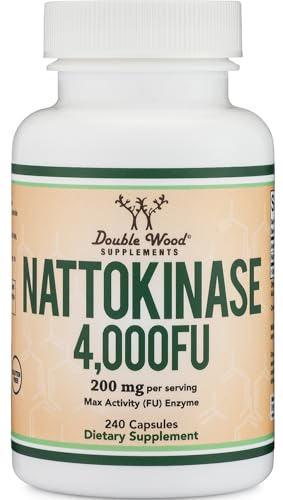

Be cautious about extremely high FU claims. While 2,000 FU per capsule is a common research-grade dose, some products now market 4,000 FU or higher. Higher activity is not inherently harmful, but it has not been validated in large long-term human trials, and the antiplatelet and fibrinolytic effects of the enzyme mean that escalating doses increase potential interactions with anticoagulant or antiplatelet medications.
Standardization Gaps and What They Mean for Consumers
The nattokinase supplement industry does not yet have a single universally enforced standardization body equivalent to the United States Pharmacopeia for pharmaceutical drugs. The JNKA framework is widely referenced, but adherence is voluntary, and the FDA does not require dietary supplement manufacturers to verify enzyme activity before sale. This creates a market in which FU figures on different brands may have been generated by different assay protocols, making head-to-head comparisons less reliable than they appear.
Until stricter standardization is enforced or widely adopted, the most pragmatic consumer approach is to prioritize brands that publish third-party CoAs showing measured FU activity, use a recognized standardization reference such as the JNKA method, and undergo independent testing by accredited laboratories. The mg figure remains useful as a secondary data point — it tells you something about the extract load — but it should never be the primary basis for comparing potency across brands.
🛒 Where to Buy Nattokinase
- Doctor’s Best Nattokinase 2,000 FULab-tested / studied
capsules, 100 mg NSK-SD per vcap (2,000 FU) — Most widely referenced brand in clinical and integrative medicine contexts; uses Japan Bio Science Laboratory NSK-SD ingredient; vegetarian capsules; 90 count - NOW Foods Nattokinase 100 mg
capsules, 100 mg per vcap (2,000 FU) — Mainstream GMP-certified brand; affordable entry-level option; 90 vcaps; widely available - Source Naturals Nattokinase 100 mg
capsules, 100 mg per tablet (2,000 FU) — Long-established supplement brand; competitive pricing at 60 tablets; good for budget-conscious buyers familiar with the brand - Healthy Origins Nattokinase 2,000 FU
capsules, 100 mg per vcap (2,000 FU) — Best cost-per-serving option on Amazon; 180 vcap bottle; uses NSK-SD ingredient; popular bulk buy for long-term users
As an Amazon Associate we earn from qualifying purchases. Nattokinase is sold on an enzymatic activity claim, and independent testing has repeatedly found bottles delivering well under their labelled potency. Check that the label states fibrinolytic units (FU) per capsule rather than milligrams alone, and prefer a brand that will supply a batch-specific certificate of analysis showing the measured FU result for that lot, since GMP certification alone does not verify it.
A Note on the Evidence
The evidence base for nattokinase consists largely of small, short-term trials, and the FDA has not approved it to treat, cure, or prevent any disease. Individuals taking blood thinners, antiplatelet drugs, or facing upcoming surgery should consult a physician before using nattokinase, as its fibrinolytic and antiplatelet activity carries meaningful interaction and bleeding risks.
Frequently Asked Questions
Is a higher FU always better?
Not necessarily. Higher FU means greater measured fibrinolytic activity in a lab assay, but human trials have not established a clear dose-response relationship showing that, say, 4,000 FU produces twice the clinical benefit of 2,000 FU. Higher doses also increase the theoretical risk of bleeding interactions with anticoagulant or antiplatelet drugs. Stick to doses studied in research unless a physician advises otherwise.

Can I convert mg to FU myself?
No reliable conversion formula exists because the ratio of FU to mg depends entirely on the concentration and purity of the specific extract used by each manufacturer. A highly purified extract might yield 20 FU per mg, while a crude powder might yield 2 FU per mg. Without the manufacturer’s own FU testing data, mg alone cannot tell you the activity level.

Why do some labels show only mg and no FU?
Enzyme activity testing requires specialized laboratory equipment and adds to production costs. Some manufacturers either have not tested their products for activity or choose not to publish the results. A label showing only mg provides no reliable information about potency and cannot be meaningfully compared to activity-tested products.
What does it mean if a label says 'standardized to X% nattokinase'?
Percentage standardization by weight means the extract has been concentrated so that a specified fraction of its mass is nattokinase protein. This is better than no standardization but still does not directly report activity, because the enzyme could be present but partially denatured or inactive. FU testing is the only way to confirm that the protein present is catalytically functional.
Are there safety concerns related to nattokinase dosing in FU?
Nattokinase has meaningful fibrinolytic and antiplatelet activity and must not be combined with warfarin, heparin, aspirin, clopidogrel, or other anticoagulants or antiplatelets without physician supervision. It should be discontinued at least one week before any surgical procedure. The FDA has not evaluated nattokinase for treating, curing, or preventing any disease, and most supportive human trials are small and short-term.
Does the form of the supplement — capsule, tablet, powder — affect FU stability?
Enzyme activity can degrade with exposure to heat, moisture, stomach acid, and prolonged storage. Enteric-coated capsules are sometimes marketed as protecting the enzyme from gastric acid, though evidence specifically establishing that enteric coating improves clinical outcomes for nattokinase in humans is limited. Regardless of form, storage in a cool, dry place away from light is important for preserving labeled FU activity until the expiration date.
References
- Kim JY et al. Effects of nattokinase on blood pressure: a randomized, controlled trial. Hypertension Research (2008);31(8):1583-8. PMID 18971533
- Hodis HN et al. Nattokinase atherothrombotic prevention study: A randomized controlled trial. Clinical Hemorheology and Microcirculation (2021);78(4):339-353. PMID 33843667
- Zhang K et al. Nattokinase supplementation for cognitive enhancement in asymptomatic intracranial/carotid stenosis: A randomized controlled trial. Journal of Stroke and Cerebrovascular Diseases (2026);35(1):108511. PMID 41325794
These statements have not been evaluated by the Food and Drug Administration. This information is not intended to diagnose, treat, cure, or prevent any disease. Content is for informational purposes only and is not medical advice; consult a qualified healthcare provider before starting any supplement. As an Amazon Associate we earn from qualifying purchases.
