Nattokinase is a serine protease enzyme derived from natto, a traditional Japanese food made by fermenting soybeans with Bacillus subtilis. It has drawn interest in cardiovascular health circles primarily because of its ability to degrade fibrin — the structural protein of blood clots — and to stimulate the body’s own clot-dissolving pathways. These properties have led some researchers and supplement marketers to suggest that nattokinase may play a role in reducing stroke risk, particularly ischemic stroke caused by arterial occlusion.
That claim deserves careful scrutiny. The available human evidence base for nattokinase is small and short-term, and the enzyme’s very mechanism of action means it carries a parallel risk: in certain individuals or combinations, the same fibrinolytic activity that might protect against clot-related stroke could instead contribute to bleeding stroke. This article reviews what is mechanistically understood, what the limited published evidence actually demonstrates, and where the safety boundaries lie — without overstating conclusions the data cannot support.
Key Takeaways
- Nattokinase degrades fibrin directly and stimulates endogenous plasminogen activators, giving it a mechanistically plausible connection to ischemic stroke prevention — but no large trial has confirmed this benefit in humans.
- The same fibrinolytic activity that could theoretically reduce clot-related stroke also raises the risk of hemorrhagic stroke, particularly in people with cerebral microbleeds or pre-existing bleeding risk.
- A published case report documents cerebellar hemorrhage when nattokinase was combined with aspirin in a patient with cerebral microbleeds, illustrating the real-world danger of combining fibrinolytic supplements with antiplatelet agents [1].
- Nattokinase should not be taken alongside warfarin, heparin, aspirin, clopidogrel, or other anticoagulants or antiplatelets without physician supervision, and should be stopped at least one week before surgery.
- The FDA has not evaluated nattokinase for treating or preventing stroke, and most human evidence comes from small, short-term studies of surrogate markers rather than clinical outcomes.
How Nattokinase Works: The Fibrinolytic Mechanism
Nattokinase belongs to the subtilisin family of serine proteases. When absorbed in the gastrointestinal tract and transported through the circulation, it acts directly on fibrin polymers, cleaving them into soluble degradation products. Unlike pharmaceutical thrombolytics such as tissue plasminogen activator (tPA), nattokinase is not a prodrug — it exerts fibrinolytic activity itself rather than primarily activating an upstream cascade.
Beyond direct fibrin digestion, nattokinase has been reported in laboratory studies to upregulate endogenous plasminogen activators, including urokinase-type plasminogen activator, thereby amplifying the body’s intrinsic thrombolytic system. Researchers reviewing the biotechnological potential of fibrinolytic enzymes describe this class of microbial proteases as promising candidates for dissolving endogenous thrombi precisely because of their dual direct and indirect fibrinolytic actions [2].
This mechanism is relevant to cerebrovascular disease because ischemic stroke — the most common stroke subtype — results from arterial occlusion, most often by a fibrin-rich thrombus or an embolus containing fibrin. In theory, an agent that accelerates fibrin dissolution could reduce thrombus burden in cerebral vessels. Whether that theoretical benefit translates into a meaningful clinical reduction in stroke incidence in humans has not been established by large, well-controlled trials.
Theoretical Relevance to Ischemic Stroke
The biological rationale for investigating nattokinase in the context of ischemic stroke rests on its fibrinolytic and antiplatelet properties. Ischemic strokes account for the large majority of all strokes, and fibrin plays a central structural role in the occlusive clots that cut off blood supply to brain tissue. An orally available fibrinolytic enzyme that survives digestive processing and retains activity in the bloodstream would be an unusual and potentially useful agent if its clinical safety and efficacy could be demonstrated.

Small human studies have examined surrogate endpoints such as fibrinogen levels, euglobulin clot lysis time, and platelet aggregation in healthy volunteers or patients with cardiovascular risk factors. Some have reported modest reductions in fibrinogen concentration and improvements in clot lysis time after several weeks of supplementation. However, it is important to note that improvements in laboratory surrogate markers do not automatically translate into reductions in stroke events. No large randomized controlled trial has established that nattokinase supplementation reduces the incidence of first or recurrent ischemic stroke in humans.

The FDA has not approved or evaluated nattokinase for the prevention, treatment, or mitigation of stroke or any other disease. Any claim that nattokinase prevents stroke goes beyond what current evidence can support.
The Hemorrhagic Risk: When Fibrinolysis Becomes Dangerous
The same mechanism that might theoretically protect against ischemic stroke creates a direct risk of hemorrhagic stroke and intracranial bleeding. Hemorrhagic stroke occurs when a blood vessel in the brain ruptures; inadequate clotting or excessive fibrinolysis worsens bleeding, delays hemostasis, and can expand the area of injury dramatically.
A published case report documents cerebellar hemorrhage in a patient who was taking both nattokinase and aspirin simultaneously. The patient had pre-existing cerebral microbleeds — small, subclinical areas of prior hemorrhage visible on MRI — and the combination of nattokinase’s fibrinolytic activity with aspirin’s antiplatelet effect is implicated as the precipitating cause of the bleeding event [1]. This case illustrates concretely that nattokinase is not a benign supplement in individuals who already carry a heightened bleeding risk or who are taking agents that inhibit clotting or platelet function.
Cerebral microbleeds are more common than most people realize, particularly in older adults and those with hypertension, and are often undetected in the absence of dedicated MRI screening. An individual with undiagnosed microbleeds who begins nattokinase supplementation — especially alongside aspirin or another antiplatelet or anticoagulant drug — may face a meaningfully elevated risk of intracranial hemorrhage.
Drug Interactions and High-Risk Combinations
The most serious safety consideration with nattokinase is its potential for pharmacodynamic interaction with anticoagulant and antiplatelet medications. Warfarin, heparin, low-molecular-weight heparins, direct oral anticoagulants such as apixaban and rivaroxaban, aspirin, clopidogrel, and other drugs that reduce clot formation all operate on overlapping pathways. Adding a fibrinolytic enzyme to any of these regimens without physician oversight stacks blood-thinning effects in an unpredictable way.
The case of cerebellar hemorrhage attributed to the nattokinase-aspirin combination [1] is a documented example of this additive risk producing a serious adverse event. Clinicians and patients should treat nattokinase as contraindicated — or at minimum requiring direct physician supervision — in anyone already taking a blood-thinning medication. Because nattokinase has a measurable half-life in the circulation, it should also be discontinued at least one week before any surgical or dental procedure to allow its fibrinolytic activity to clear.

Who Faces Elevated Cerebrovascular Risk from Nattokinase
Several populations warrant particular caution. Individuals with a history of hemorrhagic stroke, arteriovenous malformations, cerebral aneurysm, or known cerebral microbleeds face the greatest risk from additional fibrinolytic activity. Those on anticoagulant or antiplatelet therapy — a large group that includes many older adults with atrial fibrillation, prosthetic heart valves, prior ischemic stroke, or coronary artery disease — should not add nattokinase without a physician’s explicit guidance.
Older adults in general carry higher baseline rates of undetected cerebral microbleeds and are more likely to be on polypharmacy regimens that already affect coagulation. Individuals with poorly controlled hypertension face additional vulnerability because hypertension both promotes microbleed formation and increases hemorrhagic stroke risk independently.
Anyone considering nattokinase supplementation should disclose it to their physician and pharmacist, both to screen for drug interactions and to discuss whether their personal cerebrovascular risk profile makes the intervention appropriate.
Honest Appraisal of the Evidence Base
Enthusiasm for nattokinase in stroke-risk discussions often outpaces the quality of evidence. The mechanistic basis — fibrin degradation and plasminogen activator upregulation — is well established at the biochemical level, and the biotechnological promise of oral fibrinolytic enzymes has been recognized in the scientific literature [2]. However, mechanistic plausibility and clinical efficacy are not the same thing.
Human trials of nattokinase to date have been small, short in duration, and largely focused on surrogate biomarkers rather than clinical stroke outcomes. None have been powered to detect differences in stroke incidence. The safety signal from the documented hemorrhagic case [1] adds a meaningful counterweight to optimistic interpretations. Large, well-designed randomized controlled trials examining both efficacy and safety in patients at cerebrovascular risk have not yet been completed.
For now, the honest summary is this: nattokinase has a biologically coherent mechanism that is relevant to thrombotic disease; it has demonstrated fibrinolytic activity in laboratory and small human studies; and it has produced at least one documented case of serious intracranial bleeding when combined with aspirin in a vulnerable patient. The net clinical effect on stroke risk in various populations is not known with confidence, and the supplement should not be positioned as a stroke prevention tool.
🛒 Where to Buy Nattokinase
- Doctor’s Best Nattokinase 2,000 FULab-tested / studied
capsules, 100 mg NSK-SD per vcap (2,000 FU) — Most widely referenced brand in clinical and integrative medicine contexts; uses Japan Bio Science Laboratory NSK-SD ingredient; vegetarian capsules; 90 count - NOW Foods Nattokinase 100 mg
capsules, 100 mg per vcap (2,000 FU) — Mainstream GMP-certified brand; affordable entry-level option; 90 vcaps; widely available - Source Naturals Nattokinase 100 mg
capsules, 100 mg per tablet (2,000 FU) — Long-established supplement brand; competitive pricing at 60 tablets; good for budget-conscious buyers familiar with the brand - Healthy Origins Nattokinase 2,000 FU
capsules, 100 mg per vcap (2,000 FU) — Best cost-per-serving option on Amazon; 180 vcap bottle; uses NSK-SD ingredient; popular bulk buy for long-term users
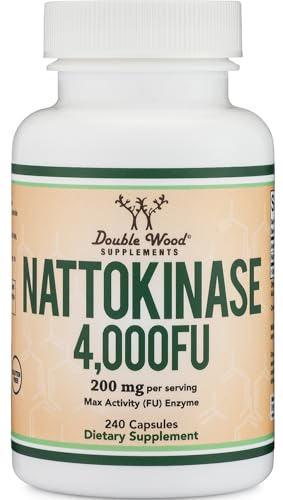
As an Amazon Associate we earn from qualifying purchases. Nattokinase is sold on an enzymatic activity claim, and independent testing has repeatedly found bottles delivering well under their labelled potency. Check that the label states fibrinolytic units (FU) per capsule rather than milligrams alone, and prefer a brand that will supply a batch-specific certificate of analysis showing the measured FU result for that lot, since GMP certification alone does not verify it.
A Note on the Evidence
The human evidence base for nattokinase and cerebrovascular outcomes consists primarily of small short-term studies of surrogate markers, plus a documented case of serious intracranial hemorrhage when the supplement was combined with aspirin in a patient with cerebral microbleeds [1]; large clinical trials establishing net stroke risk or benefit have not been completed. This article is informational only and is not medical advice — anyone with cardiovascular or cerebrovascular conditions, anyone on blood-thinning medications, and anyone planning surgery should consult a physician before using nattokinase.


Frequently Asked Questions
Can nattokinase dissolve clots in the brain to prevent or reverse stroke?
Nattokinase degrades fibrin and can accelerate clot dissolution in laboratory and small human studies, which is the basis for the claim. However, no clinical trial has demonstrated that it prevents ischemic stroke or reverses stroke damage in humans. The biotechnological potential of fibrinolytic enzymes like nattokinase has been noted in the scientific literature [2], but mechanistic promise does not equal proven clinical benefit.
Is there a risk that nattokinase could cause a stroke rather than prevent one?
Yes, and this risk is documented. A case report describes cerebellar hemorrhage — a type of bleeding stroke — occurring in a patient who combined nattokinase with aspirin and who had pre-existing cerebral microbleeds [1]. Excessive fibrinolysis can impair the blood’s ability to stop bleeding from a vessel rupture, worsening hemorrhagic strokes. This risk is especially relevant in people with undetected microbleeds, hypertension, or concomitant use of blood-thinning medications.
Can I take nattokinase if I'm already on aspirin or warfarin for stroke prevention?
You should not combine nattokinase with aspirin, warfarin, or any anticoagulant or antiplatelet drug without explicit physician guidance. The nattokinase-aspirin combination has been implicated in a serious hemorrhagic event [1], and adding a fibrinolytic supplement to an existing blood-thinning regimen can unpredictably amplify bleeding risk.
How long before surgery should nattokinase be stopped?
Because nattokinase has measurable fibrinolytic activity in the circulation, it should be discontinued at least one week before any surgical or dental procedure to allow its activity to clear. Continuing it into the perioperative period could impair normal clot formation and increase surgical bleeding risk.
Does natto in food carry the same risks as nattokinase supplements?
Natto contains nattokinase as a naturally occurring component, and regular consumption of natto has been studied in Japanese population research. However, supplement capsules are typically standardized to deliver concentrated fibrinolytic units that may substantially exceed what is present in a typical serving of natto. The case report involving adverse effects specifically concerned a nattokinase supplement combined with aspirin [1]; individual food consumption patterns and supplement dosing are different contexts.
What should someone with a history of stroke consider before trying nattokinase?
Anyone with a history of stroke — whether ischemic or hemorrhagic — should consult their physician before using nattokinase. The type of prior stroke matters enormously: someone with a prior hemorrhagic stroke or known cerebral microbleeds faces a meaningfully elevated bleeding risk from any fibrinolytic agent. Even individuals with prior ischemic stroke are often already on antiplatelet or anticoagulant therapy, which creates the combination risk documented in the published case report [1].
References
- Chang YY et al. Cerebellar hemorrhage provoked by combined use of nattokinase and aspirin in a patient with cerebral microbleeds. Internal medicine (Tokyo, Japan) (2008). PMID 18310985
- Kotb E et al. The biotechnological potential of fibrinolytic enzymes in the dissolution of endogenous blood thrombi. Biotechnology progress (2014). PMID 24799449
These statements have not been evaluated by the Food and Drug Administration. This information is not intended to diagnose, treat, cure, or prevent any disease. Content is for informational purposes only and is not medical advice; consult a qualified healthcare provider before starting any supplement. As an Amazon Associate we earn from qualifying purchases.
