Nattokinase is a serine protease enzyme derived from natto, a traditional Japanese food made from Bacillus subtilis-fermented soybeans. Unlike most dietary supplements, it has a clearly described pharmacological mechanism: it degrades fibrin directly and upregulates endogenous plasminogen activators, producing measurable fibrinolytic and antiplatelet effects in human plasma. That activity is precisely why people take it for cardiovascular support — and precisely why it requires careful management before any planned surgical procedure.
Surgery depends on your body’s ability to form stable blood clots at incision sites. Anything that impairs clot formation or accelerates clot breakdown can turn a routine operation into a serious bleeding event. Because nattokinase is sold as a dietary supplement rather than a drug, many patients assume it is automatically safe to continue right up to their procedure date. That assumption is incorrect. This article explains the proposed discontinuation timeline, the mechanism behind the risk, and how to communicate with your surgical team.
Key Takeaways
- Stop nattokinase at least one week before any planned surgery or invasive procedure; consider fourteen days for high-risk operations.
- Nattokinase degrades fibrin directly and upregulates plasminogen activators, creating measurable bleeding risk that is distinct from but additive to anticoagulant and antiplatelet drugs.
- Disclose nattokinase use to your surgeon and anesthesiologist — it is a pharmacologically active enzyme, not an inert supplement.
- Never combine nattokinase with warfarin, heparin, aspirin, clopidogrel, or other anticoagulants or antiplatelets without physician supervision.
- Do not resume nattokinase after surgery without your surgeon’s clearance; timing of restart depends on wound healing and post-operative anticoagulation status.
How Nattokinase Affects Clotting: The Mechanism That Creates Surgical Risk
Nattokinase exerts its effects through two complementary pathways. First, it acts as a direct fibrinolytic agent, cleaving fibrin strands — the structural scaffold of a blood clot — into soluble degradation products. Second, it upregulates tissue plasminogen activator (tPA) and urokinase-type plasminogen activator (uPA), the body’s own clot-dissolving enzymes, while downregulating plasminogen activator inhibitor-1 (PAI-1), the primary brake on that system. The net result is a blood environment that resists stable clot formation and accelerates the breakdown of clots that do form.
This mechanism is distinct from anticoagulants like warfarin, which block clotting factor synthesis, and from antiplatelets like aspirin, which prevent platelets from aggregating. Nattokinase targets the fibrin scaffold itself and the enzymes that regulate it. From a surgical standpoint, all three pathways — anticoagulant, antiplatelet, and fibrinolytic — converge on the same dangerous outcome: inability to achieve hemostasis at a surgical wound. Nattokinase addresses the fibrinolytic branch of that risk in a way that most patients and even some clinicians do not anticipate from a supplement.
The Recommended Discontinuation Timeline: At Least One Week Before Surgery
The conservative and widely cited guideline among integrative and surgical practitioners is to discontinue nattokinase at least one week — seven full days — before any planned surgical or invasive procedure. Some practitioners extend that recommendation to ten to fourteen days, particularly for major surgery, procedures with high inherent bleeding risk such as cardiac or neurosurgical operations, or patients who have been taking high doses for extended periods.
Why one week rather than, say, 48 hours? Nattokinase’s half-life in circulation is relatively short, but its downstream effects on plasminogen activator expression and PAI-1 suppression may persist longer than the enzyme itself remains detectable. Additionally, the fibrin degradation products generated while the enzyme is active can themselves interfere with coagulation for a period after the enzyme is cleared. A one-week window provides a conservative buffer to allow the coagulation system to return to baseline. This timeline is precautionary and derived from pharmacological reasoning rather than a large prospective trial, because such a trial does not exist for nattokinase in the peri-operative setting.


If you discover you have been taking nattokinase only days before an upcoming procedure, do not simply stop and say nothing. Contact your surgeon or anesthesiologist immediately. They may reschedule if the timeline is too short, may order point-of-care coagulation testing to assess your actual bleeding risk, or may proceed with heightened monitoring. Transparency is essential.
Types of Procedures That Require Particular Caution
Not all procedures carry equal bleeding risk, and that context matters when weighing how strictly to apply the one-week guideline. High-risk categories include cardiac surgery, neurosurgery, spinal procedures, joint replacement, and any operation in an enclosed anatomical space where even modest excess bleeding can cause serious complications such as epidural hematoma or cardiac tamponade. For these procedures, erring toward the fourteen-day discontinuation window is reasonable.
Moderate-risk procedures include abdominal surgery, thoracic surgery, and major orthopedic repairs. Low-risk procedures include many endoscopies, simple dental extractions, and superficial skin procedures — though even here, nattokinase should be discussed with the provider in advance. Some invasive procedures not typically thought of as surgery, such as epidural steroid injections, nerve blocks, or joint aspirations, also warrant prior discontinuation because bleeding into a confined space can cause serious harm. Do not assume that ‘minor’ means ‘no precautions needed.’
Drug Interactions That Compound the Risk
Nattokinase must not be combined with anticoagulant or antiplatelet medications without explicit physician supervision. Concurrent use with warfarin, heparin, low-molecular-weight heparins, direct oral anticoagulants such as rivaroxaban or apixaban, aspirin, clopidogrel, ticagrelor, or non-steroidal anti-inflammatory drugs can produce additive or synergistic effects on bleeding time that exceed what either agent would produce alone. Before surgery, patients on any of these medications already receive specific bridging or discontinuation protocols from their care team; nattokinase adds a layer of complexity that the team needs to know about.[2]
There is a second and opposite risk worth stating plainly: using nattokinase as a replacement for a prescribed anticoagulant rather than alongside one. A case report in Proceedings (Baylor University Medical Center) describes a patient who stopped warfarin after aortic valve replacement with a mechanical prosthesis and substituted nattokinase. After nearly a year of nattokinase without warfarin, thrombus formed on the mechanical valve and a repeat valve replacement was required. The authors strongly discourage using it for that purpose. For anyone anticoagulated because of a mechanical valve, atrial fibrillation, or a prior clot, nattokinase is not an equivalent substitute, and swapping it in creates a clotting risk rather than a bleeding one.[1]
Other supplements with overlapping activity deserve mention as well. Fish oil at high doses, vitamin E at supplemental doses, ginkgo biloba, garlic extract, and turmeric/curcumin all have antiplatelet or mild anticoagulant properties. Taking nattokinase alongside several of these creates a polypharmacy situation even though no individual prescription drug is involved. Your surgical team and anesthesiologist need a complete list of every supplement you take, not just prescription medications.[2]
What the Human Evidence Does and Does Not Tell Us
Human trials on nattokinase are real but limited in scope. Small randomized controlled trials have documented measurable reductions in fibrinogen, D-dimer, and blood viscosity, as well as modest blood pressure reductions in hypertensive participants. These findings establish that nattokinase has genuine pharmacological activity in humans — it is not inert — but the trials are generally short in duration, small in sample size, and not powered to detect rare adverse events such as surgical bleeding complications.

No prospective clinical trial has specifically studied nattokinase discontinuation timing before surgery and measured peri-operative bleeding outcomes. The one-week guideline therefore represents expert consensus and pharmacological extrapolation rather than direct clinical evidence at the level of a large randomized trial. This is a genuine evidence gap, and honest communication about it matters. The absence of a large trial does not mean the enzyme is safe to continue; it means the field has not yet generated the definitive data that would allow precise individualized guidance. Caution is the appropriate response to that uncertainty, not dismissal of the risk.
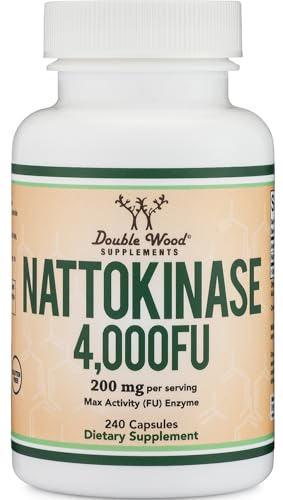
The FDA has not evaluated nattokinase for treating, curing, or preventing any disease. Marketed products vary in enzyme activity expressed in fibrinolytic units (FU), and standardization across brands is inconsistent, which adds variability to any dosing-related risk assessment.
Resuming Nattokinase After Surgery
Restarting nattokinase after a surgical procedure should be guided by your surgeon’s assessment of wound healing and hemostasis. A common conservative approach is to wait until all surgical drains are removed, primary wound healing is confirmed, and any prescribed post-operative anticoagulants for deep vein thrombosis prophylaxis have been completed or their interaction potential has been reviewed. In practice, this often means waiting at least two to four weeks after the procedure before resuming, though major surgeries or complicated recoveries may require longer.
There is a theoretical argument that nattokinase’s fibrinolytic properties could be relevant in the post-operative period for preventing excessive clot formation, but this is speculative and should not be used to justify early resumption without medical clearance. Post-operative venous thromboembolism prophylaxis is a carefully calibrated medical intervention; substituting or supplementing it with nattokinase without physician oversight is not appropriate.
🛒 Where to Buy Nattokinase
- Doctor’s Best Nattokinase 2,000 FULab-tested / studied
capsules, 100 mg NSK-SD per vcap (2,000 FU) — Most widely referenced brand in clinical and integrative medicine contexts; uses Japan Bio Science Laboratory NSK-SD ingredient; vegetarian capsules; 90 count - NOW Foods Nattokinase 100 mg
capsules, 100 mg per vcap (2,000 FU) — Mainstream GMP-certified brand; affordable entry-level option; 90 vcaps; widely available - Source Naturals Nattokinase 100 mg
capsules, 100 mg per tablet (2,000 FU) — Long-established supplement brand; competitive pricing at 60 tablets; good for budget-conscious buyers familiar with the brand - Healthy Origins Nattokinase 2,000 FU
capsules, 100 mg per vcap (2,000 FU) — Best cost-per-serving option on Amazon; 180 vcap bottle; uses NSK-SD ingredient; popular bulk buy for long-term users
As an Amazon Associate we earn from qualifying purchases. Nattokinase is sold on an enzymatic activity claim, and independent testing has repeatedly found bottles delivering well under their labelled potency. Check that the label states fibrinolytic units (FU) per capsule rather than milligrams alone, and prefer a brand that will supply a batch-specific certificate of analysis showing the measured FU result for that lot, since GMP certification alone does not verify it.
A Note on the Evidence
Human trials supporting nattokinase’s fibrinolytic effects are real but small and short-term; no large prospective trial has studied its peri-operative bleeding risk directly, and the one-week discontinuation guideline is expert consensus based on pharmacological reasoning rather than definitive clinical evidence. Anyone taking nattokinase alongside prescription anticoagulants, antiplatelets, or other fibrinolytic agents, or preparing for any surgical or invasive procedure, must consult their physician or surgeon before making any changes to their supplement regimen. This article is informational and does not constitute medical advice.
Frequently Asked Questions
Why does nattokinase matter before surgery if it is just a supplement?
Nattokinase is a serine protease with documented fibrinolytic activity in human plasma — it dissolves fibrin, the structural scaffold of blood clots, and amplifies the body’s own clot-dissolving enzymes. That mechanism is clinically meaningful during surgery, when your body depends on stable clot formation to achieve hemostasis at wound sites. The supplement classification does not change the pharmacological activity.


What is the minimum time to stop nattokinase before surgery?
The widely recommended minimum is one week, or seven full days, before any planned surgical or invasive procedure. Fourteen days is preferred for major operations or procedures with high inherent bleeding risk. This timeline is based on pharmacological reasoning and expert consensus rather than a large prospective clinical trial, because such a trial has not been conducted.
Can I take nattokinase with my blood thinner before surgery?
No. Nattokinase must not be combined with warfarin, heparin, low-molecular-weight heparins, direct oral anticoagulants, aspirin, clopidogrel, or other antiplatelet agents without explicit physician supervision. The effects on bleeding risk can be additive or synergistic. Your surgical team needs to know about all supplements you take in order to safely manage your peri-operative anticoagulation.
Does nattokinase affect anesthesia?
Nattokinase does not directly interact with anesthetic agents, but it is relevant to anesthesiologists because some procedures — particularly neuraxial anesthesia such as epidural or spinal blocks — carry a risk of serious bleeding if coagulation is impaired. Anesthesiologists follow strict guidelines about anticoagulant timing for these techniques, and nattokinase’s fibrinolytic activity places it in a category they need to know about.
I forgot to stop nattokinase in time. What should I do?
Contact your surgeon or anesthesiologist immediately and disclose when you last took it and at what dose. Do not simply stop and say nothing. Your care team may reschedule the procedure, order point-of-care coagulation testing to assess actual risk, or proceed with additional monitoring. Transparency gives them the information they need to keep you safe.
When can I restart nattokinase after my operation?
Wait until your surgeon confirms primary wound healing, all drains are removed, and any post-operative anticoagulation protocol is complete or has been reviewed for interaction potential. In practice, this is often two to four weeks post-operatively for routine procedures, longer for major surgery. Do not restart without your surgeon’s explicit clearance.
References
- Elahi MM et al. Consequence of patient substitution of nattokinase for warfarin after aortic valve replacement with a mechanical prosthesis. Proceedings (Baylor University Medical Center) (2015). PMID 25552810
- Dobre MZ et al. Navigating the Effects of Anti-Atherosclerotic Supplements and Acknowledging Associated Bleeding Risks. International Journal of Molecular Sciences (2025). PMID 41155474
These statements have not been evaluated by the Food and Drug Administration. This information is not intended to diagnose, treat, cure, or prevent any disease. Content is for informational purposes only and is not medical advice; consult a qualified healthcare provider before starting any supplement. As an Amazon Associate we earn from qualifying purchases.
