When a blood clot forms in the wrong place at the wrong time, the consequences can be fatal. Tissue plasminogen activator (tPA) is the gold-standard pharmaceutical thrombolytic used in emergency medicine to dissolve life-threatening clots in stroke and heart attack. Nattokinase is a serine protease enzyme extracted from natto, a traditional Japanese food made from Bacillus subtilis–fermented soybeans, and it has attracted attention for its ability to degrade fibrin and stimulate the body’s own clot-dissolving systems.
Comparing the two is not straightforward. tPA is a tightly controlled emergency drug with well-characterized risks and benefits, administered under hospital supervision in time-critical situations. Nattokinase is a dietary supplement with a plausible mechanism and early supportive data, but without the large, rigorous clinical trials that pharmaceutical agents must clear before approval. This article walks through what each agent does, where their mechanisms overlap, and why they occupy fundamentally different roles.
Key Takeaways
- Nattokinase and tPA both target fibrin, but through different mechanisms: nattokinase degrades fibrin directly and stimulates endogenous tPA release, while pharmaceutical tPA converts plasminogen to plasmin at the clot surface.
- tPA is a proven emergency intervention for acute ischemic stroke and certain thrombotic emergencies; nattokinase has no established role in acute clot treatment and should never be used instead of emergency care.
- Human trials on nattokinase show measurable fibrinolytic and blood-pressure effects, but the studies are small and short-term; no large outcomes trial has been completed.
- Nattokinase carries real drug interaction risks—it should not be combined with warfarin, heparin, aspirin, clopidogrel, or other anticoagulants or antiplatelets without physician supervision.
- The FDA has not approved or evaluated nattokinase for treating, curing, or preventing any disease; it is sold as a dietary supplement.
How tPA Works as a Pharmaceutical Thrombolytic
Tissue plasminogen activator is an endogenous serine protease that the body itself produces in vascular endothelial cells. The recombinant pharmaceutical versions—alteplase, tenecteplase, reteplase—are manufactured versions of this same protein. tPA works by binding to fibrin within an existing clot and, in that fibrin-bound state, converting plasminogen to plasmin with greatly amplified efficiency. Plasmin is the body’s primary fibrin-degrading enzyme; once activated at the clot surface, it cleaves fibrin strands, breaking down the structural scaffold of the thrombus.
Because tPA’s activity is dramatically enhanced by fibrin binding, it has a degree of clot selectivity—it preferentially activates plasminogen at the clot site rather than throughout the systemic circulation. However, this selectivity is incomplete, and systemic plasmin generation still occurs. This is why the major risk of tPA therapy is serious bleeding, including intracranial hemorrhage, which occurs in roughly 2–6% of stroke patients treated with it. tPA has an extremely short plasma half-life of approximately 5 minutes and must be given intravenously, typically in an intensive care or stroke unit setting.
How Nattokinase Produces Fibrinolytic Effects
Nattokinase is a 275-amino-acid serine protease produced during natto fermentation. Unlike tPA, it is not naturally present in the human body; it is taken orally as a supplement. Its primary fibrinolytic action is direct: the enzyme cleaves fibrin directly, without requiring an intermediate step through plasminogen activation. Research has characterized nattokinase as having the capacity to degrade fibrin networks directly and also to stimulate the production or release of endogenous tissue plasminogen activator from vascular endothelium, effectively amplifying the body’s own fibrinolytic system [1].

Nattokinase also appears to inhibit plasminogen activator inhibitor-1 (PAI-1), a key regulator that normally suppresses fibrinolysis. By reducing PAI-1 activity, nattokinase may shift the fibrinolytic balance toward clot breakdown even when direct enzyme activity is modest. This multi-pronged approach—direct fibrin degradation combined with upregulation of endogenous plasminogen activators and PAI-1 inhibition—is part of why nattokinase has been described as having meaningful fibrinolytic potential among naturally derived enzymes [1].

Oral bioavailability has historically been a concern for enzymes, because protein-digesting enzymes in the stomach and intestine can degrade them before absorption. Evidence suggests that nattokinase retains meaningful fibrinolytic activity after oral administration and that activity can be detected in human plasma following supplementation, though the degree of systemic exposure and the extent to which enzyme survives the gastrointestinal tract in active form continues to be an area of study.
Mechanistic Similarities and Critical Differences
Both nattokinase and tPA target the fibrin-based structure of blood clots, and both ultimately increase plasmin-mediated fibrin degradation—though they reach that endpoint by different paths. tPA works by activating plasminogen to plasmin; nattokinase degrades fibrin directly and also stimulates endogenous tPA release. Because the fibrinolytic network is interconnected, both agents can shift the balance away from coagulation and toward clot dissolution [1].
The differences are clinically decisive. tPA’s potency is measured in minutes: it can lyse a major arterial thrombus rapidly enough to restore blood flow in an acute stroke or heart attack. Nattokinase operates on a much more modest scale; the human data, while promising for supportive or preventive contexts, involves markers like D-dimer and fibrin degradation products in healthy or mildly at-risk individuals—not acute thrombus dissolution in a hospital emergency. Equating the two would be inaccurate and potentially dangerous. tPA also carries serious bleeding risk precisely because of its potency; nattokinase’s gentler fibrinolytic activity appears to carry lower bleeding risk, though this distinction also reflects a large difference in overall pharmacological power.
Where tPA Is Irreplaceable
Pharmaceutical tPA remains the only pharmacological intervention proven to improve outcomes in acute ischemic stroke when given within the treatment window (typically up to 4.5 hours from symptom onset for alteplase). In this setting, it is administered under strict imaging protocols to exclude hemorrhagic stroke, and the decision involves weighing the risk of fatal brain bleeding against the near-certainty of permanent disability without treatment. The benefit-risk calculation for acute thrombolysis has been established through large randomized controlled trials involving thousands of patients.
Nattokinase has no established role in the acute treatment of stroke, pulmonary embolism, deep-vein thrombosis, or myocardial infarction. Using a supplement in place of emergency medical care in these situations would be dangerous. Anyone experiencing symptoms suggestive of a clot-related emergency—sudden severe headache, chest pain, unilateral weakness, difficulty speaking—should call emergency services immediately. No supplement should delay that call.

What Human Studies Show About Nattokinase
The human evidence base for nattokinase is composed primarily of small, short-duration randomized trials and observational studies. These have examined outcomes including plasma fibrinolytic activity, coagulation factor levels, blood pressure, and lipid markers. Results generally suggest that oral nattokinase supplementation produces measurable increases in fibrinolytic markers and modest reductions in certain coagulation factors compared to placebo in adults with cardiovascular risk factors. Small trials have also reported reductions in systolic and diastolic blood pressure.
It is important to be honest about what this evidence does and does not establish. Small trials demonstrate biological activity—they show the enzyme does something measurable in the blood—but they are not adequately powered or designed to determine whether nattokinase reduces rates of heart attack, stroke, or clot-related events in clinical practice. No large, long-term outcomes trial comparable to those conducted on pharmaceutical anticoagulants or thrombolytics has been completed for nattokinase. The FDA has not evaluated nattokinase for treating, curing, or preventing any disease.
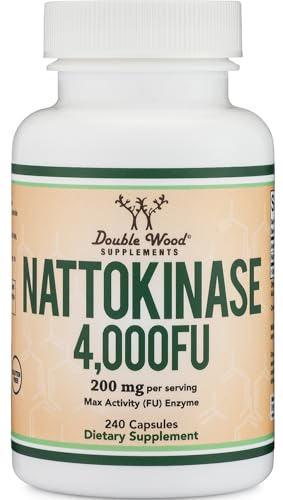
Research into fibrinolytic enzymes from fermented foods has identified nattokinase as among the most potent naturally derived fibrinolytic agents characterized to date, with its activity comparable in laboratory assays to other well-studied fibrinolytic proteins [1]. Whether that laboratory and early clinical signal translates to meaningful cardiovascular protection over time requires larger, longer trials that have not yet been conducted.
Safety, Drug Interactions, and Who Should Be Cautious
Nattokinase has meaningful antiplatelet and fibrinolytic activity. This is the source of both its potential benefit and its risk profile. Combining nattokinase with prescription anticoagulants—warfarin, heparin, low-molecular-weight heparins, direct oral anticoagulants such as rivaroxaban or apixaban—or with antiplatelet drugs such as aspirin or clopidogrel, can compound bleeding risk in unpredictable ways. Anyone taking these medications should not add nattokinase without explicit guidance from a physician.
Because of its effects on coagulation and platelet function, nattokinase should be discontinued at least one week before any scheduled surgical procedure. Individuals with bleeding disorders, recent surgery, active ulcers, or a history of hemorrhagic stroke should avoid it or use it only under close medical supervision. Natto as a food contains vitamin K2, which can interact with warfarin; nattokinase supplements are typically processed to remove vitamin K, but patients on warfarin should verify this with the specific product and discuss with their prescriber.
🛒 Where to Buy Nattokinase
- Doctor’s Best Nattokinase 2,000 FULab-tested / studied
capsules, 100 mg NSK-SD per vcap (2,000 FU) — Most widely referenced brand in clinical and integrative medicine contexts; uses Japan Bio Science Laboratory NSK-SD ingredient; vegetarian capsules; 90 count - NOW Foods Nattokinase 100 mg
capsules, 100 mg per vcap (2,000 FU) — Mainstream GMP-certified brand; affordable entry-level option; 90 vcaps; widely available - Source Naturals Nattokinase 100 mg
capsules, 100 mg per tablet (2,000 FU) — Long-established supplement brand; competitive pricing at 60 tablets; good for budget-conscious buyers familiar with the brand - Healthy Origins Nattokinase 2,000 FU
capsules, 100 mg per vcap (2,000 FU) — Best cost-per-serving option on Amazon; 180 vcap bottle; uses NSK-SD ingredient; popular bulk buy for long-term users
As an Amazon Associate we earn from qualifying purchases. Nattokinase is sold on an enzymatic activity claim, and independent testing has repeatedly found bottles delivering well under their labelled potency. Check that the label states fibrinolytic units (FU) per capsule rather than milligrams alone, and prefer a brand that will supply a batch-specific certificate of analysis showing the measured FU result for that lot, since GMP certification alone does not verify it.
A Note on the Evidence
The human evidence supporting nattokinase consists largely of small, short-term trials; no large outcomes study has established that it prevents heart attacks, strokes, or thromboembolic events. Nattokinase has real fibrinolytic and antiplatelet activity and must not be combined with prescription anticoagulants or antiplatelets without physician supervision—consult your doctor before starting it, especially if you have any cardiovascular condition or take any medications affecting clotting.

Frequently Asked Questions
Does nattokinase work the same way as tPA?
Not exactly. tPA works primarily by activating plasminogen to plasmin, which then degrades fibrin. Nattokinase degrades fibrin directly as a serine protease and also stimulates the body’s own endogenous tPA release, contributing to fibrinolysis through multiple pathways [1]. Both mechanisms ultimately promote fibrin breakdown, but the potency, speed, and clinical contexts are very different.

Can nattokinase replace tPA in a stroke emergency?
No. tPA’s ability to dissolve a major arterial thrombus rapidly enough to prevent permanent neurological damage is not something nattokinase has been shown to replicate. Stroke is a time-critical emergency requiring immediate hospitalization. Anyone with stroke symptoms should call emergency services; no supplement should substitute for or delay that response.
Is nattokinase safe to take daily as a supplement?
For healthy adults not taking anticoagulant or antiplatelet medications, nattokinase appears to be reasonably well-tolerated in the doses studied in clinical trials. However, it has real pharmacological activity on clotting and should be treated accordingly—not as an inert supplement. It is contraindicated with anticoagulants and antiplatelets and should be stopped before surgery.
What does the research actually show nattokinase doing in the body?
Small human trials have measured increased fibrinolytic activity in plasma, reduced fibrin degradation product levels, modest blood pressure reductions, and changes in coagulation markers following oral nattokinase supplementation. Research on fibrinolytic enzymes from fermented foods identifies nattokinase as one of the most active naturally derived fibrinolytic agents studied [1]. These are promising early signals, not proven clinical outcomes.
Can I take nattokinase if I'm on a blood thinner?
No, not without your physician’s explicit approval. Nattokinase has additive effects on fibrinolysis and platelet function; combining it with warfarin, heparin, aspirin, clopidogrel, or direct oral anticoagulants can increase bleeding risk in ways that are difficult to monitor. This is a serious drug-supplement interaction that requires medical oversight.
Why do researchers study naturally derived fibrinolytic enzymes at all if tPA exists?
Pharmaceutical tPA is potent but carries significant bleeding risk, has a very short half-life requiring intravenous administration, and is expensive. There is ongoing interest in identifying fibrinolytic agents that might offer lower bleeding risk, oral bioavailability, and suitability for supportive or preventive applications outside the acute care setting. Naturally derived enzymes like nattokinase represent one avenue of that research [1], though clinical proof of benefit in human outcomes trials is still needed.
References
- Kotb E et al. The biotechnological potential of fibrinolytic enzymes in the dissolution of endogenous blood thrombi. Biotechnology progress (2014). PMID 24799449
These statements have not been evaluated by the Food and Drug Administration. This information is not intended to diagnose, treat, cure, or prevent any disease. Content is for informational purposes only and is not medical advice; consult a qualified healthcare provider before starting any supplement. As an Amazon Associate we earn from qualifying purchases.
