Nattokinase and fish oil are two of the more researched natural supplements marketed for heart health, but they work in fundamentally different ways. Fish oil, derived from fatty fish, delivers omega-3 fatty acids — primarily EPA and DHA — that influence inflammation, triglyceride metabolism, and platelet aggregation. Nattokinase is a serine protease enzyme extracted from natto, a traditional Japanese fermented soybean food, that acts directly on fibrin and supports the body’s own clot-dissolving system.
Comparing these two supplements is not a matter of one being better than the other. They operate on different biological targets, carry different risk profiles, and are supported by bodies of evidence that differ substantially in size and quality. This article walks through what each compound does mechanically, what the human research shows, and where caution is warranted — without overstating what is currently known.
Key Takeaways
- Nattokinase acts primarily on the clotting system by degrading fibrin and upregulating the body’s own plasminogen activators; fish oil primarily lowers triglycerides and reduces inflammation through omega-3 fatty acid pathways.
- The human evidence base for fish oil is substantially larger and longer-term than for nattokinase, which has mainly small, short-duration trials measuring surrogate markers rather than hard cardiovascular outcomes.
- Both supplements have antiplatelet activity and can interact with anticoagulant or antiplatelet medications; nattokinase carries a particularly significant interaction risk with warfarin, heparin, aspirin, and clopidogrel.
- Nattokinase should be discontinued at least one week before surgery and should not be taken without physician supervision by anyone on blood-thinning medications.
- Neither supplement replaces evidence-based medical treatment for cardiovascular disease; both should be discussed with a physician before use, especially in the presence of existing heart conditions or medications.
How Nattokinase Works: Fibrinolysis and Beyond
Nattokinase is a serine protease — an enzyme that cleaves peptide bonds — isolated from Bacillus subtilis var. natto during the fermentation of soybeans. Its primary proposed mechanism is direct degradation of fibrin, the insoluble protein mesh that forms the structural backbone of blood clots. Unlike thrombolytic drugs administered in hospital settings, nattokinase is taken orally and must survive digestion to exert systemic effects, a point that remains an active area of inquiry.
Beyond direct fibrin degradation, nattokinase has been shown in laboratory and some human research to upregulate endogenous plasminogen activators — the body’s own clot-dissolving proteins, including tissue plasminogen activator (tPA) and urokinase. It also appears to inhibit platelet aggregation and may modestly reduce blood pressure, though the exact mechanisms for the latter are not fully established. These combined fibrinolytic and antiplatelet activities are the basis for both its potential cardiovascular benefits and its meaningful drug interaction risks.
How Fish Oil Works: Omega-3 Fatty Acids and Inflammation
Fish oil delivers eicosapentaenoic acid (EPA) and docosahexaenoic acid (DHA), long-chain omega-3 polyunsaturated fatty acids that the body incorporates into cell membranes and uses as precursors to anti-inflammatory signaling molecules called resolvins and protectins. At the cellular level, EPA and DHA compete with arachidonic acid, the precursor to pro-inflammatory prostaglandins and thromboxanes. This competitive displacement is one reason omega-3s are associated with reduced platelet aggregation and a more favorable inflammatory environment.
The most established clinical effect of fish oil is triglyceride reduction. At prescription-strength doses (typically 4 grams per day of EPA and DHA), omega-3 fatty acids significantly lower elevated triglycerides, and a purified EPA product has demonstrated cardiovascular event reduction in high-risk patients in large randomized trials. Standard over-the-counter fish oil supplements deliver lower doses and have a more modest evidence base for cardiovascular outcomes. Fish oil also has mild antihypertensive effects and may support endothelial function, though these effects are smaller and less consistent than its triglyceride impact.


Different Targets: Clot System vs. Lipid and Inflammatory Pathways
The core mechanical distinction between these two supplements is the cardiovascular pathway each addresses. Nattokinase intervenes primarily in hemostasis — the clotting and fibrinolytic cascade — by degrading formed fibrin and promoting the body’s own thrombolytic activity. This makes it conceptually relevant to thrombotic risk, meaning the risk of clot formation in arteries or veins. Fish oil, by contrast, primarily influences lipid metabolism and systemic inflammation, two major contributors to the slow buildup of atherosclerotic plaques over decades.
In practice, cardiovascular disease involves both processes. Atherosclerosis is driven by lipid accumulation and chronic inflammation; acute events like heart attacks and strokes are typically triggered when a plaque ruptures and a clot forms rapidly at the rupture site. Nattokinase and fish oil are therefore addressing different stages and mechanisms of the same broad disease process rather than competing head-to-head for the same target. Neither replaces evidence-based medical treatment for established cardiovascular disease.
What Human Research Actually Shows
The human evidence base for fish oil is substantially larger than that for nattokinase. Omega-3 fatty acids have been studied in dozens of large randomized controlled trials involving tens of thousands of participants, producing enough data to inform clinical guidelines and regulatory approvals for specific formulations. The evidence for triglyceride reduction is robust. The evidence for broader cardiovascular event reduction is more nuanced, with some large trials showing benefit and others not, and the results appearing to depend heavily on dose, formulation (EPA alone versus EPA plus DHA), and baseline patient characteristics.
Nattokinase human trials are smaller, shorter, and fewer. Published randomized controlled trials have generally been modest in size — often involving tens to a few hundred participants followed for weeks to months — and have measured surrogate endpoints like fibrinolytic markers, blood viscosity, or blood pressure rather than hard outcomes like heart attack or stroke incidence. Small trials can demonstrate biological activity, and some nattokinase studies have shown measurable effects on fibrin degradation products and modest blood pressure reductions, but they cannot establish whether these changes translate into reduced cardiovascular events over years of use. This is an important honest limitation of the current evidence.
Drug Interactions and Safety Considerations
Both supplements carry antiplatelet activity, which creates meaningful interaction risk with anticoagulant and antiplatelet medications. Nattokinase’s interaction profile is particularly significant: it should not be combined with warfarin, heparin, aspirin, clopidogrel, or other anticoagulants or antiplatelets without physician supervision. The combined effect can substantially increase bleeding risk. Nattokinase should also be discontinued at least one week before any surgical procedure. Individuals with a history of stroke, bleeding disorders, or those on blood-thinning medications should not take nattokinase without medical clearance.

Fish oil at supplemental doses also has mild antiplatelet effects, though clinical bleeding risk at typical supplement doses (1–3 grams per day) appears low in most individuals. At higher prescription doses, fish oil is used under medical supervision, and interactions with anticoagulants warrant attention. People taking warfarin or other anticoagulants should inform their prescriber before adding fish oil. Both supplements are contraindicated or require extra caution in pregnancy without a physician’s guidance. The FDA has not evaluated nattokinase for treating, curing, or preventing any disease; it is sold as a dietary supplement and is not a substitute for medical care.
Choosing Between Them — or Using Both
Because nattokinase and fish oil address different pathways, they are not direct substitutes for each other. Someone with elevated triglycerides and high systemic inflammation has more evidence supporting fish oil than nattokinase for their specific risk profile. Someone specifically interested in supporting healthy fibrinolytic activity — recognizing the limited human outcome data — might consider nattokinase, ideally under medical supervision given its interaction risks.
Some individuals use both, but combining two supplements that each have antiplatelet effects requires awareness of the additive impact, particularly if other medications are involved. The most responsible approach is to discuss both with a healthcare provider who knows your full medication list, medical history, and cardiovascular risk profile. There is no well-established dose-optimization protocol comparing the two in combination, and the human data for using them together is minimal.
🛒 Where to Buy Nattokinase
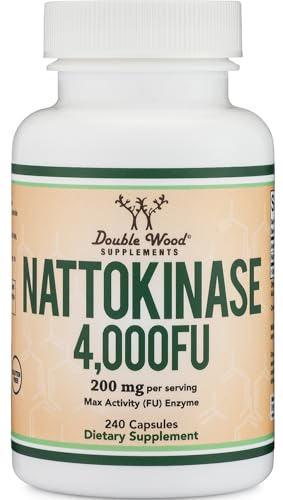
- Doctor’s Best Nattokinase 2,000 FULab-tested / studied
capsules, 100 mg NSK-SD per vcap (2,000 FU) — Most widely referenced brand in clinical and integrative medicine contexts; uses Japan Bio Science Laboratory NSK-SD ingredient; vegetarian capsules; 90 count - NOW Foods Nattokinase 100 mg
capsules, 100 mg per vcap (2,000 FU) — Mainstream GMP-certified brand; affordable entry-level option; 90 vcaps; widely available - Source Naturals Nattokinase 100 mg
capsules, 100 mg per tablet (2,000 FU) — Long-established supplement brand; competitive pricing at 60 tablets; good for budget-conscious buyers familiar with the brand - Healthy Origins Nattokinase 2,000 FU
capsules, 100 mg per vcap (2,000 FU) — Best cost-per-serving option on Amazon; 180 vcap bottle; uses NSK-SD ingredient; popular bulk buy for long-term users
As an Amazon Associate we earn from qualifying purchases. Nattokinase is sold on an enzymatic activity claim, and independent testing has repeatedly found bottles delivering well under their labelled potency. Check that the label states fibrinolytic units (FU) per capsule rather than milligrams alone, and prefer a brand that will supply a batch-specific certificate of analysis showing the measured FU result for that lot, since GMP certification alone does not verify it.
A Note on the Evidence
Most human trials supporting nattokinase are small and measure surrogate markers rather than hard cardiovascular outcomes; the evidence base is early and should not be interpreted as proof of disease prevention or treatment. Nattokinase has meaningful fibrinolytic and antiplatelet activity and must not be used concurrently with warfarin, heparin, aspirin, clopidogrel, or other anticoagulants or antiplatelets without physician supervision, and should be stopped at least one week before any surgical procedure; anyone with a bleeding disorder, history of stroke, or who is pregnant should consult a physician before use. The FDA has not evaluated nattokinase for treating, curing, or preventing any disease. This article is informational only and is not a substitute for personalized medical advice.
Frequently Asked Questions
Can I take nattokinase and fish oil together?
There is no established evidence base for combining the two, and both have antiplatelet effects that could add together. While some people use both, anyone on blood-thinning medications or with a bleeding disorder should consult a physician before combining them. There is no well-studied protocol for optimal combined dosing.


Does nattokinase actually dissolve blood clots?
Nattokinase is a fibrinolytic enzyme — it degrades fibrin, the structural protein in clots, and can upregulate the body’s own clot-dissolving proteins in laboratory and some human research. However, it is not a pharmaceutical thrombolytic agent, and human outcome data showing it prevents or resolves clinically significant clots is limited. It should never be used as a substitute for prescribed anticoagulant therapy.
Is fish oil actually proven to prevent heart attacks?
The evidence is nuanced. Fish oil at prescription doses has demonstrated cardiovascular event reduction in certain high-risk populations in large randomized trials, particularly for formulations using purified EPA. However, several other large trials using standard EPA-plus-DHA formulations have not shown the same benefit. The strongest established effect is triglyceride reduction; broader cardiovascular protection depends heavily on dose, formulation, and patient characteristics.
Who should not take nattokinase?
People taking warfarin, heparin, aspirin, clopidogrel, or other anticoagulant or antiplatelet medications should not take nattokinase without physician supervision due to bleeding risk. It should also be avoided by anyone with a bleeding disorder, scheduled for surgery within one week, or who has had a hemorrhagic stroke. Pregnant individuals should consult a physician before use.
How does nattokinase compare to prescription blood thinners?
They are not equivalent. Prescription anticoagulants like warfarin or direct oral anticoagulants have established, well-characterized pharmacokinetics, standardized dosing, monitoring protocols, and large outcome trial data. Nattokinase is a dietary supplement with limited human outcome data, no standardized clinical dosing protocol, and no FDA approval for treating or preventing any condition. Taking nattokinase in place of a prescribed anticoagulant without medical guidance is not appropriate.
Does fish oil lower blood pressure?
Fish oil appears to have a modest antihypertensive effect, particularly at higher doses, likely through improvements in endothelial function and reduced vascular inflammation. However, the magnitude of effect is generally small and is not a substitute for antihypertensive medication in people with clinically elevated blood pressure. A physician should guide treatment decisions for hypertension.
These statements have not been evaluated by the Food and Drug Administration. This information is not intended to diagnose, treat, cure, or prevent any disease. Content is for informational purposes only and is not medical advice; consult a qualified healthcare provider before starting any supplement. As an Amazon Associate we earn from qualifying purchases.
