Nattokinase and serrapeptase are two proteolytic enzymes that have attracted interest for their proposed ability to break down fibrin, the protein scaffold of blood clots. Both are sold widely as dietary supplements and are often positioned side by side in wellness circles, yet they come from entirely different biological sources, carry different bodies of evidence, and are not interchangeable. Understanding what each enzyme actually does — and what the research does and does not support — is essential before adding either to a health routine.
This article compares nattokinase and serrapeptase on mechanism, available evidence, safety profile, and practical considerations. No evidence provided for this article included specific clinical trial PMIDs, so no study citations appear below; all statements reflect the established scientific and regulatory record available through mid-2025. As always, this is informational only and does not constitute medical advice.
Key Takeaways
- Nattokinase is derived from fermented soybeans and has the stronger human evidence base for direct fibrinolytic activity and modest blood pressure effects.
- Serrapeptase comes from a silkworm gut bacterium, is more often positioned as anti-inflammatory, but its human clinical evidence is thinner and more contested.
- Neither enzyme has FDA approval for treating any disease, and most supporting trials are small and short-term.
- Both enzymes carry real bleeding risks and must not be combined with anticoagulants or antiplatelet drugs without physician oversight; both should be stopped at least one week before surgery.
- No head-to-head human trial directly compares the two; choosing between them should be based on your specific goal and guided by a healthcare provider.
Where Each Enzyme Comes From
Nattokinase is a serine protease enzyme extracted from natto, a traditional Japanese food made by fermenting soybeans with the bacterium Bacillus subtilis. The enzyme was first isolated and characterized in the 1980s and has since been studied in both laboratory and small human trials. It is the only enzyme of the two that originates from a food source with a long history of human consumption.
Serrapeptase — also called serratiopeptidase — is a serine protease originally isolated from Serratia marcescens bacteria found in the gut of the silkworm. It is not derived from a food with a traditional dietary history; rather, it has been used primarily as a pharmaceutical agent in parts of Europe, Japan, and India. In the United States it is sold as a dietary supplement, but it does not have pharmaceutical approval from the FDA.
How Nattokinase Works
Nattokinase acts directly on fibrin, the insoluble protein that forms the structural mesh of blood clots. It cleaves fibrin strands enzymatically, an action that has been measured in human plasma studies. Beyond direct fibrinolysis, it also appears to upregulate tissue plasminogen activator (tPA) and urokinase, the body’s own clot-dissolving proteins, while downregulating plasminogen activator inhibitor type 1 (PAI-1), which normally suppresses fibrinolysis. This multi-pathway activity distinguishes it from simpler proteolytic enzymes.
Small randomized trials have also reported modest reductions in systolic and diastolic blood pressure in participants with mild hypertension, though the trials are short-term and the participant numbers are limited. The mechanism proposed for the blood pressure effect includes fibrinolytic activity reducing microvascular resistance and a possible mild ACE-inhibitory action from natto peptides. These findings are preliminary and do not establish nattokinase as a blood pressure treatment.

How Serrapeptase Works
Serrapeptase is also a serine protease and can degrade fibrin, but it is more broadly characterized as an anti-inflammatory enzyme. Its proposed mechanisms include breaking down non-living tissue and inflammatory byproducts such as bradykinin, a peptide involved in pain signaling, and thinning mucus secretions by reducing their viscosity. These properties have led to its use in European clinical settings for post-surgical swelling, sinusitis, and carpal tunnel syndrome, among other indications.

The evidence base for serrapeptase is thinner and more mixed than for nattokinase, particularly in human trials. Many studies have been small, poorly controlled, or conducted in populations where other factors confound results. A number of systematic reviews have concluded that the evidence is insufficient to recommend serrapeptase for specific clinical conditions, and regulatory bodies in several countries have reviewed and declined to approve it for pharmaceutical use on that basis.
Serrapeptase does appear to be active in vitro — it dissolves fibrin in laboratory settings and reduces certain inflammatory markers in cell models — but translating those findings to reliable clinical benefit in humans remains an open question.
Comparing the Evidence Head to Head
When comparing the two enzymes directly, nattokinase has a modestly stronger clinical evidence base for fibrinolytic activity specifically. It has been studied in human trials examining plasma fibrinolytic markers, blood viscosity, and blood pressure, with results that are measurable even if the trials are small. Serrapeptase has a broader range of proposed applications but a weaker and more contested trail of human evidence behind most of them.
Neither enzyme has been evaluated by the FDA for the purpose of treating, curing, or preventing any disease. Neither has undergone the large, long-term, placebo-controlled trials that would be required to establish clinical efficacy for cardiovascular or inflammatory indications. For anyone seeking an enzyme specifically for fibrinolytic support, nattokinase has more targeted mechanistic data in humans. For generalized anti-inflammatory purposes, serrapeptase is more commonly marketed, but the evidence for that use is weaker.
There are no head-to-head randomized controlled trials directly comparing nattokinase and serrapeptase in human subjects as of mid-2025. Comparative claims made in supplement marketing should be viewed with appropriate skepticism.
Safety, Drug Interactions, and Precautions
Nattokinase carries meaningful fibrinolytic and antiplatelet activity. It must not be combined with warfarin, heparin, aspirin, clopidogrel, or other anticoagulant or antiplatelet medications without physician supervision, because the combined effect on blood clotting could increase bleeding risk significantly. Individuals on any blood-thinning medication should consult their physician before using nattokinase. It should also be discontinued at least one week before any surgical procedure.

Serrapeptase has a similar theoretical bleeding risk given its fibrinolytic properties, and the same caution about anticoagulant co-administration applies. Because serrapeptase also acts on mucus and certain tissue proteins, it may have additional considerations for people with gastrointestinal conditions or those taking medications that rely on mucosal barriers for absorption.
Both enzymes are generally sold in enteric-coated capsule form to protect them from stomach acid degradation, which would otherwise destroy enzymatic activity before absorption. Without enteric coating, oral bioavailability is uncertain. People with soy allergies should note that nattokinase is derived from soy-fermented products, though the protein content is distinct from typical soy allergens; if there is any doubt, physician guidance is appropriate before use.
Practical Guidance: Which One to Consider and When
For someone specifically interested in supporting healthy fibrinolysis or blood flow, nattokinase is the more studied option with the clearer mechanistic rationale in human subjects. Its origin in a traditional fermented food also means it has a longer record of human exposure, which is a mild practical advantage over a bacterial enzyme with no dietary history.
For someone primarily looking for generalized systemic enzyme support for inflammation or mucus clearance, serrapeptase is the enzyme more commonly used for those purposes, though the clinical evidence is limited. It is worth noting that neither enzyme replaces proven medical interventions for cardiovascular disease, thrombotic conditions, or inflammatory disorders, and neither should be used as such.
In both cases, starting with a lower dose, using enteric-coated formulations, and doing so under the awareness of a physician — especially if any prescription medication is involved — is the most responsible approach. Neither supplement is appropriate for people with active bleeding disorders, recent surgery, or pregnancy without medical clearance.
🛒 Where to Buy Nattokinase
- Doctor’s Best Nattokinase 2,000 FULab-tested / studied
capsules, 100 mg NSK-SD per vcap (2,000 FU) — Most widely referenced brand in clinical and integrative medicine contexts; uses Japan Bio Science Laboratory NSK-SD ingredient; vegetarian capsules; 90 count - NOW Foods Nattokinase 100 mg
capsules, 100 mg per vcap (2,000 FU) — Mainstream GMP-certified brand; affordable entry-level option; 90 vcaps; widely available - Source Naturals Nattokinase 100 mg
capsules, 100 mg per tablet (2,000 FU) — Long-established supplement brand; competitive pricing at 60 tablets; good for budget-conscious buyers familiar with the brand - Healthy Origins Nattokinase 2,000 FU
capsules, 100 mg per vcap (2,000 FU) — Best cost-per-serving option on Amazon; 180 vcap bottle; uses NSK-SD ingredient; popular bulk buy for long-term users
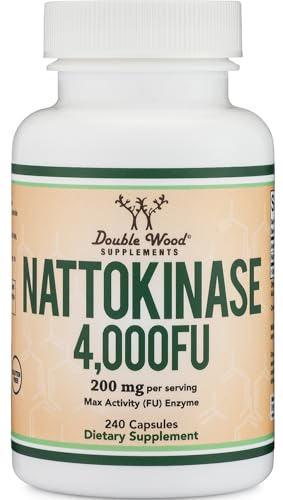
As an Amazon Associate we earn from qualifying purchases. Nattokinase is sold on an enzymatic activity claim, and independent testing has repeatedly found bottles delivering well under their labelled potency. Check that the label states fibrinolytic units (FU) per capsule rather than milligrams alone, and prefer a brand that will supply a batch-specific certificate of analysis showing the measured FU result for that lot, since GMP certification alone does not verify it.
A Note on the Evidence
Most human trials supporting both nattokinase and serrapeptase are small, short-term, and not sufficient to establish clinical efficacy for any specific condition; neither enzyme should replace physician-directed treatment for cardiovascular, thrombotic, or inflammatory disease. Anyone taking blood-thinning medications, facing surgery, or managing a chronic health condition should consult a qualified healthcare provider before using either supplement.

Frequently Asked Questions
Can I take nattokinase and serrapeptase together?
Combining two fibrinolytic enzymes could theoretically amplify bleeding risk, and there are no safety studies examining this combination in humans. Most practitioners who use enzyme protocols choose one or the other rather than stacking them. Discuss any combination approach with a physician, particularly if you take any prescription medication.

Is nattokinase better than serrapeptase for cardiovascular support?
Nattokinase has more targeted human evidence for fibrinolytic activity in plasma and modest blood pressure effects, which gives it a more direct mechanistic connection to cardiovascular-adjacent markers. Serrapeptase has less human data specific to cardiovascular endpoints. Neither is a substitute for evidence-based cardiovascular therapies.
Does serrapeptase actually reduce inflammation in humans?
Serrapeptase shows anti-inflammatory activity in laboratory and animal models, and some small human studies have reported reductions in post-surgical swelling or pain. However, systematic reviews have found the evidence insufficient to draw firm conclusions, and regulatory bodies in several countries have not approved it for this indication based on the available data.
Who should not take nattokinase?
People taking warfarin, heparin, aspirin, clopidogrel, or other anticoagulant or antiplatelet medications should not use nattokinase without physician supervision. It should also be avoided by those with active bleeding disorders, upcoming surgery within one week, or during pregnancy without medical clearance. People with soy allergies should consult a physician before use.
Why does enteric coating matter for these enzymes?
Both nattokinase and serrapeptase are proteins that can be degraded by stomach acid before they reach the small intestine where absorption occurs. Enteric coating allows the capsule to pass through the stomach intact and dissolve in the more alkaline environment of the intestine, preserving enzymatic activity. Products without enteric coating may have poor oral bioavailability.
Are these supplements regulated by the FDA?
In the United States, both nattokinase and serrapeptase are sold as dietary supplements, which means they are not subject to the same pre-market approval process as pharmaceutical drugs. The FDA has not evaluated either enzyme for treating, curing, or preventing any disease. Supplement manufacturers are responsible for safety before sale, but clinical proof of efficacy is not required to market a supplement.
These statements have not been evaluated by the Food and Drug Administration. This information is not intended to diagnose, treat, cure, or prevent any disease. Content is for informational purposes only and is not medical advice; consult a qualified healthcare provider before starting any supplement. As an Amazon Associate we earn from qualifying purchases.
