Nattokinase is a serine protease enzyme derived from natto, a traditional Japanese food made from Bacillus subtilis-fermented soybeans. It has gained popularity as a dietary supplement because it can degrade fibrin — a protein central to blood clot formation — and appears to upregulate the body’s own clot-dissolving plasminogen activators. For people looking for natural support for cardiovascular health, these properties sound appealing. But that same fibrinolytic activity creates a real and serious problem when nattokinase is used alongside prescription blood thinners like warfarin.
Warfarin is a narrow-therapeutic-index anticoagulant. Tiny shifts in how much anticoagulation a patient receives can mean the difference between a clot and a dangerous bleed. Adding a supplement with independent fibrinolytic and antiplatelet effects to a warfarin regimen is not a minor decision — it is one that requires physician oversight. This article explains the pharmacological basis for the interaction, the clinical risks, and the practical steps anyone currently taking warfarin must take before considering nattokinase.
Key Takeaways
- Nattokinase degrades fibrin and inhibits platelets through mechanisms that are independent of — and additive to — warfarin’s anticoagulant effect, creating a real bleeding risk when combined.
- INR testing does not capture the fibrinolytic or antiplatelet activity nattokinase adds, meaning a patient’s true bleeding risk may be higher than their INR suggests.
- Nattokinase must not be combined with warfarin, heparin, aspirin, clopidogrel, or any other anticoagulant or antiplatelet drug without physician supervision.
- Discontinue nattokinase at least one week before any surgical or invasive dental procedure, and disclose it to all members of your care team.
- Human clinical trials on nattokinase are small and short-term; the FDA has not evaluated it to treat, cure, or prevent any disease — consult a physician before use if you have any cardiovascular or clotting condition.
What Nattokinase Actually Does in the Body
Nattokinase works through two complementary pathways. First, it acts directly as a protease that cleaves fibrin, the cross-linked protein mesh that holds blood clots together. Second, it appears to increase circulating levels of tissue plasminogen activator (tPA) and urokinase plasminogen activator (uPA), which are the body’s own enzymes for dissolving clots. This dual mechanism makes nattokinase genuinely fibrinolytically active in laboratory and plasma models.
Beyond fibrinolysis, nattokinase also inhibits platelet aggregation — the earlier step where platelets clump together to start clot formation. This antiplatelet effect adds another layer of blood-thinning activity that is pharmacologically independent from warfarin’s mechanism. Warfarin works by blocking vitamin K-dependent clotting factor synthesis (factors II, VII, IX, and X); nattokinase acts downstream, on existing fibrin and on platelets. These are different parts of the same hemostatic system, and inhibiting multiple parts simultaneously multiplies bleeding risk.
It is important to be honest about the state of the evidence. Most human studies on nattokinase are small and short-term, and have measured changes in fibrinolytic markers and modest blood pressure reductions. The one large, long-term exception was negative: a double-blind, placebo-controlled trial in 265 participants taking 2,000 FU daily for a median of three years found no significant effect on carotid intima-media thickness, arterial stiffness, blood pressure or any laboratory measure [1]. The FDA has not evaluated nattokinase for the treatment, cure, or prevention of any disease. What the pharmacology makes clear, however, is that the interaction risk with anticoagulants is mechanistically real regardless of how complete the clinical trial evidence is.
Why the Nattokinase–Warfarin Combination Raises Serious Bleeding Risk
Warfarin already suppresses the production of several clotting factors. Patients on warfarin are managed to a target INR (International Normalized Ratio) — a measure of how long it takes their blood to clot — that is carefully calibrated for their condition. That INR window is narrow: too low and clots form; too high and spontaneous bleeding becomes life-threatening. Nattokinase introduces additional anticoagulant activity that INR testing does not capture, because INR only measures the vitamin K-dependent clotting cascade, not fibrinolytic enzyme activity or platelet inhibition.

This creates a hidden risk. A person on warfarin who adds nattokinase could have a normal or even sub-therapeutic INR reading while simultaneously having dramatically impaired clot formation due to the supplement’s fibrinolytic and antiplatelet effects. Their physician, looking at a standard INR result, would not know the patient’s real bleeding risk had increased. This is precisely why any supplement with anticoagulant or fibrinolytic properties must be disclosed to and evaluated by the prescribing physician before use.
The consequences of excessive anticoagulation are severe: intracranial hemorrhage, gastrointestinal bleeds, and prolonged bleeding from minor injuries or surgical incisions. For patients who are on warfarin specifically because they have a high clot risk — for instance, those with mechanical heart valves, atrial fibrillation, or a history of pulmonary embolism — disrupting the careful balance of their anticoagulation regimen carries consequences on both ends of the spectrum.

Other Anticoagulants and Antiplatelets That Share This Risk
Warfarin is the most commonly discussed example, but it is not the only drug that creates a dangerous combination with nattokinase. Heparin and low-molecular-weight heparins (such as enoxaparin) are anticoagulants frequently used in hospitals and for conditions like deep vein thrombosis — combining them with nattokinase adds fibrinolytic load on top of existing anticoagulation.
Antiplatelet drugs present the same concern via a different mechanism. Aspirin — even low-dose 81 mg used for cardiovascular prevention — inhibits platelet cyclooxygenase and reduces thromboxane-driven aggregation. Clopidogrel (Plavix) and related drugs like prasugrel and ticagrelor block ADP receptors on platelets. Nattokinase’s own antiplatelet activity compounds these effects. Dual antiplatelet therapy, which some cardiac patients receive after stent placement, represents a particularly high-risk context.
Direct oral anticoagulants (DOACs) such as rivaroxaban, apixaban, edoxaban, and dabigatran are increasingly common alternatives to warfarin. They target factor Xa or thrombin directly. Adding nattokinase to any of these regimens raises the same concern: stacking fibrinolytic and antiplatelet supplement activity on top of pharmaceutical anticoagulation without physician knowledge and monitoring creates unpredictable and potentially dangerous bleeding risk.
The Surgical Discontinuation Requirement
Any supplement that affects clotting, platelet function, or fibrinolysis must be stopped well before elective surgery, and nattokinase is no exception. The standard recommendation is to discontinue nattokinase at least one week before any surgical procedure. This window allows the enzyme’s activity to clear and gives the body’s normal hemostatic mechanisms time to fully restore.
Failure to stop nattokinase before surgery can lead to excessive intraoperative bleeding, difficulty with hemostasis, and complications during recovery. Surgeons and anesthesiologists routinely ask patients to list all supplements before procedures — and the list must include nattokinase even though it is sold over the counter and perceived as natural. ‘Natural’ does not mean ‘inert in a surgical context.’ If you are scheduled for any procedure and taking nattokinase, inform your surgical team immediately.

The same caution applies to dental procedures with significant bleeding potential, such as extractions or implant surgery. Discuss any fibrinolytic or antiplatelet supplement use with both your dentist and your prescribing physician in advance.
Who Should Never Take Nattokinase Without Medical Clearance
Anyone currently prescribed warfarin, heparin, a DOAC, aspirin for cardiovascular disease, or any antiplatelet agent should not add nattokinase without explicit physician review. The risk is not theoretical — it is mechanistically grounded in what the enzyme does to fibrin and platelets.
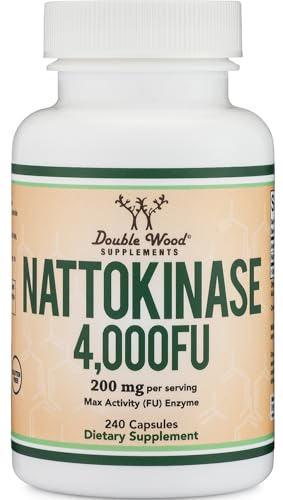
Beyond anticoagulant users, other groups face elevated risk. People with a history of hemorrhagic stroke have a brain already vulnerable to bleeding; adding fibrinolytic activity without careful evaluation is contraindicated. Those with active peptic ulcer disease, recent major surgery, or a bleeding disorder should similarly avoid nattokinase unless a physician has specifically reviewed the decision. Pregnant women and people about to undergo any planned medical procedure also fall into this high-caution category.
It is also worth noting that nattokinase is derived from fermented soybeans, so individuals with soy allergies need to consider allergic risk separately from the hemostatic concerns.
Practical Steps If You Are Considering Nattokinase
If you are not on any anticoagulant or antiplatelet medication and have no bleeding history, the pharmacological interaction risk described above does not apply to you in the same way. Even so, the evidence base for nattokinase in humans remains limited in scale and duration, and the FDA has not approved it for any medical use. Approaching it as a low-risk, evidence-light supplement rather than a proven therapeutic is the accurate framing.
If you are on warfarin or any other blood thinner and are curious about nattokinase, the only responsible path is a conversation with your physician or pharmacologist before taking anything. Bring the supplement’s label, explain your interest, and let your provider assess whether any trial of the supplement could be safely monitored — for example, through more frequent INR testing if you are on warfarin. Do not adjust your anticoagulant dose on your own to ‘make room’ for a supplement.
Finally, disclose all supplements to every provider involved in your care: your cardiologist, your primary care physician, your pharmacist, and your surgeon or dentist if procedures are planned. Supplement-drug interactions are systematically underreported because patients often do not think of supplements as drugs. In the case of nattokinase and anticoagulants, that assumption can cause serious harm.
🛒 Where to Buy Nattokinase
- Doctor’s Best Nattokinase 2,000 FULab-tested / studied
capsules, 100 mg NSK-SD per vcap (2,000 FU) — Most widely referenced brand in clinical and integrative medicine contexts; uses Japan Bio Science Laboratory NSK-SD ingredient; vegetarian capsules; 90 count - NOW Foods Nattokinase 100 mg
capsules, 100 mg per vcap (2,000 FU) — Mainstream GMP-certified brand; affordable entry-level option; 90 vcaps; widely available - Source Naturals Nattokinase 100 mg
capsules, 100 mg per tablet (2,000 FU) — Long-established supplement brand; competitive pricing at 60 tablets; good for budget-conscious buyers familiar with the brand - Healthy Origins Nattokinase 2,000 FU
capsules, 100 mg per vcap (2,000 FU) — Best cost-per-serving option on Amazon; 180 vcap bottle; uses NSK-SD ingredient; popular bulk buy for long-term users
As an Amazon Associate we earn from qualifying purchases. Nattokinase is sold on an enzymatic activity claim, and independent testing has repeatedly found bottles delivering well under their labelled potency. Check that the label states fibrinolytic units (FU) per capsule rather than milligrams alone, and prefer a brand that will supply a batch-specific certificate of analysis showing the measured FU result for that lot, since GMP certification alone does not verify it.


A Note on the Evidence
Human clinical trials on nattokinase are mostly small and short-term, the one large multi-year trial found no benefit on any measure it tracked [1], and the full scope of its interactions with prescription medications has not been systematically studied; the information here is educational and does not constitute medical advice. Anyone taking anticoagulant or antiplatelet medications, or who has a clotting disorder, cardiovascular condition, or planned surgical procedure, must consult a qualified physician before using nattokinase.
Frequently Asked Questions
Can I take nattokinase if I'm on warfarin?
You should not combine nattokinase with warfarin without explicit physician supervision. Nattokinase has independent fibrinolytic and antiplatelet activity that adds to warfarin’s anticoagulant effect in ways that standard INR monitoring will not detect, raising your real bleeding risk beyond what your test results show.
How does nattokinase interact with blood thinners mechanistically?
Nattokinase is a serine protease that breaks down fibrin and upregulates the body’s own plasminogen activators; it also inhibits platelet aggregation. These effects are pharmacologically additive to anticoagulants like warfarin and antiplatelets like aspirin or clopidogrel, meaning the combination suppresses clot formation through multiple simultaneous pathways.
How long before surgery should I stop taking nattokinase?
The standard guidance is to stop nattokinase at least one week before any surgical or invasive procedure. This allows the enzyme’s fibrinolytic activity to clear and gives your body’s normal clotting mechanisms time to fully recover. Always inform your surgical team that you have been taking it.
Does nattokinase affect INR results?
Nattokinase does not directly alter INR, because INR specifically measures the vitamin K-dependent clotting cascade that warfarin suppresses. This is actually what makes the combination particularly risky: a patient could have an in-range INR while simultaneously having meaningfully impaired clot formation due to nattokinase’s fibrinolytic and antiplatelet effects.
Is nattokinase approved by the FDA to treat cardiovascular disease?
No. The FDA has not evaluated nattokinase for the treatment, cure, or prevention of any disease. It is sold as a dietary supplement. While small human studies have measured fibrinolytic marker changes and modest blood pressure reductions, the largest and longest trial, running a median of three years in 265 participants, found no significant benefit on any measure it tracked [1], and no health claim has been formally approved.
Who else, beyond warfarin users, should avoid nattokinase without medical clearance?
People on heparin, direct oral anticoagulants (rivaroxaban, apixaban, dabigatran), or antiplatelet drugs (aspirin, clopidogrel, prasugrel, ticagrelor) face the same additive bleeding risk. Those with a history of hemorrhagic stroke, active peptic ulcer, bleeding disorders, or upcoming surgery should also seek physician clearance before using nattokinase.
References
- Hodis HN et al. Nattokinase atherothrombotic prevention study: A randomized controlled trial. Clinical hemorheology and microcirculation (2021);78(4):339-353. PMID 33843667
These statements have not been evaluated by the Food and Drug Administration. This information is not intended to diagnose, treat, cure, or prevent any disease. Content is for informational purposes only and is not medical advice; consult a qualified healthcare provider before starting any supplement. As an Amazon Associate we earn from qualifying purchases.
