Third-party certification seals are one of the more genuinely useful signals in a supplement aisle otherwise full of marketing claims, but nattokinase is an unusual case: the certified-product pool is small, so most shoppers will need a fallback method for evaluating quality. This guide covers what NSF and USP certification actually mean, why nattokinase lags behind more mainstream categories like multivitamins, and what to look for instead when a certified option isn’t available.
Key Takeaways
- NSF International tests finished products in its own accredited labs against NSF/ANSI 173, the only American National Standard for dietary supplements.
- USP verification involves annual facility audits plus ongoing product testing against USP’s public quality monographs.
- Few nattokinase products currently carry NSF or USP verification, reflecting both certification cost and the category’s smaller market size relative to multivitamins or protein powders.
- A certification seal confirms label accuracy, contaminant limits, and manufacturing controls; it does not confirm the product is effective or right for you.
What NSF Certification Actually Tests
NSF International is the organization behind NSF/ANSI 173, the only American National Standard specific to dietary supplements. Unlike programs that simply review a manufacturer’s submitted test data, NSF conducts its own product testing in accredited laboratories, confirming that what’s on the label matches what’s actually in the capsule, and screening for contaminants and label accuracy. For an enzyme product like nattokinase, that would mean independently verifying FU (fibrinolytic unit) potency claims rather than accepting the manufacturer’s in-house assay at face value.

What USP Verification Actually Tests
USP (United States Pharmacopeia) is a nonprofit scientific organization, founded in 1820, that sets official public quality standards for medicines and supplements recognized by the FDA. Its verification program involves annual facility audits alongside ongoing product testing against USP’s published monographs, covering identity, potency, purity, and manufacturing consistency. Products that pass carry the USP Verified Mark, which is distinct from a manufacturer simply stating “USP-grade ingredients,” a marketing phrase that does not require any independent verification.
Why Nattokinase Specifically Lags
Both NSF and USP verification programs represent real cost and time investment for a manufacturer, and they tend to be adopted first in higher-volume categories like multivitamins, protein powders, and fish oil, where the certification cost spreads across a larger sales base. Nattokinase occupies a smaller, more specialized market, and as a result very few nattokinase products currently carry either seal. This is a category-level gap, not necessarily a signal that any specific uncertified brand is lower quality.
What to Look for Without a Seal
In the absence of NSF or USP verification, look for independent third-party lab testing disclosed by the manufacturer, ideally from an ISO/IEC 17025-accredited laboratory, covering identity, enzymatic (FU) potency, heavy metals (tested via a recognized method like ICP-MS against USP <2232> limits), and microbial safety. Facility-level GMP certification, such as NSF/ANSI 455-2 for dietary supplement manufacturing, is a separate and more commonly available signal than full product verification, and confirms the manufacturing environment itself meets documented quality-control standards even when the specific product hasn’t been independently tested batch by batch. Some manufacturers also standardize potency claims using the Japan Nattokinase Association’s assay method, which can add a layer of consistency to FU labeling even without a US-based certification seal.
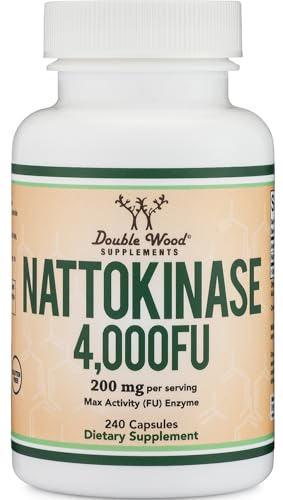
What a Seal Doesn’t Tell You
Even a full NSF or USP certification confirms label accuracy, contaminant limits, and manufacturing consistency, not that the product is effective for your specific goal or appropriate given your medication list. A certified nattokinase product still carries the same bleeding-risk and drug-interaction considerations as an uncertified one; certification is a quality-control signal, not a safety clearance to skip the conversation with your physician.
References
- NSF International. Dietary Supplement and Vitamin Certification. NSF.org
- U.S. Pharmacopeia. USP Verified Mark and Dietary Supplement Verification Program. USP.org
These statements have not been evaluated by the Food and Drug Administration. This information is not intended to diagnose, treat, cure, or prevent any disease. Content is for informational purposes only and is not medical advice; consult a qualified healthcare provider before starting any supplement. As an Amazon Associate we earn from qualifying purchases.
