Walk into any supplement aisle and you will find nattokinase capsules ranging from 100 mg to 4,000 FU with almost no consistency between brands. NSK-SD is a trademarked form of nattokinase developed to address exactly that problem: it is manufactured to a defined fibrinolytic activity level, verified by standardized assay, so that each lot delivers a predictable enzymatic dose rather than an arbitrary milligram weight.
Understanding what NSK-SD actually means requires separating two things that supplement labels routinely conflate: the mass of a protein and the activity of an enzyme. For a serine protease like nattokinase, only activity matters clinically, and NSK-SD is specifically a promise about activity. This article explains the standardization system, what it tells you about the product you are buying, and what the broader nattokinase evidence honestly supports.
Key Takeaways
- NSK-SD is a trademarked nattokinase ingredient standardized to a verified fibrinolytic activity level in Fibrinolytic Units (FU), not just milligrams of protein.
- Fibrinolytic Units are the only meaningful potency measure for nattokinase; milligram-only labeling tells you almost nothing about what a product will actually do.
- Human clinical evidence for nattokinase is limited to small, short-term trials; no large trials have established hard cardiovascular endpoint benefits.
- Nattokinase has real anticoagulant and antiplatelet activity and must not be combined with blood-thinning medications without physician oversight.
- NSK-SD standardization addresses ingredient quality but does not replace the need for third-party finished-product testing from the brand you are buying.
What Is Nattokinase and Where Does NSK-SD Fit?
Nattokinase is a serine protease enzyme produced during the fermentation of soybeans by Bacillus subtilis natto. It was first characterized in the 1980s from natto, the traditional Japanese fermented soybean food. The enzyme degrades fibrin directly and has been shown in laboratory and some human studies to upregulate endogenous plasminogen activators, contributing to fibrinolytic activity in plasma.
NSK-SD is a specific trademarked ingredient manufactured by Japan Bio Science Laboratory (JBSL). The ‘SD’ designation refers to the company’s standardization and purification process. It is supplied to supplement brands as a finished ingredient, meaning the brand using it is not manufacturing the enzyme itself but rather encapsulating or tableting a standardized input. When you see NSK-SD on a label, you are looking at a product built on this specific trademarked material rather than a generic nattokinase powder.
Fibrinolytic Units: The Only Number That Actually Matters
Nattokinase is an enzyme, and enzymes are catalysts. A milligram of a highly active preparation will do far more biological work than a milligram of a partially degraded or poorly extracted one. Measuring enzyme products in milligrams alone is therefore essentially meaningless from a functional standpoint. The industry uses Fibrinolytic Units (FU) as the activity measure for nattokinase, derived from an assay comparing the enzyme’s ability to dissolve a fibrin clot against a streptokinase reference standard.
NSK-SD is typically supplied and labeled at 2,000 FU per 100 mg, though formulations at other concentrations exist. What matters is that the FU figure on an NSK-SD product represents a verified assay result from the manufacturing lot, not an estimate or a theoretical yield. Generic nattokinase products frequently list only milligrams, or list FU figures without specifying the assay method or lot verification, making it impossible to compare them meaningfully to NSK-SD or to each other.

The Japan Bio Science Laboratory has published internal assay methodology using a fibrin plate method for FU determination. Third-party finished-product testing by independent labs has found significant variability in activity among nattokinase supplements that list similar milligram doses, which is precisely the problem standardization is designed to solve. When selecting a nattokinase product, the FU figure from a defined, verified assay is the single most informative piece of information on the label.

How Nattokinase Works: The Proposed Mechanism
Nattokinase exerts fibrinolytic effects through at least two complementary pathways. First, it acts as a direct fibrinolytic enzyme, cleaving fibrin polymers that form the structural backbone of blood clots. Second, it upregulates the body’s own plasminogen activators, particularly tissue plasminogen activator (tPA), which converts plasminogen to plasmin, the body’s primary clot-dissolving enzyme. This dual action is why some researchers consider nattokinase a more complete fibrinolytic agent than single-mechanism alternatives.
In vitro studies have also shown nattokinase to inhibit platelet aggregation and to degrade PAI-1 (plasminogen activator inhibitor-1), a protein that normally suppresses endogenous clot dissolution. These properties make nattokinase pharmacologically interesting from a cardiovascular standpoint, though translating in vitro findings to reliable clinical outcomes in humans requires well-designed trials that remain limited in number and scale. The proposed mechanisms are scientifically plausible but should not be treated as established clinical benefits.
What the Human Evidence Does and Does Not Show
Human clinical trials on nattokinase exist but are predominantly small, short-term, and use varying doses and formulations, making it difficult to draw firm conclusions. Studies have examined effects on plasma fibrinolytic markers, blood pressure, and lipid panels with mixed results. Some small randomized trials have reported modest reductions in systolic and diastolic blood pressure over periods of eight to twelve weeks. Other studies have examined changes in plasma fibrinogen, D-dimer, and clotting factor levels as surrogate markers of fibrinolytic activity.
No large, long-term, placebo-controlled trials have established that nattokinase reduces the incidence of stroke, myocardial infarction, deep vein thrombosis, or other hard cardiovascular endpoints in humans. The existing evidence is promising enough to justify continued research but not sufficient to support disease claims. The FDA has not evaluated nattokinase for treating, curing, or preventing any disease. Any supplement company claiming that nattokinase prevents or treats cardiovascular disease is making a claim that goes beyond what the current evidence supports.
NSK-SD specifically has been used as the ingredient in several published and unpublished studies, which is one reason researchers sometimes prefer it: using a standardized ingredient means the dose in a trial is more precisely defined than if researchers used an uncharacterized generic powder. This makes NSK-SD-based studies more reproducible in principle, though the same limitations around small sample sizes and short follow-up periods apply.

Safety, Interactions, and Who Should Not Use Nattokinase
Nattokinase has meaningful fibrinolytic and antiplatelet activity. This is not a benign supplement for all populations. It must not be combined with warfarin, heparin, aspirin, clopidogrel, or any other anticoagulant or antiplatelet medication without direct physician supervision. The combination of nattokinase’s fibrinolytic effects with pharmaceutical anticoagulation substantially increases bleeding risk and cannot be safely self-managed.
People with bleeding disorders, a history of hemorrhagic stroke, active ulcers, or other conditions predisposing to bleeding should avoid nattokinase unless under medical supervision. Because enzyme activity continues after ingestion, nattokinase should be discontinued at least one week before any surgical procedure, including dental extractions, to reduce perioperative bleeding risk. Pregnant and breastfeeding individuals should not use it, as safety data for these populations is absent.
NSK-SD is derived from fermented soybeans. Individuals with soy allergies should approach it with caution, though the fermentation and purification process significantly reduces but may not eliminate soy protein content. As with any supplement, the standardization of the input ingredient (NSK-SD) does not eliminate the need to evaluate the quality, third-party testing, and manufacturing practices of the finished product brand using it.
How to Read an NSK-SD Label Critically
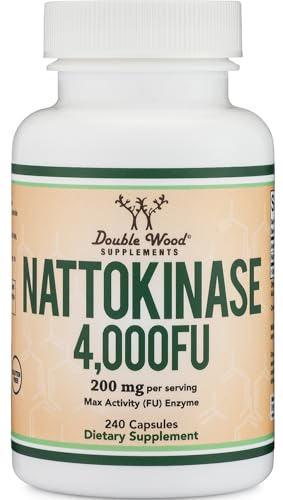
When evaluating a product containing NSK-SD, look for the FU figure listed per serving, not just per capsule if the serving is multiple capsules. Common research-adjacent doses have ranged from 2,000 to 4,000 FU per day, though no universally agreed therapeutic dose has been established. The label should specify NSK-SD by name as the nattokinase source rather than just listing ‘nattokinase’ generically, since the trademark indicates use of the standardized input material.
Third-party testing certification from organizations such as NSF, USP, or Informed Sport adds an additional layer of assurance that the finished product contains what the label claims and is free from common contaminants. The NSK-SD trademark addresses activity standardization at the ingredient level; it does not automatically guarantee the finished capsule or tablet meets the label claim unless the manufacturer also verifies the finished product. A reputable finished product should have both a verified-activity ingredient and third-party finished-product testing.
🛒 Where to Buy Nattokinase
- Doctor’s Best Nattokinase 2,000 FULab-tested / studied
capsules, 100 mg NSK-SD per vcap (2,000 FU) — Most widely referenced brand in clinical and integrative medicine contexts; uses Japan Bio Science Laboratory NSK-SD ingredient; vegetarian capsules; 90 count - NOW Foods Nattokinase 100 mg
capsules, 100 mg per vcap (2,000 FU) — Mainstream GMP-certified brand; affordable entry-level option; 90 vcaps; widely available - Source Naturals Nattokinase 100 mg
capsules, 100 mg per tablet (2,000 FU) — Long-established supplement brand; competitive pricing at 60 tablets; good for budget-conscious buyers familiar with the brand - Healthy Origins Nattokinase 2,000 FU
capsules, 100 mg per vcap (2,000 FU) — Best cost-per-serving option on Amazon; 180 vcap bottle; uses NSK-SD ingredient; popular bulk buy for long-term users
As an Amazon Associate we earn from qualifying purchases. Nattokinase is sold on an enzymatic activity claim, and independent testing has repeatedly found bottles delivering well under their labelled potency. Check that the label states fibrinolytic units (FU) per capsule rather than milligrams alone, and prefer a brand that will supply a batch-specific certificate of analysis showing the measured FU result for that lot, since GMP certification alone does not verify it.
A Note on the Evidence
The human evidence base for nattokinase remains limited to small, short-term trials, and no large controlled studies have established benefits for hard cardiovascular endpoints; the FDA has not evaluated nattokinase for treating or preventing any disease. Nattokinase has genuine fibrinolytic and antiplatelet activity, making it inappropriate for anyone on blood-thinning medications or with bleeding risk conditions without direct physician supervision, and it must be stopped at least one week before any surgical procedure. This article is informational only and does not constitute medical advice.

Frequently Asked Questions
Does NSK-SD mean the product has been tested by the FDA?
No. NSK-SD is a trademarked ingredient designation from Japan Bio Science Laboratory, a private manufacturer. The FDA does not evaluate or approve dietary supplements before they reach market, and the FDA has not evaluated nattokinase for treating, curing, or preventing any disease. NSK-SD indicates a privately developed and verified standardization process, not FDA review.
Is 2,000 FU the right dose for everyone?
No established universally correct dose exists. Small human trials have used a range of doses, and individual responses will vary based on body weight, health status, and whether other medications are involved. Any dosing decision should involve a healthcare provider, particularly because nattokinase has real fibrinolytic and antiplatelet activity that carries dose-dependent risks.
Can I take NSK-SD nattokinase if I am already taking a daily aspirin?
Nattokinase must not be combined with aspirin or other antiplatelet agents without physician supervision. Both aspirin and nattokinase inhibit platelet aggregation through different mechanisms, and their combined use increases bleeding risk. This is not a theoretical concern; it is a pharmacological interaction that requires medical oversight to manage safely.
Why is standardization to FU important if the milligrams are the same?
Because enzymes are catalysts, their biological activity depends on protein folding, purity, and preservation conditions, not mass alone. Two products with the same milligram dose can have radically different fibrinolytic activity if one was poorly extracted, improperly stored, or contaminated. FU standardization measures what the enzyme actually does, not how much protein by weight is present, which is why it is the more clinically meaningful measure.
How long before surgery should I stop taking nattokinase?
Nattokinase should be discontinued at least one week before any surgical or invasive procedure, including dental extractions. The enzyme’s fibrinolytic activity persists after ingestion and can impair normal clot formation during and after surgery, increasing perioperative bleeding risk. Always disclose all supplements to your surgical and anesthesia team in advance.
Does the NSK-SD trademark guarantee the finished product I buy is high quality?
It indicates that the input ingredient was manufactured to a standardized activity specification, which is a meaningful quality signal at the ingredient level. However, it does not guarantee the finished capsule or tablet was manufactured under rigorous conditions, stored properly, or verified by third-party testing after encapsulation. For full confidence in the finished product, look for additional third-party certification such as NSF Certified for Sport, USP verification, or Informed Sport.
These statements have not been evaluated by the Food and Drug Administration. This information is not intended to diagnose, treat, cure, or prevent any disease. Content is for informational purposes only and is not medical advice; consult a qualified healthcare provider before starting any supplement. As an Amazon Associate we earn from qualifying purchases.
