Nattokinase is a serine protease enzyme derived from natto, a traditional Japanese food made by fermenting soybeans with Bacillus subtilis. Unlike many supplement ingredients with vague mechanisms, nattokinase has a reasonably well-characterized action: it degrades fibrin directly and appears to upregulate the body’s own plasminogen activators, supporting the fibrinolytic system that keeps blood clots in check. That specificity has drawn genuine scientific interest, and small human trials have explored its effects on fibrin degradation markers and blood pressure.
Because the supplement market is crowded with products of wildly different quality, evaluating nattokinase requires looking past label claims and into measurable factors: enzyme activity in fibrinolytic units (FU), standardization method, third-party testing, and whether vitamin K2 has been removed for users who cannot tolerate it. This article explains what those factors mean in practice and what an evidence-informed buyer should look for—without overstating what the current research can support.
Key Takeaways
- Evaluate nattokinase by fibrinolytic units (FU), not milligrams—active enzyme dose is what matters, and this requires third-party verification.
- NSK-SD is the most studied standardized form; it has vitamin K2 removed, making it safer for those on vitamin K–sensitive anticoagulants.
- A typical research-informed dose is 2,000–4,000 FU per day; products that list only milligrams without FU cannot be reliably compared.
- Nattokinase must not be combined with warfarin, aspirin, clopidogrel, heparin, or other anticoagulants or antiplatelets without physician supervision due to additive bleeding risk.
- Most supporting human trials are small and short-term; the FDA has not approved nattokinase for any disease, and this supplement should be viewed as a research-backed option with real limitations—not a proven therapy.
What Nattokinase Is and How It Works
Nattokinase is produced during the fermentation of soybeans by Bacillus subtilis var. natto. The enzyme belongs to the subtilisin family of serine proteases, meaning it cleaves peptide bonds in substrate proteins using a catalytic serine residue. Its primary biochemical target is fibrin, the cross-linked protein scaffold that gives blood clots their structural integrity. By hydrolyzing fibrin directly, nattokinase can dissolve existing clot material in a way that the body’s own limited fibrinolytic output sometimes cannot match.
Beyond direct fibrinolysis, research has examined whether nattokinase modulates endogenous fibrinolytic pathways—specifically by stimulating production of tissue plasminogen activator (t-PA) and urokinase plasminogen activator (u-PA), both of which convert the inactive precursor plasminogen into active plasmin. This dual mechanism—direct fibrin degradation plus amplification of the body’s own clot-dissolving machinery—is the proposed rationale for the enzyme’s cardiovascular interest. It is important to note that this activity is also what makes nattokinase potentially dangerous when combined with anticoagulant or antiplatelet drugs.
Understanding Fibrinolytic Units: The Only Meaningful Dose Metric
Milligrams alone are a poor guide to nattokinase potency. Enzyme activity degrades with heat, moisture, improper storage, and poor manufacturing, meaning two products containing the same milligram weight can have dramatically different biological activity. The industry-standard measure of nattokinase activity is the fibrinolytic unit (FU), derived from a standardized assay that measures how much fibrin the enzyme dissolves in a defined time period. A reputable product will list FU on the label, not just milligrams.
The most common commercial nattokinase standardization is NSK-SD, a form developed in Japan and used in the majority of published human studies. NSK-SD is produced with the vitamin K2 removed, which matters because raw natto is rich in MK-7 (a form of vitamin K2) that can antagonize the anticoagulant effects of warfarin. Most clinical investigations have used doses in the range of 2,000 to 4,000 FU per day, typically divided across one or two servings. Products significantly below this range may not deliver meaningful fibrinolytic activity, while very high doses increase the risk of bleeding-related adverse effects.

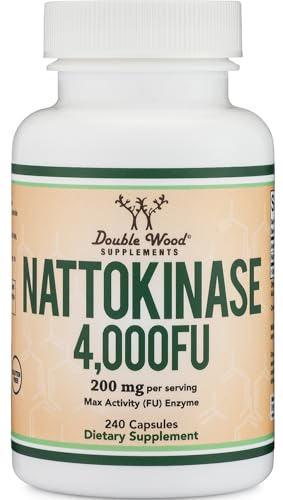
When comparing products, prioritize those that state the FU count per capsule, disclose their standardization source (NSK-SD or equivalent), and provide a certificate of analysis (COA) showing third-party enzyme activity verification. A label that lists only milligrams with no FU disclosure is a signal of insufficient quality control.

Key Quality Markers to Evaluate Before Buying
Third-party testing is the single most important quality signal for any enzyme supplement. Nattokinase activity is sensitive to manufacturing conditions, and without independent verification there is no way to confirm the enzyme on the label is active on the shelf. Look for products tested by organizations such as NSF International, USP, Informed Sport, or Consumer Lab. These bodies test for both label accuracy (does the product contain what it claims?) and contamination (heavy metals, microbiological load, undisclosed fillers).
Vitamin K2 removal is a meaningful differentiator for a specific population: anyone on warfarin or other vitamin K–antagonist anticoagulants. NSK-SD and similar processed nattokinase forms have the K2 removed during extraction. If a product markets itself as ‘whole natto extract’ or ‘unprocessed natto concentrate,’ it may retain significant K2, which can interfere with anticoagulant therapy. Users who are not on vitamin K–sensitive medications do not need to worry about this distinction.
Enteric coating is sometimes marketed as necessary to protect nattokinase from stomach acid. The evidence on this point is less clear-cut than manufacturers often suggest—nattokinase has demonstrated moderate stability at gastric pH in some studies—but enteric coating does no harm and may offer reassurance for users with highly acidic stomach environments. More important than the capsule format is the presence of unnecessary fillers, allergens, or additives that could compromise the product for individuals with sensitivities.
Comparing Forms: Capsule, Softgel, and Powder
Nattokinase is most commonly sold in hard-shell vegetable capsules, which are the most practical format for a precise, shelf-stable enzyme dose. Vegetable (HPMC) capsules are preferred over gelatin for users following plant-based diets and are the norm for NSK-SD-based products. Softgels are rarely used for nattokinase because the glycerin and oil-based fill environment is less suited to enzyme stability than a dry capsule.
Powdered nattokinase is occasionally sold in bulk or blended into multi-ingredient cardiovascular stacks. Powders can be cost-effective but are more vulnerable to moisture and oxidation after opening, and blended products make it difficult to assess the actual FU dose being delivered per serving. Unless you need a custom dose or are blending a specialized formulation, a standardized single-ingredient capsule from a verified manufacturer is the most reliable option.

A growing category is combination products that pair nattokinase with serrapeptase, another fibrinolytic enzyme derived from silkworm bacteria. While some practitioners recommend these stacks, the clinical evidence for combined fibrinolytic enzyme protocols is thinner than for nattokinase alone, and the interaction profile becomes more complex. Buyers interested in combination products should research each ingredient independently rather than assuming synergy.
Safety, Drug Interactions, and Who Should Avoid Nattokinase
Nattokinase has meaningful fibrinolytic and antiplatelet properties, which means it carries a real risk of additive bleeding when combined with drugs that also reduce clotting. This is not a theoretical concern: combining nattokinase with warfarin, heparin, aspirin, clopidogrel (Plavix), rivaroxaban, apixaban, or other anticoagulant or antiplatelet agents without physician oversight can increase bleeding risk significantly. Anyone taking these medications should consult their prescribing physician before adding nattokinase.
Nattokinase should be discontinued at least one week before any surgical procedure, including dental extractions. The enzyme’s fibrinolytic activity can impair normal surgical hemostasis. Patients with a history of hemorrhagic stroke, bleeding disorders, peptic ulcers, or any condition associated with elevated bleeding risk should approach nattokinase with particular caution. Pregnant and breastfeeding women should avoid it in the absence of controlled safety data for those populations.
The FDA has not approved nattokinase for treating, preventing, or curing any disease. Most human studies supporting its cardiovascular effects are small, short-term, and conducted in specific populations; they do not establish long-term safety at high doses or demonstrate clinical outcomes like reduced stroke or heart attack rates. Nattokinase is a supplement with a plausible mechanism and preliminary human data—not a proven pharmaceutical therapy.
What to Look for in a Reputable Nattokinase Brand
Several characteristics distinguish higher-quality nattokinase brands from commodity supplement producers. First, the product should use a verified, named nattokinase ingredient such as NSK-SD rather than a generic unlabeled extract. Named ingredients come with manufacturer quality documentation and a traceable supply chain. Second, the FU count should be clearly disclosed per serving—2,000 FU is both the common entry-level dose and the dose used in the largest randomised trials that exist, while 4,000 FU appears in a single open-label study. Third, there should be evidence of third-party testing, either a seal on the label or a downloadable COA.
Good manufacturing practice (GMP) certification from the FDA (21 CFR Part 111) is a baseline expectation for any U.S.-sold supplement. Beyond GMP, brands that publish batch-specific COAs, offer transparent ingredient sourcing information, and clearly disclose allergen status (nattokinase is derived from soy, which is a top allergen) demonstrate a level of transparency that commodity brands often lack.

Price is an imperfect proxy for quality but extreme low prices on nattokinase—especially below modestly priced for a full month’s supply at 2,000+ FU—should prompt additional scrutiny. Third-party testing, quality raw materials, and proper enzyme standardization cost money. If a product is priced far below the market, it is worth asking whether those cost savings came at the expense of activity verification.
🛒 Where to Buy Nattokinase
- Doctor’s Best Nattokinase 2,000 FULab-tested / studied
capsules, 100 mg NSK-SD per vcap (2,000 FU) — Most widely referenced brand in clinical and integrative medicine contexts; uses Japan Bio Science Laboratory NSK-SD ingredient; vegetarian capsules; 90 count - NOW Foods Nattokinase 100 mg
capsules, 100 mg per vcap (2,000 FU) — Mainstream GMP-certified brand; affordable entry-level option; 90 vcaps; widely available - Source Naturals Nattokinase 100 mg
capsules, 100 mg per tablet (2,000 FU) — Long-established supplement brand; competitive pricing at 60 tablets; good for budget-conscious buyers familiar with the brand - Healthy Origins Nattokinase 2,000 FU
capsules, 100 mg per vcap (2,000 FU) — Best cost-per-serving option on Amazon; 180 vcap bottle; uses NSK-SD ingredient; popular bulk buy for long-term users
As an Amazon Associate we earn from qualifying purchases. Nattokinase is sold on an enzymatic activity claim, and independent testing has repeatedly found bottles delivering well under their labelled potency. Check that the label states fibrinolytic units (FU) per capsule rather than milligrams alone, and prefer a brand that will supply a batch-specific certificate of analysis showing the measured FU result for that lot, since GMP certification alone does not verify it.

A Note on the Evidence
Most human trials supporting nattokinase are small, short-term, and limited in scope; the FDA has not evaluated this enzyme for treating or preventing any disease, and it should not be used as a replacement for prescribed cardiovascular medications. Nattokinase must be avoided or used only under physician supervision by anyone taking anticoagulant or antiplatelet drugs, anyone scheduled for surgery or a dental procedure within one week, and anyone with a bleeding disorder, hemorrhagic stroke history, or elevated bleeding risk.
Frequently Asked Questions
What is the difference between nattokinase milligrams and fibrinolytic units (FU)?
Milligrams measure the mass of enzyme powder, while fibrinolytic units measure actual enzymatic activity—how much fibrin the enzyme can dissolve under standardized conditions. Because enzyme activity degrades with heat, poor storage, and manufacturing variability, two products with identical milligram doses can have very different FU counts. Always look for FU disclosure on the label rather than relying on milligrams alone.
Is nattokinase safe to take every day?
For healthy individuals without bleeding disorders or relevant drug interactions, short-term daily use at 2,000–4,000 FU appears to be generally tolerated based on available research. However, long-term safety data are limited, and no large controlled trials have established a definitive safe upper limit for chronic use. Anyone with a medical condition, particularly cardiovascular disease requiring anticoagulation therapy, should consult a physician before starting daily nattokinase.
Can I take nattokinase with aspirin or ibuprofen?
This combination is not recommended without physician guidance. Aspirin has antiplatelet activity, and nattokinase has both fibrinolytic and antiplatelet effects; the combination increases bleeding risk in an additive way. Ibuprofen and other NSAIDs also reduce platelet function and can irritate the gastric mucosa, which compounds bleeding risk. Consult your doctor if you regularly use any over-the-counter pain reliever and are considering nattokinase.
Does nattokinase contain vitamin K2, and does that matter?
Raw natto is rich in menaquinone-7 (MK-7), a form of vitamin K2. Processed nattokinase supplements—particularly NSK-SD—have the K2 removed during extraction, which is important for anyone on warfarin or other vitamin K antagonists because K2 can counteract their anticoagulant effect. If you are on such a medication, verify that your chosen product uses a K2-depleted form and discuss it with your prescribing doctor regardless.

Should I take nattokinase with or without food?
Most manufacturers recommend taking nattokinase on an empty stomach, typically 30–60 minutes before meals, on the theory that food proteins can compete with the enzyme before it is absorbed. Some products with enteric coating are designed to bypass the acidic stomach environment. In practice, consistent timing matters more than a strict fasting window, and you should follow the specific instructions on your product’s label.
How long does nattokinase take to work?
The available small-scale human studies have measured effects on fibrin degradation markers and blood pressure over periods ranging from a few weeks to several months. There is no established timeline for when an individual user should expect to notice a subjective change, and because fibrinolytic activity is not something most people can feel, self-assessment is unreliable. Nattokinase is best viewed as a long-term supplementation decision rather than an acute intervention, and any meaningful health monitoring should involve appropriate clinical testing.
These statements have not been evaluated by the Food and Drug Administration. This information is not intended to diagnose, treat, cure, or prevent any disease. Content is for informational purposes only and is not medical advice; consult a qualified healthcare provider before starting any supplement. As an Amazon Associate we earn from qualifying purchases.
