Deep vein thrombosis — the formation of a blood clot in a deep vein, most often in the leg — is a serious medical condition that can lead to life-threatening pulmonary embolism if untreated. Against this backdrop, nattokinase, a fibrinolytic enzyme derived from natto (Bacillus subtilis–fermented soybeans), has attracted interest as a natural circulatory support ingredient. Unlike many supplement claims, nattokinase does have a plausible and measurable mechanism: it is a serine protease that directly degrades fibrin, the structural scaffold of blood clots, and research suggests it may also upregulate the body’s own plasminogen activators.
This article reviews what current evidence does and does not say about nattokinase and DVT, explains how the enzyme works, and — critically — identifies where the evidence is weak, absent, or complicated by serious safety concerns. Nattokinase is not an approved treatment for DVT or any other disease. The FDA has not evaluated it for treating, curing, or preventing any condition, and it carries real drug-interaction risks that must be understood before use. Nothing here is medical advice.
Key Takeaways
- Nattokinase has a plausible, biochemically measurable mechanism — direct fibrin degradation and possible upregulation of endogenous plasminogen activators — but this mechanism alone does not confirm clinical efficacy against DVT.
- The most frequently cited human DVT trial tested a combination of nattokinase and pycnogenol, not nattokinase alone, making it impossible to attribute the observed results to nattokinase independently [1].
- Real-world data from vascular patients supports a generally tolerable short-term safety profile, but does not establish efficacy and does not cover all relevant patient populations [2].
- Nattokinase carries a meaningful risk of additive bleeding when combined with warfarin, heparin, aspirin, clopidogrel, or other anticoagulants and antiplatelets — medications commonly used by the very population at elevated DVT risk.
- DVT requires medical diagnosis and management; nattokinase is not FDA-approved for DVT treatment or prevention, and it should never replace physician-directed care for an active or suspected clot.
How Nattokinase Works: The Fibrinolytic Mechanism
Nattokinase is a serine protease enzyme produced by Bacillus subtilis during the fermentation of soybeans into natto. What distinguishes it from many supplement ingredients is that its proposed mechanism has been studied at the biochemical level. The enzyme acts by directly cleaving fibrin — the protein mesh that holds a blood clot together. This is the same broad molecular target that pharmaceutical thrombolytics act upon, though nattokinase is considerably weaker and has a different pharmacological profile than clinical clot-busting drugs.
Beyond direct fibrinolysis, research suggests nattokinase may upregulate endogenous plasminogen activators — particularly tissue plasminogen activator (tPA), the body’s own primary fibrinolytic protein. The enzyme may also inhibit platelet aggregation through additional pathways. These combined actions — direct clot degradation plus indirect enhancement of the body’s fibrinolytic system — form the theoretical basis for interest in nattokinase in conditions involving unwanted clot formation, including DVT.
It is critical to note, however, that demonstrating an effect on fibrin in a test tube, or even observing changes in plasma biomarkers in small studies, does not automatically translate into clinically meaningful protection against DVT in humans. The gap between a plausible mechanism and a proven clinical outcome is significant, and the human evidence for nattokinase has not closed that gap.
The LONFLIT-FLITE Trial: The Most Cited Human DVT Data
The most frequently referenced human trial in this context is the LONFLIT-FLITE randomized controlled trial, which examined prevention of venous thrombosis in passengers on long-haul flights — a well-recognized DVT risk scenario due to prolonged immobility [1]. The trial reported a statistically significant reduction in DVT incidence in the supplemented group compared with controls, and it is routinely cited in nattokinase marketing as evidence of anti-DVT efficacy.


There is a critical methodological detail that deserves more attention than it typically receives: the intervention was not pure nattokinase. The trial used a combination product called Flite Tabs, which contained both nattokinase and pycnogenol — a pine bark extract with its own established anti-inflammatory and antiplatelet properties [1]. Because the two compounds were co-administered, it is not scientifically valid to attribute the observed reduction in DVT incidence to nattokinase alone. The study is genuinely encouraging as a proof-of-concept, but it does not isolate nattokinase’s independent contribution from pycnogenol’s.
The trial also examined a specific, acute DVT risk scenario — air travel — rather than chronic prevention in high-risk patient populations such as those with inherited thrombophilias, prior DVT, or active malignancy. Extrapolating from this one combination-product trial to broader DVT management requires caution that the trial itself does not justify.
Real-World Safety Data: What Post-Market Surveillance Shows
A 2021 analysis published in the journal Nutrients examined real-life data recorded from patients with vascular diseases who were taking nattokinase [2]. The data supported a generally favorable short-term safety profile in that observed population, with no serious unexpected adverse events identified.
It is important to be clear about what this type of data can and cannot establish. Real-world observational registries are valuable for detecting rare but serious safety signals — unexpected bleeding events, harmful drug interactions, or hypersensitivity reactions. When such signals are absent in a reasonable cohort, it provides some reassurance about general tolerability [2]. What this data cannot do is establish efficacy, confirm optimal dosing, or verify safety across all patient populations — particularly those on anticoagulant therapy who may not have been well-represented. Tolerability in a general vascular patient population does not automatically extend to a patient actively managed with warfarin or a direct oral anticoagulant.
Critical Limitations of the Evidence Base
Any honest assessment must acknowledge that the human evidence base for nattokinase in DVT is small, early, and largely short-term. There are no large-scale, long-duration, placebo-controlled trials studying nattokinase as a standalone intervention for primary or secondary DVT prevention in high-risk patient populations. The existing human studies involve relatively few participants and have not been replicated at a scale that permits the kind of confidence associated with approved pharmaceutical interventions.
Much of the published work on nattokinase uses surrogate endpoints — changes in fibrin degradation products, D-dimer levels, or plasma viscosity — rather than actual DVT incidence or clot-related clinical events as primary outcomes. Biomarker shifts are biologically plausible and measurable, but they do not automatically predict a reduction in real-world events like DVT or pulmonary embolism. This gap between biomarker change and clinical outcome protection is a recurring limitation in the nattokinase literature.

Dosing standardization is also a practical concern. Nattokinase activity is measured in fibrinolytic units (FUs), and potency varies considerably across commercial products. Without consistent standardization, comparing findings across studies or generalizing from any single trial to specific product recommendations is unreliable.
Drug Interactions and Bleeding Risk: Non-Negotiable Cautions
Nattokinase’s fibrinolytic and antiplatelet activity — precisely what makes it interesting for circulatory health — is also the source of its most serious safety concern. When combined with anticoagulant or antiplatelet medications, nattokinase can produce additive bleeding effects that exceed what either agent alone would cause. It must not be combined with warfarin, heparin, direct oral anticoagulants such as rivaroxaban or apixaban, aspirin used for cardiovascular prevention, clopidogrel, or any other anticoagulant or antiplatelet agent without direct physician supervision and appropriate monitoring.
This warning is especially consequential in the DVT context because people at elevated DVT risk are often the same people already prescribed anticoagulant therapy. The population most likely to be interested in nattokinase for DVT support is therefore frequently the population for whom unmonitored co-administration is most dangerous. Additionally, nattokinase should be discontinued at least one full week before any surgical procedure due to its effects on clotting and the risk of perioperative bleeding complications.
Further caution is warranted for individuals with bleeding disorders, those who have recently had a hemorrhagic stroke, and pregnant or breastfeeding women, none of whom should use nattokinase without explicit physician guidance. Natto-derived products also contain vitamin K2, which carries its own interaction profile relevant to warfarin users — an additional reason this population requires careful medical oversight before any nattokinase use.
Where Nattokinase Fits: Realistic Context
The appropriate framing for nattokinase in relation to DVT is not as a treatment or a substitute for prescribed anticoagulation. DVT is a medical diagnosis that requires evaluation, imaging, and often pharmaceutical management. Attempting to self-treat a diagnosed or suspected DVT with supplements instead of seeking care creates genuine risk of clot propagation, extension, and pulmonary embolism.
Where nattokinase might attract informed, cautious interest is in the domain of general circulatory support for otherwise healthy individuals who face transient DVT risk scenarios — such as long-haul air travel — and who are not taking anticoagulant medications and have no personal or family history of clotting disorders. Even in this narrower context, the evidence base is limited, and the most defensible approach remains an informed conversation with a healthcare provider rather than unilateral supplementation.
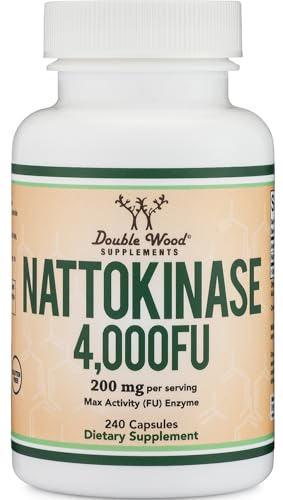
🛒 Where to Buy Nattokinase
- Doctor’s Best Nattokinase 2,000 FULab-tested / studied
capsules, 100 mg NSK-SD per vcap (2,000 FU) — Most widely referenced brand in clinical and integrative medicine contexts; uses Japan Bio Science Laboratory NSK-SD ingredient; vegetarian capsules; 90 count - NOW Foods Nattokinase 100 mg
capsules, 100 mg per vcap (2,000 FU) — Mainstream GMP-certified brand; affordable entry-level option; 90 vcaps; widely available - Source Naturals Nattokinase 100 mg
capsules, 100 mg per tablet (2,000 FU) — Long-established supplement brand; competitive pricing at 60 tablets; good for budget-conscious buyers familiar with the brand - Healthy Origins Nattokinase 2,000 FU
capsules, 100 mg per vcap (2,000 FU) — Best cost-per-serving option on Amazon; 180 vcap bottle; uses NSK-SD ingredient; popular bulk buy for long-term users
As an Amazon Associate we earn from qualifying purchases. Nattokinase is sold on an enzymatic activity claim, and independent testing has repeatedly found bottles delivering well under their labelled potency. Check that the label states fibrinolytic units (FU) per capsule rather than milligrams alone, and prefer a brand that will supply a batch-specific certificate of analysis showing the measured FU result for that lot, since GMP certification alone does not verify it.

A Note on the Evidence
The evidence supporting nattokinase specifically for DVT prevention is preliminary and derived largely from small studies and one combination-product trial; it is not sufficient to support clinical recommendations. Anyone with a clotting disorder, anyone taking anticoagulant or antiplatelet medications, and anyone scheduled for surgery should consult a physician before using nattokinase.

Frequently Asked Questions
Has nattokinase been tested in a human DVT trial?
Yes, the LONFLIT-FLITE randomized controlled trial examined venous thrombosis prevention in long-haul flight passengers and reported reduced DVT incidence in the supplemented group [1]. However, the product tested combined nattokinase with pycnogenol, so the results cannot be attributed to nattokinase alone. No large-scale standalone nattokinase DVT trial currently exists.
Is nattokinase safe to use?
A real-world observational analysis of patients with vascular diseases found no serious unexpected adverse events in those taking nattokinase, supporting a generally tolerable short-term profile [2]. However, safety has not been established across all populations, particularly those on anticoagulant therapy, and long-term data from large controlled studies is lacking.
Can I take nattokinase if I am on warfarin or aspirin?
No — not without physician supervision. Nattokinase has fibrinolytic and antiplatelet properties that can interact additively with warfarin, aspirin, heparin, clopidogrel, and other anticoagulants or antiplatelets, potentially increasing bleeding risk. Always consult your prescribing physician before combining any supplement with these medications.
How does nattokinase compare to pharmaceutical anticoagulants for DVT?
There is no valid basis for direct comparison. Approved anticoagulants such as rivaroxaban and warfarin have been studied in large, well-controlled trials with DVT incidence as a primary clinical endpoint. Nattokinase has not been studied at that scale, has not been approved by the FDA for DVT, and should not be treated as an equivalent or interchangeable alternative.
Should I stop nattokinase before surgery?
Yes. Due to its fibrinolytic and antiplatelet activity, nattokinase should be discontinued at least one week before any surgical procedure to reduce the risk of perioperative bleeding. Always inform your surgeon and anesthesiologist about all supplements you are taking well in advance of a scheduled procedure.
Can nattokinase treat an existing DVT?
No. Nattokinase is not an approved or established treatment for DVT. If you have or suspect a DVT, you require immediate medical evaluation — imaging and clinical assessment are needed to determine the extent of the clot and the appropriate treatment. Relying on supplements instead of seeking care for an active DVT creates serious risk of pulmonary embolism.
References
- Cesarone MR et al. Prevention of venous thrombosis in long-haul flights with Flite Tabs: the LONFLIT-FLITE randomized, controlled trial. Angiology (2003). PMID 14565628
- Gallelli G et al. Data Recorded in Real Life Support the Safety of Nattokinase in Patients with Vascular Diseases. Nutrients (2021). PMID 34199189
These statements have not been evaluated by the Food and Drug Administration. This information is not intended to diagnose, treat, cure, or prevent any disease. Content is for informational purposes only and is not medical advice; consult a qualified healthcare provider before starting any supplement. As an Amazon Associate we earn from qualifying purchases.
