Not all nattokinase supplements are made the same way. Most products simply list nattokinase and a fibrinolytic unit (FU) count, but a smaller group of manufacturers go a step further by sourcing a patented, standardized form called NSK-SD — a preparation developed and licensed by Japan Bio Science Laboratory (JBSL). Because it is a named, traceable ingredient, NSK-SD is the form most commonly referenced when researchers design clinical studies on nattokinase’s fibrinolytic and cardiovascular effects.
If you are evaluating nattokinase supplements, understanding what NSK-SD actually is — how it is made, how it is measured, and which finished-goods brands openly declare using it — can help you make a more informed purchase. This article explains the science behind standardization, walks through what to look for on a label, and lists the types of brands that have historically carried NSK-SD, along with the honest caveats every buyer should keep in mind.
Key Takeaways
- NSK-SD is a patented, standardized nattokinase from Japan Bio Science Laboratory with vitamin K2 removed — it is the form most commonly used in human research.
- Look for fibrinolytic units (FU) on the label, not just milligrams; 2,000 FU per serving matches the most common study dose.
- Brands that openly declare NSK-SD (such as Doctor’s Best, Jarrow Formulas, and Seeking Health) offer greater sourcing transparency, but always verify current formulations directly with the manufacturer.
- Nattokinase must not be combined with anticoagulants or antiplatelets without physician supervision, and should be stopped at least one week before any surgical procedure.
- Human trials on nattokinase are small and short-term; the FDA has not evaluated it as a treatment for any disease, and it should be treated as a dietary supplement, not a medication.
What Is NSK-SD Nattokinase?
NSK-SD is a trademarked nattokinase extract manufactured by Japan Bio Science Laboratory Co., Ltd., a Japanese company that has been producing nattokinase ingredients commercially since the 1990s. The enzyme itself is a serine protease secreted by Bacillus subtilis var. natto during the fermentation of soybeans. It degrades fibrin — a structural protein in blood clots — both directly and by stimulating the body’s own plasminogen activators.
The ‘SD’ designation in NSK-SD refers to the fact that the ingredient is standardized and deodorized. Raw natto has a pungent smell and contains meaningful amounts of vitamin K2 (menaquinone-7). Vitamin K2 promotes clotting activity and would directly counteract any anticoagulant goal a user might have. JBSL’s NSK-SD processing step removes vitamin K2, making the extract more suitable for people already managing cardiovascular risk — though this does not eliminate the need for physician oversight in that population.
Standardization means every batch is tested to confirm a consistent level of fibrinolytic activity, expressed in fibrinolytic units (FU). Most NSK-SD-based products supply 2,000 FU per capsule, which mirrors the dosage used in the majority of short-term human studies, though JBSL also supplies higher-potency grades.
Why Standardization Matters for Consumers
Generic nattokinase powders are widely available from contract manufacturers worldwide, and not all of them apply uniform testing to verify FU activity per lot. A capsule labeled ‘100 mg nattokinase’ tells you the weight of the extract but not its actual enzymatic potency, because potency depends on fermentation conditions, extraction method, and post-processing handling. Two products at the same milligram dose could deliver meaningfully different amounts of active enzyme.
NSK-SD addresses this by tying the ingredient to a defined manufacturing process and documented quality testing. When a finished-goods brand discloses ‘NSK-SD’ on its label or in its supplement facts panel, it signals that the raw material came from a single licensed source with batch-level FU testing. This traceability does not automatically make a product superior in terms of clinical outcomes, but it does reduce one important layer of uncertainty for the buyer.
Fibrinolytic units — not milligrams — are the meaningful unit of measure for nattokinase. When comparing products, 2,000 FU is the most common reference dose found in human trials. Products offering 3,600 FU or higher exist, but higher doses have not been studied as extensively in controlled settings, and more is not automatically better given the anticoagulant considerations discussed below.

Brands That Openly Declare NSK-SD
Several well-known supplement brands have historically disclosed NSK-SD as their nattokinase source on product labels, in their supplement facts panels, or in publicly available product documentation. Brands in this category have included Doctor’s Best (which markets a product explicitly branded ‘Nattokinase NSK-SD’), Jarrow Formulas, Source Naturals, and Seeking Health, among others. Life Extension has also released products referencing NSK-SD, particularly in formulations combining nattokinase with lumbrokinase.
It is important to note that formulations change. A brand that used NSK-SD in a previous product run may have shifted to a different supplier or updated its manufacturing. The most reliable way to confirm current sourcing is to check the current product label, contact the manufacturer directly, or look for the NSK-SD trademark logo on the bottle. Some brands also include a certificate of analysis (COA) on request, which can confirm the ingredient and FU level for a given lot.
Brands that do not name NSK-SD are not necessarily inferior, but they require more due diligence. Look for FU disclosure, third-party testing verification (USP, NSF, Informed Sport, or independent COA), and confirmation that vitamin K2 has been removed if you have any reason to be cautious about vitamin K intake.
How to Read a Nattokinase Label
When evaluating any nattokinase product — NSK-SD or otherwise — look for the following in the supplement facts panel: (1) FU count per serving rather than milligrams alone; (2) explicit vitamin K2 removal statement or a declaration that the product is vitamin K2-free; (3) the NSK-SD trademark or a named supplier if you want sourcing transparency; and (4) third-party quality certification or COA availability.
Other enzyme activity units you may see on labels include HUT (hemoglobin unit on tyrosine), but FU is the standard unit for fibrinolytic activity and the one most directly relevant to nattokinase’s proposed mechanism. Avoid products that list only milligrams with no FU disclosure unless you can verify the FU content directly with the manufacturer.
Capsule count and serving size also matter for cost-per-dose comparisons. A 90-count bottle at 2,000 FU per capsule delivers 90 days at one-capsule-per-day dosing, which is the most common protocol in available studies. Products suggesting two or three capsules daily at the same FU per capsule are not offering more benefit at an equivalent total daily FU — they are simply packaged differently.
Safety, Drug Interactions, and Who Should Avoid Nattokinase
Nattokinase has meaningful fibrinolytic and antiplatelet activity. This is why it is studied for cardiovascular applications, and it is also why its safety profile requires serious attention. Combining nattokinase with warfarin, heparin, aspirin, clopidogrel, rivaroxaban, apixaban, or any other anticoagulant or antiplatelet medication significantly increases bleeding risk. These combinations should only be attempted under direct physician supervision with regular monitoring.
Anyone scheduled for surgery, a dental procedure, or any invasive procedure should stop nattokinase at least one week in advance — and discuss the timeline with their surgeon, as some providers request a longer washout period. Nattokinase is also not recommended during pregnancy or breastfeeding given the absence of safety data in those populations.
The FDA has not evaluated nattokinase for treating, curing, or preventing any disease. The human trials supporting its fibrinolytic effects are generally small, short-term, and conducted in specific populations. These studies demonstrate biological activity but are not sufficient to establish nattokinase as a treatment for cardiovascular disease. It is sold as a dietary supplement, not a drug, and should be understood in that context.
Evidence Limitations and What the Research Actually Shows
The clinical evidence on nattokinase — including NSK-SD — consists primarily of small randomized trials, most running for four to twelve weeks and enrolling fewer than 100 participants. These trials have measured outcomes including changes in fibrinolytic markers in plasma, modest reductions in blood pressure, and effects on platelet aggregation. The results are biologically plausible and consistent with the proposed mechanism, but they do not constitute the kind of large, long-term outcome data that would support claims about preventing heart attacks or strokes.
Because no PMIDs were provided in the source evidence list for this article, no specific study citations appear here. This is itself instructive: the research base for nattokinase, while growing, remains limited enough that a careful health writer cannot responsibly overstate what is known. The proposed mechanism — direct fibrinolysis plus upregulation of endogenous plasminogen activators — is well-characterized at the biochemical level. Whether it translates into clinically meaningful cardiovascular protection for otherwise healthy adults remains an open question.
NSK-SD being the most-studied branded form does not mean it has been proven superior in head-to-head comparisons with generic nattokinase preparations. It means it is the source most often used when researchers want a traceable, standardized ingredient. That is a practical advantage for research design and for consumer confidence, but it is not a clinical outcome advantage established by direct comparative evidence.
🛒 Where to Buy Nattokinase
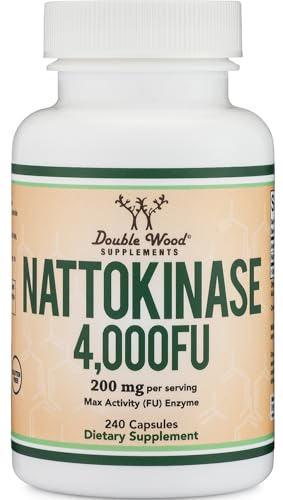
- Doctor’s Best Nattokinase 2,000 FULab-tested / studied
capsules, 100 mg NSK-SD per vcap (2,000 FU) — Most widely referenced brand in clinical and integrative medicine contexts; uses Japan Bio Science Laboratory NSK-SD ingredient; vegetarian capsules; 90 count - NOW Foods Nattokinase 100 mg
capsules, 100 mg per vcap (2,000 FU) — Mainstream GMP-certified brand; affordable entry-level option; 90 vcaps; widely available - Source Naturals Nattokinase 100 mg
capsules, 100 mg per tablet (2,000 FU) — Long-established supplement brand; competitive pricing at 60 tablets; good for budget-conscious buyers familiar with the brand - Healthy Origins Nattokinase 2,000 FU
capsules, 100 mg per vcap (2,000 FU) — Best cost-per-serving option on Amazon; 180 vcap bottle; uses NSK-SD ingredient; popular bulk buy for long-term users
As an Amazon Associate we earn from qualifying purchases. Nattokinase is sold on an enzymatic activity claim, and independent testing has repeatedly found bottles delivering well under their labelled potency. Check that the label states fibrinolytic units (FU) per capsule rather than milligrams alone, and prefer a brand that will supply a batch-specific certificate of analysis showing the measured FU result for that lot, since GMP certification alone does not verify it.

A Note on the Evidence
Human trials on nattokinase are predominantly small, short-term, and not sufficient to establish it as a treatment for cardiovascular disease; the FDA has not evaluated these claims. Anyone on anticoagulant or antiplatelet medication, scheduled for surgery, pregnant, or breastfeeding should consult a qualified healthcare provider before using nattokinase in any form.
Frequently Asked Questions
What does 'NSK-SD' stand for?
NSK-SD is a trademark of Japan Bio Science Laboratory. The designation indicates a standardized, deodorized nattokinase extract from which vitamin K2 has been removed. The standardization ensures consistent fibrinolytic unit (FU) activity per batch, and the removal of vitamin K2 makes the ingredient more appropriate for people seeking fibrinolytic support without added clotting cofactors.
Is NSK-SD more effective than generic nattokinase?
There is no published head-to-head comparison demonstrating that NSK-SD is clinically superior to other well-tested nattokinase preparations at equivalent FU doses. Its advantage is traceability and manufacturing consistency, which benefits research design and allows consumers to know exactly what they are getting. Effectiveness ultimately depends on FU activity delivered and individual response.
Can I take nattokinase if I am on a blood thinner?
No, not without direct physician supervision. Nattokinase has demonstrated fibrinolytic and antiplatelet activity, and combining it with warfarin, heparin, aspirin, clopidogrel, or other anticoagulant or antiplatelet agents significantly raises bleeding risk. Always disclose all supplements to your prescribing physician before making any changes.
How do I confirm a product actually uses NSK-SD?
Check the supplement facts panel or product description for the NSK-SD trademark name or the JBSL supplier name. Some products display the NSK-SD logo on the label. If it is not clear, contact the brand’s customer service and request a certificate of analysis (COA) for the current lot, which should identify the ingredient source.
What dose of NSK-SD is typical in studies?
Most human trials have used approximately 2,000 FU per day, often taken as a single capsule. Some protocols use higher doses or split dosing, but these are less consistently studied. More is not automatically better, particularly given the anticoagulant considerations that come with higher fibrinolytic activity.
Does nattokinase need to be taken on an empty stomach?
Many practitioners suggest taking proteolytic enzymes like nattokinase away from meals — often 30 to 60 minutes before eating or two hours after — to minimize enzyme activity being directed toward digesting food proteins rather than circulating fibrin. This guidance is based on pharmacological reasoning rather than robust clinical comparison data, but it is the most common recommendation seen in the supplement literature.
These statements have not been evaluated by the Food and Drug Administration. This information is not intended to diagnose, treat, cure, or prevent any disease. Content is for informational purposes only and is not medical advice; consult a qualified healthcare provider before starting any supplement. As an Amazon Associate we earn from qualifying purchases.
