Nattokinase is a serine protease enzyme derived from natto, a traditional Japanese food produced by fermenting soybeans with Bacillus subtilis. It has attracted genuine scientific interest for its ability to directly degrade fibrin — the structural protein of blood clots — and to upregulate the body’s own plasminogen activators, the enzymes responsible for dissolving clots. Small randomized trials have also reported modest reductions in blood pressure in some participants, and laboratory studies point to antiplatelet activity alongside fibrinolysis.
Those same properties make nattokinase a meaningful concern when taken alongside pharmaceutical anticoagulants or antiplatelet drugs such as warfarin, aspirin, clopidogrel, or heparin. Stacking a supplement with measurable blood-thinning activity on top of medications that already suppress clot formation can amplify risk in ways that are difficult to predict and harder to monitor. This article explains the proposed mechanisms behind that risk, the specific drug classes involved, and what anyone considering this combination should discuss with their physician.
Key Takeaways
- Nattokinase is a fibrinolytic serine protease that directly degrades fibrin and upregulates the body’s own clot-dissolving enzymes, giving it meaningful blood-thinning activity across multiple pathways.
- Combining nattokinase with aspirin or other antiplatelet drugs creates additive or synergistic platelet inhibition that can significantly increase bleeding risk in ways that are difficult to predict.
- Combining nattokinase with warfarin, heparin, or direct oral anticoagulants layers fibrinolytic activity on top of existing anticoagulation and may not be fully captured by standard monitoring such as INR.
- Nattokinase should be discontinued at least one week before any surgical or invasive procedure; there is no established reversal agent for its fibrinolytic effects.
- The FDA has not approved nattokinase for any medical indication, the human evidence base is limited to small short-term trials, and anyone on blood-thinning therapy should consult their physician before using it.
How Nattokinase Acts on the Blood Clotting System
Nattokinase belongs to the serine protease family — enzymes that cleave other proteins at specific peptide bonds. Research characterizing fibrinolytic serine proteases from biological sources has established that enzymes in this class can directly degrade fibrin and simultaneously influence endogenous clot-dissolving pathways [1]. Nattokinase works through both mechanisms: it cleaves fibrin strands directly and has been reported in laboratory studies to upregulate tissue-type plasminogen activator (t-PA) and urokinase-type plasminogen activator (u-PA), the body’s primary fibrinolytic enzymes.
Beyond fibrinolysis, nattokinase has been reported in laboratory and small human studies to reduce platelet aggregation — the tendency of platelets to clump together at the initial stage of clot formation. This antiplatelet activity is the biological overlap with drugs like aspirin and clopidogrel. Because nattokinase touches multiple components of hemostasis simultaneously — both the fibrin removal pathway and the platelet activation pathway — its combination with existing blood-thinning medications introduces compounding, unpredictable effects.
The Aspirin Interaction: Why It Matters
Aspirin inhibits cyclooxygenase (COX) enzymes, reducing the production of thromboxane A2, a chemical that normally promotes platelet activation and aggregation. Low-dose aspirin (commonly 81 mg daily) is widely prescribed for secondary prevention of heart attack and stroke. When nattokinase’s reported antiplatelet properties are layered on top of aspirin’s COX inhibition, both agents are simultaneously reducing the blood’s ability to initiate clot formation through the platelet pathway.
This dual platelet suppression does not simply double a predictable effect. Synergistic inhibition can make it significantly harder to stop bleeding from a minor gastrointestinal irritation, a cut, or a more serious internal event. People on low-dose aspirin for cardiac conditions are maintained at a physician-calibrated balance between clot prevention and bleeding risk; adding nattokinase without medical oversight disrupts that balance in ways neither the patient nor the prescribing clinician can easily track.


There are no large controlled trials specifically examining the nattokinase-aspirin combination in humans, so the exact magnitude of any interaction cannot be quantified with confidence. The caution against combining them rests on well-characterized mechanisms of both agents and the established clinical principle that additive or synergistic antiplatelet effects increase the likelihood of clinically significant bleeding.
Interactions with Warfarin and Other Anticoagulants
Warfarin inhibits vitamin K–dependent clotting factors (II, VII, IX, and X) in the coagulation cascade, and patients taking it require regular INR monitoring to remain within a narrow therapeutic window. Nattokinase acts through fibrinolysis and antiplatelet mechanisms rather than by targeting clotting factors directly. This means the combination could increase effective anticoagulation beyond what INR testing alone would detect, creating a monitoring blind spot that makes the combination particularly hazardous.
Heparin and low-molecular-weight heparins (such as enoxaparin) activate antithrombin, which then inhibits thrombin and other coagulation factors. Adding a fibrinolytic enzyme on top of heparin compounds the anticoagulant effect through a parallel mechanism. The risk of serious bleeding events — including gastrointestinal hemorrhage or intracranial hemorrhage — becomes meaningfully elevated in this setting.
Direct oral anticoagulants (DOACs) such as rivaroxaban, apixaban, and dabigatran are increasingly prescribed alternatives to warfarin. Specific interaction data between DOACs and nattokinase is sparse, but the underlying logic is identical: DOACs already substantially impair coagulation, and layering a fibrinolytic supplement introduces further uncharacterized and unmonitored risk.
Antiplatelet Drugs Beyond Aspirin: Clopidogrel and P2Y12 Inhibitors
Clopidogrel (Plavix), ticagrelor, and prasugrel block platelet activation through the ADP receptor (P2Y12) pathway — distinct from aspirin’s COX mechanism. Many patients with coronary stents or recent acute coronary syndromes are maintained on dual antiplatelet therapy: aspirin plus a P2Y12 inhibitor simultaneously. This regimen is carefully calibrated to prevent stent thrombosis while managing bleeding risk. Adding nattokinase with its reported antiplatelet activity to this already-intensive regimen represents a third, uncontrolled layer of platelet inhibition.
Even for patients on a single antiplatelet drug, combining it with nattokinase is unsupported by clinical evidence demonstrating acceptable safety. In the absence of data showing a net benefit over the established pharmaceutical regimen, the prudent approach is to avoid the combination unless a physician with full knowledge of the patient’s medication list and cardiovascular history explicitly advises otherwise.
Surgical and Procedural Considerations
Any supplement with fibrinolytic or antiplatelet activity requires discontinuation before elective surgery. The standard recommendation applied to nattokinase is to stop it at least one week prior to any surgical or invasive procedure — including minor interventions such as dental extractions, colonoscopy with polypectomy, or dermatological procedures. Surgeons and anesthesiologists managing perioperative bleeding risk need accurate information about all supplements a patient is taking. Nattokinase is frequently omitted from medication lists because patients do not consider it a drug.

If an emergency procedure is required while a patient has been taking nattokinase, the clinical team should be informed immediately. Unlike some anticoagulants, there is currently no established pharmacological reversal agent for nattokinase’s fibrinolytic effects, which makes preoperative discontinuation especially important rather than something that can be managed at the last moment.
Who Should Be Most Cautious
Several populations face elevated risk and should not use nattokinase without explicit physician guidance. Anyone currently prescribed an anticoagulant (warfarin, heparin, enoxaparin, or a DOAC) or antiplatelet drug (aspirin, clopidogrel, ticagrelor, prasugrel) is at the top of this list. Individuals with a personal or family history of bleeding disorders, prior hemorrhagic stroke, gastrointestinal bleeding, peptic ulcer disease, or thrombocytopenia (low platelet counts) also belong in this high-caution group.
Pregnant individuals and those with significant liver or kidney disease should avoid nattokinase until clearer safety data are available. Pediatric use is not supported by any current evidence. In all of these situations, the absence of documented harm is not equivalent to established safety, and a conservative approach is appropriate.
The FDA has not evaluated nattokinase for treating, curing, or preventing any disease. The human clinical trials that do exist are small in sample size and short in duration. Long-term safety data — including the frequency of rare adverse events such as serious bleeding — have not been adequately characterized in the literature available to date.
🛒 Where to Buy Nattokinase
- Doctor’s Best Nattokinase 2,000 FULab-tested / studied
capsules, 100 mg NSK-SD per vcap (2,000 FU) — Most widely referenced brand in clinical and integrative medicine contexts; uses Japan Bio Science Laboratory NSK-SD ingredient; vegetarian capsules; 90 count - NOW Foods Nattokinase 100 mg
capsules, 100 mg per vcap (2,000 FU) — Mainstream GMP-certified brand; affordable entry-level option; 90 vcaps; widely available - Source Naturals Nattokinase 100 mg
capsules, 100 mg per tablet (2,000 FU) — Long-established supplement brand; competitive pricing at 60 tablets; good for budget-conscious buyers familiar with the brand - Healthy Origins Nattokinase 2,000 FU
capsules, 100 mg per vcap (2,000 FU) — Best cost-per-serving option on Amazon; 180 vcap bottle; uses NSK-SD ingredient; popular bulk buy for long-term users
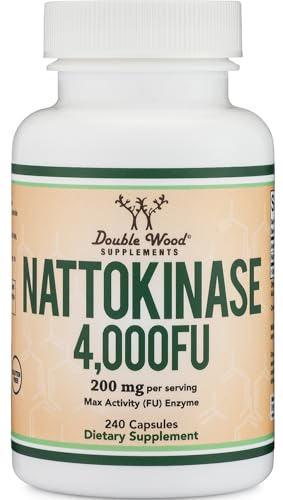
As an Amazon Associate we earn from qualifying purchases. Nattokinase is sold on an enzymatic activity claim, and independent testing has repeatedly found bottles delivering well under their labelled potency. Check that the label states fibrinolytic units (FU) per capsule rather than milligrams alone, and prefer a brand that will supply a batch-specific certificate of analysis showing the measured FU result for that lot, since GMP certification alone does not verify it.
A Note on the Evidence
The human evidence for nattokinase consists primarily of small, short-term trials, and no large controlled studies have specifically examined the safety of combining it with anticoagulant or antiplatelet drugs; the interaction risks described here are based on known mechanisms, not comprehensive clinical outcome data. Anyone currently taking warfarin, aspirin, heparin, clopidogrel, or any other blood-thinning medication should consult their physician before using nattokinase — this article is informational only and does not constitute medical advice.

Frequently Asked Questions
Can I take nattokinase if I am already on low-dose aspirin?
Taking nattokinase alongside low-dose aspirin is not recommended without physician supervision. Both agents reduce platelet function — aspirin through COX inhibition and nattokinase through reported antiplatelet mechanisms — and the combined effect on bleeding risk has not been studied in adequately sized controlled human trials. Discuss the potential interaction with your prescribing physician before adding nattokinase to your regimen.
Does nattokinase specifically interact with warfarin?
Nattokinase works through fibrinolysis and platelet pathways rather than by suppressing the vitamin K–dependent clotting factors that warfarin targets, which means the combination could increase effective anticoagulation beyond what standard INR monitoring would detect. This monitoring gap makes the warfarin-nattokinase combination particularly difficult to manage safely. Patients on warfarin should not add nattokinase without close medical oversight and frequent monitoring.

Is nattokinase a safe replacement for prescribed blood thinners?
No. Nattokinase is a dietary supplement enzyme with fibrinolytic properties observed in laboratory studies and small human trials; it is not a substitute for pharmaceutical anticoagulants or antiplatelets that have been validated in large, long-term clinical trials with established dosing and reversal protocols. The FDA has not approved nattokinase for any medical indication, and substituting it for a prescribed medication could leave a patient undertreated for a serious cardiovascular condition.
How long before surgery should I stop nattokinase?
The standard recommendation is to discontinue nattokinase at least one week before any elective surgical or invasive procedure, including dental extractions, gastrointestinal endoscopy with biopsy, or dermatological procedures. Always inform your surgeon, dentist, and anesthesiologist about all supplements you take, since nattokinase’s fibrinolytic effects lack a pharmacological reversal agent and cannot easily be counteracted if unexpected bleeding occurs during a procedure.
Can nattokinase be combined with clopidogrel or dual antiplatelet therapy?
Combining nattokinase with clopidogrel, ticagrelor, or prasugrel is not supported by clinical safety data and is inadvisable without explicit physician guidance. Patients on dual antiplatelet therapy after a coronary stent are already maintained at a carefully calibrated level of platelet suppression; adding a supplement with further antiplatelet activity could push bleeding risk beyond the intended therapeutic range and increase the likelihood of serious bleeding events.
What bleeding warning signs should I watch for?
Warning signs that warrant immediate medical attention include unusual or easy bruising, prolonged bleeding from minor cuts, blood in urine or stool, coughing or vomiting blood, sudden severe headache, or new neurological symptoms such as sudden weakness or difficulty speaking. If you experience any of these while taking nattokinase — particularly in combination with any blood-thinning medication — seek emergency medical care and inform all providers about every supplement and drug you are taking.
References
- Gogoi D et al. Characterization of active anticoagulant fraction and a fibrin(ogen)olytic serine protease from leaves of Clerodendrum colebrookianum, a traditional ethno-medicinal plant used to reduce hypertension. Journal of ethnopharmacology (2019). PMID 31326559
These statements have not been evaluated by the Food and Drug Administration. This information is not intended to diagnose, treat, cure, or prevent any disease. Content is for informational purposes only and is not medical advice; consult a qualified healthcare provider before starting any supplement. As an Amazon Associate we earn from qualifying purchases.
