Nattokinase is a serine protease enzyme derived from natto, a traditional Japanese food made by fermenting soybeans with Bacillus subtilis. Unlike many herbal supplements, nattokinase has a well-characterized mechanism: it degrades fibrin directly and upregulates endogenous plasminogen activators, producing fibrinolytic effects measurable in human plasma [1]. Because it is a protein-based enzyme, however, questions about when to take it — specifically whether an empty stomach or a meal-paired dose is better — are more than scheduling preferences. They touch on the basic biochemistry of enzyme survival in the gastrointestinal tract.
This article reviews what published research actually tells us about nattokinase oral delivery, gastric stability, and the practical tradeoffs of timing. It does not constitute medical advice, and the FDA has not evaluated nattokinase for treating, curing, or preventing any disease. If you take anticoagulants, antiplatelets, or are planning surgery, consult a physician before using nattokinase.
Key Takeaways
- Nattokinase is a protein enzyme vulnerable to gastric acid; this makes timing and formulation more relevant than for most supplements.
- Research on encapsulation systems confirms that protecting nattokinase from gastric acid is a recognized scientific priority [2][3].
- For unprotected capsules, taking nattokinase on an empty stomach (30–60 min before eating or 2 hours after) is mechanistically logical, though no direct human head-to-head trial has confirmed superiority over fed dosing.
- Enteric-coated or microencapsulated formulations may reduce the importance of fed-versus-fasted timing since the protective coating bypasses gastric acid regardless.
- Nattokinase carries real anticoagulant risk; it must not be combined with blood-thinning medications without medical supervision and should be stopped at least one week before surgery.
Why Timing Is Especially Relevant for a Protein Enzyme
Most dietary supplements are small molecules that survive the stomach relatively intact. Nattokinase is fundamentally different: it is a 275-amino-acid protein with a molecular weight of roughly 27.7 kDa. Enzymes of this type are vulnerable to gastric acid, which denatures protein structures, and to pepsin, the primary stomach protease that specifically cleaves peptide bonds. If nattokinase is inactivated in the stomach before it can be absorbed in the small intestine, its downstream fibrinolytic activity is diminished or lost entirely.
Research into novel delivery systems underscores how seriously scientists treat this vulnerability. A 2026 study constructed multi-level encapsulation structures in gel beads specifically designed to shield nattokinase from acidic gastric conditions while allowing controlled release in the more neutral intestinal environment, reporting that these systems significantly improved enzyme stability and retained fibrinolytic activity compared to unprotected enzyme [2]. A separate investigation used chitosan and casein to build bilayer shell-core microparticles for oral nattokinase delivery, again with the explicit goal of protecting enzymatic activity through gastric transit [3]. The convergent message from both lines of research is that unprotected nattokinase faces a meaningful stability challenge between the mouth and the small intestine.
What the Foundational Human Study Actually Measured
The most frequently cited human evidence for oral nattokinase activity comes from a 1990 study that administered nattokinase to healthy volunteers and measured plasma fibrinolytic markers, finding enhanced fibrinolytic activity in blood over the following hours [1]. This study is important because it demonstrated that at least some biologically active enzyme — or fibrinolytic activity attributable to it — does survive gastric transit and produce measurable effects. However, the study did not include a head-to-head comparison of empty-stomach versus fed-state dosing, so it cannot directly answer which condition yields higher plasma activity.
A 2026 narrative and systematic review of nattokinase for thrombophilia management notes that the enzyme reaches systemic circulation and exerts fibrinolytic effects after oral dosing, but also acknowledges that absorption and bioavailability data remain limited and that most supportive human trials are small and short-term [4]. This honest assessment of the evidence base is important context: while we know nattokinase can be orally active, the precise pharmacokinetic variables — including the optimal fed vs. fasted state — have not been rigorously characterized in large human studies.

The Case for Taking Nattokinase on an Empty Stomach
The conventional recommendation from many nattokinase manufacturers and integrative practitioners is to take the supplement on an empty stomach, typically 30 to 60 minutes before a meal or at least two hours after one. The logic is straightforward: an empty stomach reduces the volume of food proteins competing with nattokinase for the same digestive enzymes, and gastric emptying time is shorter without a mixed meal, meaning the enzyme spends less time in the acidic gastric environment before reaching the more neutral pH of the duodenum.
The encapsulation research supports this concern indirectly. The chitosan-casein bilayer microparticle system [3] was engineered specifically because unprotected nattokinase loses significant activity under simulated gastric conditions. If a formulation lacks such protection, a shorter gastric residence time — favored by an empty stomach — would plausibly preserve more active enzyme. Similarly, the gel-bead encapsulation study [2] was motivated by the observation that gastric acid exposure is the primary barrier to consistent oral bioavailability. Neither study, however, directly compared human outcomes between fed and fasted dosing; the inference about timing is mechanistic rather than directly empirical.
Considerations When Taking Nattokinase With Food
Some users and practitioners suggest taking nattokinase with a light meal, reasoning that food raises gastric pH transiently — particularly protein- and fat-containing foods that stimulate buffering — and may partially shield the enzyme from the lowest pH values seen in a fasted, highly acidic stomach. There is logic here as well: the fasted stomach can reach pH values below 2, which are highly denaturing, while a meal typically raises gastric pH to 3–5 during active digestion before it returns to baseline.
The counterargument is that a meal also extends the time nattokinase spends in the stomach waiting for gastric emptying, introduces competing dietary proteins that could occupy proteolytic enzymes and potentially cleave nattokinase, and may alter intestinal transit in ways that reduce the absorption window. At present, no published human trial has randomized participants to empty-stomach versus fed-state nattokinase and measured plasma fibrinolytic activity under both conditions. The comparison remains theoretical, grounded in gastrointestinal physiology rather than controlled data.
Formulation Matters as Much as Timing
One underappreciated variable in the timing debate is that not all nattokinase products are equivalent. Standard capsules or tablets deliver unprotected enzyme directly to gastric acid. Enteric-coated or microencapsulated formulations are specifically designed to bypass the stomach and release in the small intestine, theoretically making the fed-versus-fasted timing question less critical for those products — because gastric conditions are circumvented regardless.
The chitosan-casein microparticle research [3] and the fig-gel-bead encapsulation study [2] represent the frontier of this thinking. Both demonstrated that layered encapsulation can protect enzyme activity through simulated gastric conditions and allow controlled intestinal release. If you are using an enteric-coated or nano-encapsulated nattokinase product, the manufacturer’s timing guidance — which may differ from the empty-stomach recommendation appropriate for bare-enzyme capsules — should be followed, since the protective release mechanism may be designed to function optimally under specific conditions.
A 2024 comparative review positioning nattokinase alongside novel oral anticoagulants for cardioprotective purposes noted the importance of bioavailability considerations in translating bench research to clinical use, emphasizing that how nattokinase is formulated and delivered affects how confidently its fibrinolytic activity can be expected in practice [5]. This reinforces that the delivery vehicle is a first-order variable, not a secondary one.
Practical Guidance on Timing and Safety
Given the mechanistic reasoning and the available (though limited) research, the most defensible general guidance for unprotected nattokinase capsules is to take the supplement on an empty stomach — at least 30 minutes before a meal or two hours after one. This minimizes gastric acid exposure time and reduces competition with food proteins. For enteric-coated formulations, follow the product-specific instructions, as the protective coating changes the relevant variables.
Regarding time of day, some practitioners recommend evening dosing based on the idea that coagulation activity and fibrinolytic suppression are higher during overnight rest, though this circadian argument has not been directly tested for nattokinase in controlled human studies. Morning dosing before breakfast is also common and practical. Consistency of timing from day to day matters more than the precise hour, since fibrinolytic effects in the 1990 plasma study were measured over an extended post-dose window [1].
Safety context is non-negotiable. Nattokinase has meaningful anticoagulant and antiplatelet activity and must not be combined with warfarin, heparin, aspirin, clopidogrel, or other blood-thinning medications without physician supervision. It should be discontinued at least one week before any surgical or dental procedure. Antihypertensive effects have been documented in animal models [6], so individuals on blood pressure medication should monitor accordingly. Pregnant women, people with bleeding disorders, and those with recent stroke or hemorrhage should avoid nattokinase unless cleared by a physician.

🛒 Where to Buy Nattokinase
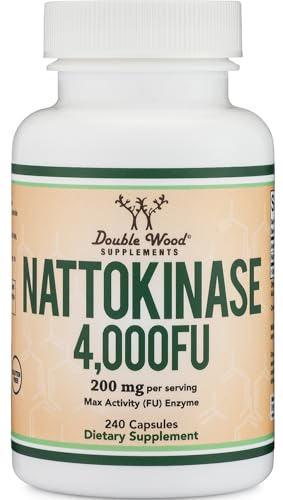
- Doctor’s Best Nattokinase 2,000 FULab-tested / studied
capsules, 100 mg NSK-SD per vcap (2,000 FU) — Most widely referenced brand in clinical and integrative medicine contexts; uses Japan Bio Science Laboratory NSK-SD ingredient; vegetarian capsules; 90 count - NOW Foods Nattokinase 100 mg
capsules, 100 mg per vcap (2,000 FU) — Mainstream GMP-certified brand; affordable entry-level option; 90 vcaps; widely available - Source Naturals Nattokinase 100 mg
capsules, 100 mg per tablet (2,000 FU) — Long-established supplement brand; competitive pricing at 60 tablets; good for budget-conscious buyers familiar with the brand - Healthy Origins Nattokinase 2,000 FU
capsules, 100 mg per vcap (2,000 FU) — Best cost-per-serving option on Amazon; 180 vcap bottle; uses NSK-SD ingredient; popular bulk buy for long-term users
As an Amazon Associate we earn from qualifying purchases. Nattokinase is sold on an enzymatic activity claim, and independent testing has repeatedly found bottles delivering well under their labelled potency. Check that the label states fibrinolytic units (FU) per capsule rather than milligrams alone, and prefer a brand that will supply a batch-specific certificate of analysis showing the measured FU result for that lot, since GMP certification alone does not verify it.
A Note on the Evidence
The human evidence supporting nattokinase is largely from small, short-term trials, and no controlled study has directly compared empty-stomach versus fed-state dosing on plasma fibrinolytic outcomes; all timing guidance here is mechanistically informed, not proven by head-to-head data. Nattokinase has real anticoagulant and antiplatelet activity — anyone taking blood-thinning medications, scheduled for surgery, pregnant, or managing a bleeding disorder should consult a qualified physician before use.
Best Time to Take Nattokinase: The Short Version
Because nattokinase is a protein-based enzyme, the empty-stomach-vs-with-food question comes down to gastric stability, taking it away from food (typically on an empty stomach) is generally favored to reduce competing digestive breakdown before the enzyme reaches systemic circulation. See the full evidence review above for the specifics on timing and gastric survival.
Frequently Asked Questions
Should I take nattokinase on an empty stomach or with food?
For standard unprotected capsules, taking nattokinase on an empty stomach is generally recommended because shorter gastric residence time and less competition from dietary proteins may help preserve enzyme activity before intestinal absorption. Research on protective encapsulation systems confirms that gastric acid is a real threat to nattokinase stability [2]. However, no controlled human trial has directly compared plasma fibrinolytic activity between fasted and fed dosing, so this recommendation is mechanistically informed rather than proven by head-to-head data.

What time of day is best to take nattokinase?
There is no published human trial establishing a clearly superior time of day. Common practice is either morning on an empty stomach before breakfast or evening before bed. The foundational human study measured plasma fibrinolytic activity across several hours after dosing [1], suggesting the enzyme’s effects are not instantaneous, so consistency of daily timing matters more than the specific hour chosen.
Does food destroy nattokinase before it can work?
Gastric acid and proteases pose a demonstrated challenge to nattokinase stability, which is why researchers have developed encapsulation strategies including chitosan-casein bilayer microparticles [3] and multi-level gel-bead structures [2] to protect the enzyme during gastric transit. Food may partially buffer stomach acid, but it also prolongs gastric residence time, so the net effect on unprotected enzyme activity is unclear. Enteric-coated products are specifically designed to bypass gastric degradation.
Can I take nattokinase with my blood pressure medication?
Animal studies have shown antihypertensive effects from continuous oral nattokinase administration [6], which means combining it with prescription antihypertensive drugs could potentially produce additive blood pressure lowering. You should consult your physician before combining nattokinase with any blood pressure medication and monitor blood pressure more closely if you do.
Is it safe to take nattokinase with aspirin or warfarin?
No — not without physician supervision. Nattokinase has meaningful fibrinolytic and antiplatelet activity, and combining it with anticoagulants such as warfarin or heparin, or antiplatelet drugs such as aspirin or clopidogrel, increases bleeding risk. A 2024 comparative review positioned nattokinase in the same anticoagulant space as newer oral anticoagulants, highlighting the clinical significance of this interaction [5]. Always disclose nattokinase use to your prescribing physician.
How strong is the overall evidence for nattokinase's benefits?
The evidence is promising but limited. A 2026 review characterizes nattokinase as a multifunctional enzyme with demonstrated fibrinolytic activity, while also noting that most supportive human trials are small and short-term [4]. The foundational human plasma study from 1990 showed measurable fibrinolytic effects after oral dosing [1], but large randomized controlled trials in humans are lacking. The FDA has not evaluated nattokinase for treating, curing, or preventing any disease.
References
- Sumi H et al. Enhancement of the fibrinolytic activity in plasma by oral administration of nattokinase. Acta haematologica (1990). PMID 2123064
- Cheng Y et al. Enhancing nattokinase stability through synergistic interactions:Construction and mechanism analysis of multi-level encapsulation structures in fig-like gel beads. Food research international (Ottawa, Ont.) (2026). PMID 42116475
- Zhang X et al. Chitosan/casein based microparticles with a bilayer shell-core structure for oral delivery of nattokinase. Food & function (2020). PMID 33232435
- Ma Y et al. Nattokinase: A multifunctional food-derived enzyme for thrombophilia management. Life sciences (2026). PMID 42097398
- Muric M et al. Comparative Cardioprotective Effectiveness: NOACs vs. Nattokinase-Bridging Basic Research to Clinical Findings. Biomolecules (2024). PMID 39199344
- Fujita M et al. Antihypertensive effects of continuous oral administration of nattokinase and its fragments in spontaneously hypertensive rats. Biological & pharmaceutical bulletin (2011). PMID 22040882
These statements have not been evaluated by the Food and Drug Administration. This information is not intended to diagnose, treat, cure, or prevent any disease. Content is for informational purposes only and is not medical advice; consult a qualified healthcare provider before starting any supplement. As an Amazon Associate we earn from qualifying purchases.
