Atherosclerosis—the progressive accumulation of fibrin-rich plaques inside arterial walls—is a leading driver of heart attack and stroke. As interest in adjunctive nutritional strategies grows, nattokinase, a serine protease derived from natto (Bacillus subtilis–fermented soybeans), has attracted clinical research attention for its ability to degrade fibrin directly and upregulate the body’s own plasminogen activators. Unlike many supplement categories where human trial data are largely absent, nattokinase does have a small but peer-reviewed clinical literature in cardiovascular research.
This article focuses specifically on what that research tells us about nattokinase and atherosclerosis endpoints—particularly carotid intima-media thickness (CIMT), a validated surrogate marker of systemic plaque burden, and lipid parameters that contribute to plaque development. We examine the proposed mechanisms, summarize available human trial findings, and are honest about the substantial gaps that remain before any clinical recommendations can be made. This is informational content only and does not constitute medical advice.
Key Takeaways
- Nattokinase is a fibrin-degrading serine protease with proposed relevance to atherosclerosis through direct fibrinolysis, PAI-1 downregulation, and possible lipid-modulating effects.
- An uncontrolled clinical study in 1,062 participants did report favorable changes in atherosclerosis markers and lipid parameters, but only at 10,800 FU/day; the same study found 3,600 FU/day ineffective, and most retail capsules supply far less than either dose [1].
- The only randomized, double-blind, placebo-controlled trial to test this directly, in 265 participants taking 2,000 FU daily for a median of three years, found no significant difference from placebo in carotid intima-media thickness, carotid arterial stiffness, blood pressure or any laboratory measure [2].
- The evidence is early-stage; no large outcomes trials have demonstrated that nattokinase reduces clinical cardiovascular events such as heart attack or stroke.
- Nattokinase must not be combined with anticoagulants or antiplatelet drugs without physician oversight, and should be stopped at least one week before surgery.
What Is Atherosclerosis and Why Fibrinolysis Matters
Atherosclerosis begins with endothelial injury, followed by lipid deposition and the recruitment of inflammatory cells into the arterial intima. Over time, fibrin strands stabilize the growing lesion, trapping lipids, cellular debris, and calcium into a hardened plaque. The thickness of the carotid artery wall—measured as intima-media thickness, or CIMT—is used clinically and in research as a non-invasive proxy for systemic plaque burden; higher CIMT correlates with increased cardiovascular risk.
Fibrin is not merely a bystander in plaque biology. It contributes to lesion stability, inflammatory signaling, and the risk of thrombus formation when a vulnerable plaque ruptures. Agents that support fibrinolysis—the enzymatic breakdown of fibrin—therefore represent a theoretically plausible complement to lipid-lowering strategies in the management of atherosclerosis. Nattokinase’s direct fibrinolytic activity and its capacity to stimulate endogenous tissue plasminogen activator (tPA) production are the mechanistic foundations underlying its investigation in this context.
How Nattokinase Works: Proposed Mechanisms Relevant to Plaque
Nattokinase is classified as a subtilisin-like serine protease. In laboratory and human plasma studies, it cleaves fibrin directly—a property that distinguishes it from most other dietary supplements. It also appears to downregulate plasminogen activator inhibitor-1 (PAI-1), thereby amplifying the activity of the body’s own fibrinolytic system. Together, these actions promote the dissolution of fibrin-rich thrombi and, theoretically, the fibrin component of atherosclerotic plaques.
Beyond fibrinolysis, research has explored whether nattokinase influences lipid metabolism. Elevated LDL cholesterol and triglycerides are foundational drivers of plaque formation, so any agent with both fibrinolytic and lipid-modulating properties would be of particular interest. One large clinical investigation found that nattokinase supplementation was associated with improvements in lipid profiles alongside reductions in atherosclerosis progression markers [1], though it is important to understand the scope and design of that study before drawing conclusions.

It is worth noting that the precise intracellular and systemic signaling pathways by which nattokinase might slow or regress established plaque remain incompletely characterized. Most proposed mechanisms are plausible extrapolations from its known enzymatic activity rather than fully elucidated causal chains confirmed in large prospective trials.

The 1,062-Participant Clinical Study: Atherosclerosis and Lipid Findings
One of the largest human investigations of nattokinase in this context enrolled 1,062 participants and examined its effects on atherosclerosis progression and hyperlipidemia [1]. The scale of this study is notable within the nattokinase literature, which is generally characterized by small, short-duration trials. The investigation was published in Frontiers in Cardiovascular Medicine in 2022.
The study reported findings on both atherosclerosis-related markers and lipid parameters, suggesting that nattokinase supplementation was associated with favorable changes in measures relevant to plaque burden and lipid metabolism [1]. Because we are committed to not overstating findings, readers should access the full publication to review the effect sizes, control conditions, and participant characteristics before forming conclusions. What can be said is that this represents meaningful clinical signal worthy of further investigation in larger, independently replicated, placebo-controlled trials.
The study’s breadth across a relatively large participant pool lends it more weight than the typical small-n pilot trial. However, a single study—however well-conducted—does not establish clinical efficacy, and the authors themselves would not claim that nattokinase treats or prevents atherosclerosis as a disease.
The Randomized Controlled Trial: Atherothrombotic Prevention
A randomized controlled trial published in Clinical Hemorheology and Microcirculation in 2021 examined nattokinase specifically in the context of atherothrombotic prevention [2]. It is the largest and longest trial run on this supplement: 265 participants with no clinical cardiovascular disease, median age 65, randomized to 2,000 FU of nattokinase or matching placebo and followed for a median of three years. Because randomized controlled trials occupy a higher rung on the evidence hierarchy than observational studies or uncontrolled case series, this is the most informative evidence available on the question this page asks.
It was negative. The annualized rate of change in carotid intima-media thickness and in carotid arterial stiffness did not differ significantly between the nattokinase and placebo groups, and the trial reported no significant effect on blood pressure or on any laboratory measure it tracked, including its coagulation, fibrinolysis and inflammatory markers. The authors describe the result as a null effect on subclinical atherosclerosis progression [2].
The trial’s focus on atherothrombosis—the process by which plaque rupture and subsequent thrombus formation cause acute cardiovascular events—aligns directly with nattokinase’s proposed fibrinolytic mechanism. Platelet aggregation, coagulation cascade activation, and fibrin deposition all converge at the moment of plaque rupture, and an agent with antiplatelet and fibrinolytic properties would theoretically influence this process [2].
The honest way to hold these two studies together is by dose and by design. The positive CIMT and plaque findings come from an uncontrolled study at 10,800 FU/day [1], and that same study found 3,600 FU/day did nothing. The null findings come from a placebo-controlled trial at 2,000 FU/day [2], a dose closer to what most retail products actually contain. Those results are not necessarily in conflict, but the reading they support is narrow: at the doses commonly sold, three years of supplementation did not measurably slow atherosclerosis in people who did not already have cardiovascular disease. Anyone citing the 1,062-participant figure as evidence for a 2,000 FU capsule is stretching it well past what either study shows.
Carotid Intima-Media Thickness as a Research Endpoint
CIMT is widely used in cardiovascular research because it can be measured non-invasively by ultrasound and correlates with the presence and extent of systemic atherosclerosis. A reduction in CIMT over time has been used in trials of statins and other interventions as evidence of plaque stabilization or regression. It is therefore a meaningful endpoint in nattokinase atherosclerosis research.

When the available trials examine atherosclerosis markers, CIMT and related carotid plaque assessments provide a more direct window into arterial wall biology than lipid panels alone. Lipid reductions are meaningful as a downstream risk-modifier, but changes in actual plaque burden—as reflected in CIMT—speak more directly to the question of whether nattokinase influences the arterial wall itself. The clinical literature referenced here includes such structural assessments [1], though again, the precise magnitude and clinical interpretation of these changes should be evaluated in the primary literature.
It is also important to acknowledge that CIMT, while validated, is a surrogate marker. Reductions in CIMT do not automatically translate into reductions in clinical events such as myocardial infarction or stroke unless demonstrated in long-term outcomes trials—a standard that nattokinase has not yet been tested against.
Safety, Drug Interactions, and Who Should Exercise Caution
Nattokinase’s fibrinolytic and antiplatelet activity is precisely what makes it pharmacologically interesting—and precisely what makes certain combinations hazardous. Anyone taking warfarin, heparin, aspirin at antiplatelet doses, clopidogrel, apixaban, rivaroxaban, or any other anticoagulant or antiplatelet medication must not add nattokinase without explicit physician supervision. The combined effect on coagulation could substantially increase bleeding risk, including serious internal bleeding.
Nattokinase should be discontinued at least one week before any surgical or invasive procedure for the same reason. Because soy proteins are present in natto-derived products, individuals with soy allergy should exercise caution or avoid nattokinase entirely. Pregnant or breastfeeding individuals and those with active bleeding disorders should not use nattokinase without medical guidance.
The FDA has not evaluated nattokinase for treating, curing, or preventing any disease. Nattokinase supplements are regulated as dietary supplements in the United States, meaning pre-market efficacy and safety review by the FDA is not required. Choosing products from manufacturers with third-party quality testing and transparent fibrinolytic unit (FU) dosing disclosure is advisable.
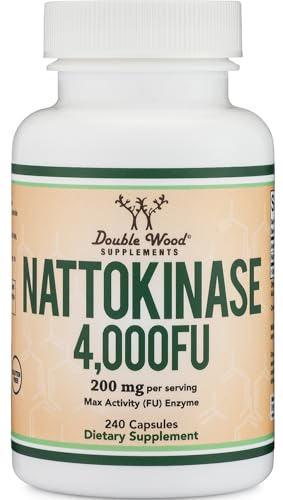
🛒 Where to Buy Nattokinase
- Doctor’s Best Nattokinase 2,000 FULab-tested / studied
capsules, 100 mg NSK-SD per vcap (2,000 FU) — Most widely referenced brand in clinical and integrative medicine contexts; uses Japan Bio Science Laboratory NSK-SD ingredient; vegetarian capsules; 90 count - NOW Foods Nattokinase 100 mg
capsules, 100 mg per vcap (2,000 FU) — Mainstream GMP-certified brand; affordable entry-level option; 90 vcaps; widely available - Source Naturals Nattokinase 100 mg
capsules, 100 mg per tablet (2,000 FU) — Long-established supplement brand; competitive pricing at 60 tablets; good for budget-conscious buyers familiar with the brand - Healthy Origins Nattokinase 2,000 FU
capsules, 100 mg per vcap (2,000 FU) — Best cost-per-serving option on Amazon; 180 vcap bottle; uses NSK-SD ingredient; popular bulk buy for long-term users
As an Amazon Associate we earn from qualifying purchases. Nattokinase is sold on an enzymatic activity claim, and independent testing has repeatedly found bottles delivering well under their labelled potency. Check that the label states fibrinolytic units (FU) per capsule rather than milligrams alone, and prefer a brand that will supply a batch-specific certificate of analysis showing the measured FU result for that lot, since GMP certification alone does not verify it.

A Note on the Evidence
The human trial evidence on nattokinase and atherosclerosis is preliminary, consisting of small and short-term studies that have not yet been replicated at the scale required to establish clinical recommendations; results should not be interpreted as proof that nattokinase treats or reverses heart disease. Anyone with cardiovascular disease, taking blood-thinning medications, or planning surgery must consult a qualified healthcare provider before using nattokinase.
Frequently Asked Questions
What does nattokinase do to arterial plaques?
Nattokinase degrades fibrin—a structural component of atherosclerotic plaques—directly and also stimulates the body’s own plasminogen activators. A clinical study in over a thousand participants found associations between nattokinase use and changes in atherosclerosis markers [1], but whether this translates to meaningful plaque regression in humans over the long term remains under investigation.

What is CIMT and why does it matter for nattokinase research?
Carotid intima-media thickness (CIMT) is an ultrasound measurement of arterial wall thickness used as a non-invasive surrogate for systemic plaque burden. It is a recognized research endpoint in cardiovascular trials. Some nattokinase clinical studies have included CIMT-related assessments as outcome measures [1], providing a more direct measure of arterial wall changes than lipid panels alone.
Is there a randomized controlled trial on nattokinase and atherosclerosis?
Yes. A randomized controlled trial published in Clinical Hemorheology and Microcirculation investigated nattokinase in atherothrombotic prevention [2]. RCTs sit higher on the evidence hierarchy than observational studies. However, this and other nattokinase trials remain small and short-term relative to the large outcomes trials that define standard cardiovascular care.
Can nattokinase replace statins or other cardiovascular medications?
No. Nattokinase is a dietary supplement and has not been approved by the FDA to treat, cure, or prevent any disease. It should not replace prescribed cardiovascular medications. Anyone considering nattokinase alongside existing cardiovascular treatment should discuss it with their physician first.
Who should absolutely avoid nattokinase?
Anyone on anticoagulants (warfarin, heparin, apixaban, rivaroxaban) or antiplatelet drugs (aspirin at antiplatelet doses, clopidogrel) should not take nattokinase without direct physician supervision due to the risk of serious bleeding. It should also be avoided by people with active bleeding disorders, soy allergy, and pregnant or breastfeeding individuals, and discontinued at least one week before surgery.
How strong is the overall evidence for nattokinase in atherosclerosis?
The evidence is preliminary but not trivial. A large clinical study of 1,062 participants [1] and a randomized controlled trial [2] provide human-trial data that most supplements in this category lack. However, the trials are short-term, and no large long-term outcomes trial has established that nattokinase reduces clinical cardiovascular events. Independent replication in larger studies is needed before strong clinical conclusions can be drawn.
References
- Chen H et al. Effective management of atherosclerosis progress and hyperlipidemia with nattokinase: A clinical study with 1,062 participants. Frontiers in cardiovascular medicine (2022). PMID 36072877
- Hodis HN et al. Nattokinase atherothrombotic prevention study: A randomized controlled trial. Clinical hemorheology and microcirculation (2021). PMID 33843667
These statements have not been evaluated by the Food and Drug Administration. This information is not intended to diagnose, treat, cure, or prevent any disease. Content is for informational purposes only and is not medical advice; consult a qualified healthcare provider before starting any supplement. As an Amazon Associate we earn from qualifying purchases.
