Nattokinase is a serine protease enzyme isolated from natto, a traditional Japanese food made from Bacillus subtilis–fermented soybeans. Best known for its fibrinolytic properties in cardiovascular research, nattokinase directly degrades fibrin and upregulates endogenous plasminogen activators. More recently, researchers have begun investigating whether that same proteolytic activity might extend to amyloid-beta (Aβ), the misfolded protein that accumulates in plaques throughout the brains of people with Alzheimer’s disease.
The research is genuinely early-stage. Every study cited here was conducted in cell cultures or animal models; no published human clinical trial has tested nattokinase specifically for Alzheimer’s prevention or treatment. That distinction matters enormously before drawing any practical conclusions. What the existing data does provide is a mechanistic rationale worth examining — along with clear reasons to remain cautious about how far those findings can be extrapolated.
Key Takeaways
- Nattokinase demonstrated direct amyloid fibril-degrading activity in a cell-free laboratory system [1], providing a biochemical rationale for further investigation.
- Multiple animal studies have reported changes in Alzheimer’s-relevant endpoints — including neuroinflammation, BDNF signaling disruption, and neuropsychiatric markers — following nattokinase treatment [2][3].
- A nanoparticle delivery system was developed specifically to help nattokinase cross the blood-brain barrier, highlighting that systemic oral delivery may face significant physiological obstacles [4].
- All current evidence comes from in vitro assays or animal models; no human clinical trials on nattokinase for Alzheimer’s disease have been published.
- Nattokinase carries real drug-interaction risks — including with warfarin, aspirin, clopidogrel, and other anticoagulants — and should never be used without physician oversight in people on these medications.
The Amyloid Hypothesis and Why Fibrinolytic Enzymes Are Being Studied
The amyloid cascade hypothesis holds that abnormal accumulation of Aβ peptides — particularly Aβ(1-40) and Aβ(1-42) — in the brain initiates a series of toxic events including neuroinflammation, synaptic dysfunction, and eventual neuronal death. Aβ plaques are structurally stabilized by cross-linked fibrils that resist ordinary protein degradation machinery. This structural similarity to fibrin clots led investigators to ask whether enzymes that dissolve fibrin might also dismantle amyloid fibrils.
Nattokinase is not the only fibrinolytic enzyme under investigation for this purpose. Related enzymes such as lumbrokinase and serratiopeptidase have also been studied for their ability to degrade Aβ(1-42) peptide in vitro and through computational modeling [5]. The convergent interest across this enzyme class suggests the proteolytic mechanism itself — rather than any one compound — may be driving the hypothesis.
Direct Amyloid-Degrading Activity: The In Vitro Foundation
The biochemical basis for this line of research was established in a 2009 study published in the Journal of Agricultural and Food Chemistry, which directly measured nattokinase’s amyloid-degrading ability using Aβ fibrils derived from Bacillus subtilis natto [1]. The study demonstrated that nattokinase could degrade amyloid fibrils in a cell-free system, establishing proof of principle that the enzyme’s proteolytic activity extends beyond its primary fibrin substrate to amyloid structures.

This foundational finding matters because it separates a pharmacological question — can this enzyme physically cleave Aβ? — from the harder question of whether it could do so meaningfully inside living tissue. The in vitro environment eliminates confounding variables like blood-brain barrier permeability, protein binding, and enzyme half-life, which all become significant obstacles when moving toward animal models and, ultimately, human application.
Rat Model Evidence: Neurodegeneration and Pathophysiology
A 2013 study published in Human and Experimental Toxicology examined nattokinase alongside serrapeptase in a rat model of Alzheimer’s disease pathophysiology [6]. The findings suggested that nattokinase intervention was associated with changes in markers of Alzheimer’s-relevant neurodegeneration in the rat model, providing early evidence that the enzyme could act in a living system rather than only in isolated cell-free assays.

More recently, a 2024 study in In Vivo used the D-galactose and aluminum chloride (AlCl3) co-administration model — a well-established rodent approach for inducing Alzheimer’s-like cognitive and neurochemical changes — and assessed the effect of nattokinase treatment [3]. This model produces oxidative stress, cholinergic dysfunction, and amyloid accumulation comparable in some respects to early Alzheimer’s pathology, giving researchers a systematic way to measure whether a treatment reduces disease-relevant endpoints. The study added to the growing body of animal evidence, though the specific outcome metrics and effect sizes are important details that should be reviewed in the primary paper rather than generalized.
Neuroinflammation, Neuropsychiatric Symptoms, and BDNF Signaling
One of the more detailed mechanistic studies in this area was published in the European Journal of Pharmacology in 2023. Researchers found that nattokinase prevented Aβ(1-42)-induced neuropsychiatric complications, neuroinflammation, and disruption of BDNF (brain-derived neurotrophic factor) signaling in mice [2]. BDNF is a protein critical for the survival, growth, and maintenance of neurons, and its signaling is known to be compromised in Alzheimer’s disease.
The significance of this study lies partly in what it measured beyond amyloid load. Neuroinflammation — the chronic activation of microglia and astrocytes in response to amyloid and other damage signals — is now understood as a central driver of Alzheimer’s progression rather than merely a consequence. If nattokinase modulates this inflammatory response in addition to directly degrading Aβ, the enzyme could theoretically be acting through more than one pathway. However, these findings are from a mouse model using exogenous Aβ infusion, which does not fully replicate the chronic, progressive nature of human Alzheimer’s disease.
The Blood-Brain Barrier Problem and Nanoparticle Delivery Research
Even if nattokinase demonstrates consistent amyloid-degrading activity in animal models, a formidable obstacle remains: the blood-brain barrier (BBB). The BBB is a highly selective membrane that restricts the passage of large molecules — including proteins like nattokinase — from the bloodstream into brain tissue. Oral nattokinase supplementation raises enzyme levels in the blood, but whether meaningful concentrations reach brain parenchyma in humans is not established.
A 2017 study in the International Journal of Nanomedicine directly addressed this delivery challenge by developing a surface-engineered PLGA (poly lactic-co-glycolic acid) nanoparticle system conjugated with Tet1 — a peptide that targets neurons — loaded with nattokinase enzyme, specifically designed to inhibit Aβ(40) plaques in an Alzheimer’s disease model [4]. The nanoparticle approach is significant because it represents an attempt to solve the BBB problem pharmacologically. PLGA nanoparticles are biodegradable, FDA-recognized for use in drug delivery, and can be surface-modified for targeted tissue uptake. This type of research is far from clinical translation, but it signals that researchers recognize systemic delivery alone may be insufficient and are exploring engineered solutions.

Where the Evidence Stands: Preclinical Signals, Not Clinical Proof
Taken together, the available studies form a coherent preclinical story: nattokinase can degrade amyloid fibrils in vitro [1], produces neurologically relevant changes in animal models of Alzheimer’s pathology [6][3], attenuates neuroinflammation and supports BDNF signaling in mice exposed to Aβ(1-42) [2], and can be reformulated into nanoparticle systems designed to cross the BBB [4]. That is a more developed mechanistic foundation than exists for many nutraceuticals.
However, the gap between promising animal data and proven human benefit is wide and frequently uncrossed. Dozens of Alzheimer’s therapeutics that performed well in rodent models have failed in human trials. The animal models used in these studies — chemical induction with D-galactose, AlCl3, or exogenous Aβ infusion — do not reproduce the full genetic, synaptic, and cellular complexity of sporadic human Alzheimer’s disease. No published randomized controlled trial in humans has tested nattokinase for cognitive outcomes, amyloid burden reduction (measured by PET imaging or CSF biomarkers), or any Alzheimer’s-relevant clinical endpoint. The FDA has not evaluated nattokinase for the treatment, prevention, or cure of any disease.
For people currently using nattokinase for its more established cardiovascular applications, this emerging research is scientifically interesting context. It should not, however, be interpreted as evidence that supplementing with nattokinase will reduce Alzheimer’s risk or slow cognitive decline. Anyone with concerns about cognitive health or Alzheimer’s risk should work with a neurologist or geriatrician rather than relying on preclinical enzyme research.
🛒 Where to Buy Nattokinase
- Doctor’s Best Nattokinase 2,000 FULab-tested / studied
capsules, 100 mg NSK-SD per vcap (2,000 FU) — Most widely referenced brand in clinical and integrative medicine contexts; uses Japan Bio Science Laboratory NSK-SD ingredient; vegetarian capsules; 90 count - NOW Foods Nattokinase 100 mg
capsules, 100 mg per vcap (2,000 FU) — Mainstream GMP-certified brand; affordable entry-level option; 90 vcaps; widely available - Source Naturals Nattokinase 100 mg
capsules, 100 mg per tablet (2,000 FU) — Long-established supplement brand; competitive pricing at 60 tablets; good for budget-conscious buyers familiar with the brand - Healthy Origins Nattokinase 2,000 FU
capsules, 100 mg per vcap (2,000 FU) — Best cost-per-serving option on Amazon; 180 vcap bottle; uses NSK-SD ingredient; popular bulk buy for long-term users
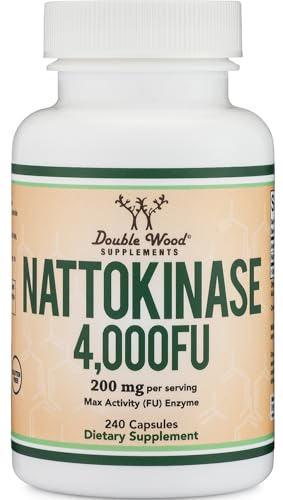
As an Amazon Associate we earn from qualifying purchases. Nattokinase is sold on an enzymatic activity claim, and independent testing has repeatedly found bottles delivering well under their labelled potency. Check that the label states fibrinolytic units (FU) per capsule rather than milligrams alone, and prefer a brand that will supply a batch-specific certificate of analysis showing the measured FU result for that lot, since GMP certification alone does not verify it.
A Note on the Evidence
All research on nattokinase and Alzheimer’s disease to date has been conducted in cell cultures or animal models; no human clinical evidence supports using nattokinase to treat, prevent, or slow Alzheimer’s disease, and the FDA has not evaluated it for any such purpose. Nattokinase has potent fibrinolytic effects that create serious interaction risks with anticoagulant and antiplatelet medications, making physician consultation essential before use — particularly for older adults who are often prescribed these drugs.
Frequently Asked Questions
Can nattokinase actually break down amyloid-beta plaques?
In laboratory conditions, nattokinase has demonstrated the ability to degrade amyloid fibrils directly [1]. Animal studies have also shown changes in amyloid-related pathology [6][3]. Whether this translates to meaningful plaque reduction in living human brains is unknown — no human trial has tested this.

What mechanism would explain nattokinase's effect on amyloid?
Nattokinase is a serine protease — an enzyme that cleaves protein bonds. Amyloid-beta plaques are composed of cross-linked protein fibrils, and the hypothesis is that nattokinase’s proteolytic activity can dismantle those fibril structures in much the same way it degrades fibrin in blood clots. The in vitro data from the 2009 study supports this enzymatic mechanism [1].

Does nattokinase affect brain inflammation in Alzheimer's models?
A 2023 mouse study found that nattokinase prevented Aβ(1-42)-induced neuroinflammation and disruption of BDNF signaling [2]. These are potentially meaningful effects because neuroinflammation is a driver — not just a symptom — of Alzheimer’s progression. However, this was a controlled animal experiment, not a human study.
Why is the blood-brain barrier a problem for nattokinase?
Nattokinase is a large protein molecule, and the blood-brain barrier is specifically designed to block large molecules from crossing from the bloodstream into brain tissue. Researchers recognized this and developed a nanoparticle-based delivery system to help the enzyme reach Aβ plaques in the brain [4]. Whether standard oral nattokinase supplements achieve brain-level concentrations in humans has not been established.
Is it safe to take nattokinase if I am worried about Alzheimer's?
Nattokinase has meaningful fibrinolytic and antiplatelet activity. It must not be combined with warfarin, heparin, aspirin, clopidogrel, or other anticoagulants or antiplatelets without physician supervision, and should be discontinued at least one week before any surgical procedure. Anyone on medications for heart disease, stroke prevention, or blood clotting should consult a physician before adding nattokinase. The FDA has not evaluated it for any disease indication.
Are there any human trials of nattokinase for Alzheimer's disease?
No published human clinical trials have specifically tested nattokinase for Alzheimer’s prevention or treatment. The existing evidence base consists of one in vitro study [1], multiple animal model studies [6][2][3], and a nanoparticle delivery proof-of-concept [4]. Human trials would be necessary before any clinical conclusion could be drawn.
References
- Hsu RL et al. Amyloid-degrading ability of nattokinase from Bacillus subtilis natto. Journal of agricultural and food chemistry (2009). PMID 19117402
- Naik S et al. Nattokinase prevents β-amyloid peptide (Aβ(1-42)) induced neuropsychiatric complications, neuroinflammation and BDNF signalling disruption in mice. European journal of pharmacology (2023). PMID 37263404
- Tanikawa T et al. Effect of Nattokinase in D-galactose- and Aluminum Chloride-induced Alzheimer's Disease Model of Rat. In vivo (Athens, Greece) (2024). PMID 39477413
- Bhatt PC et al. Development of surface-engineered PLGA nanoparticulate-delivery system of Tet1-conjugated nattokinase enzyme for inhibition of Aβ(40) plaques in Alzheimer's disease. International journal of nanomedicine (2017). PMID 29263666
- Metkar SK et al. The potential of lumbrokinase and serratiopeptidase for the degradation of Aβ 1-42 peptide – an in vitro and in silico approach. The International journal of neuroscience (2024). PMID 35694981
- Fadl NN et al. Serrapeptase and nattokinase intervention for relieving Alzheimer's disease pathophysiology in rat model. Human & experimental toxicology (2013). PMID 23821590
These statements have not been evaluated by the Food and Drug Administration. This information is not intended to diagnose, treat, cure, or prevent any disease. Content is for informational purposes only and is not medical advice; consult a qualified healthcare provider before starting any supplement. As an Amazon Associate we earn from qualifying purchases.
