Nattokinase is a serine protease enzyme derived from natto, a traditional Japanese food made by fermenting soybeans with Bacillus subtilis. Researchers first became interested in it for its fibrinolytic properties — its ability to break down fibrin clots directly and to upregulate the body’s own plasminogen activators. More recently, small randomized controlled trials have examined whether those cardiovascular effects extend to blood pressure regulation.
If you have seen marketing claims that nattokinase ‘lowers blood pressure naturally,’ it is worth knowing exactly what the human trial data does and does not support. The short answer: there is a modest, plausible signal from two well-designed randomized trials, but the evidence base is still limited in size and duration, and nattokinase carries real drug-interaction risks that anyone on blood thinners or antihypertensives must understand before considering it.
Key Takeaways
- Two randomized controlled trials found modest blood pressure reductions with nattokinase supplementation compared to placebo [1][2].
- The 2016 North American trial also found reductions in von Willebrand factor, a marker of cardiovascular and endothelial risk [2].
- Nattokinase has real fibrinolytic and antiplatelet activity and must not be combined with warfarin, aspirin, clopidogrel, heparin, or other anticoagulants without physician supervision.
- Discontinue nattokinase at least one week before any surgical or invasive procedure and inform your healthcare provider.
- The existing human evidence is promising but limited — small trials, short duration, no long-term outcome data — so nattokinase should not replace prescribed antihypertensive therapy.
What Nattokinase Is and How It Works
Nattokinase is not a mineral, herb, or extract in the conventional supplement sense — it is an enzyme, a protein catalyst. It belongs to the serine protease family and was isolated from natto in the 1980s. Its primary documented action is fibrinolytic: it cleaves fibrin, the structural protein that holds blood clots together. It also appears to stimulate endogenous tissue plasminogen activator (t-PA), meaning it may amplify the body’s own clot-dissolving machinery rather than simply substituting for it.
The connection to blood pressure is less direct. Proposed mechanisms include reducing plasma fibrinogen (high fibrinogen is associated with increased blood viscosity and cardiovascular risk), modulating von Willebrand factor (a clotting protein also linked to endothelial health), and potentially influencing the renin-angiotensin system, though that last pathway remains speculative in humans. None of these mechanisms have been conclusively proven to drive blood pressure reduction in large trials.
The 2008 Randomized Controlled Trial
The most frequently cited human trial on nattokinase and blood pressure was published in Hypertension Research in 2008 [1]. It was a randomized, controlled design enrolling adults with prehypertension or stage 1 hypertension who were not taking antihypertensive medications. Participants received either a nattokinase supplement or placebo for eight weeks.

The trial reported statistically significant reductions in both systolic and diastolic blood pressure in the nattokinase group compared to placebo [1]. The reductions were modest in absolute terms — roughly in the range seen with low-dose lifestyle interventions — rather than the dramatic drops produced by pharmaceutical antihypertensives. Importantly, this was a relatively short study in a specific population (drug-naive, mildly elevated BP), so its findings cannot be straightforwardly generalized to people with established hypertension or those already on medications.

The 2016 North American Multicenter Trial
A methodologically stronger study published in Integrated Blood Pressure Control in 2016 extended this work to a North American population (79 participants enrolled and 74 completing, so comparable in size to the 2008 trial rather than larger) [2]. It was randomized, double-blind, placebo-controlled, and conducted across multiple centers — a design that reduces the risk of site-specific bias. Participants were followed for several months.
This trial found that nattokinase consumption was associated with reduced blood pressure alongside reductions in von Willebrand factor, a glycoprotein released by damaged endothelial cells that serves as both a clotting mediator and a marker of cardiovascular risk [2]. The simultaneous reduction in von Willebrand factor is notable because it suggests the blood pressure effect, if real, may accompany broader improvements in vascular endothelial function rather than being an isolated hemodynamic change.
Even with its multicenter design, this trial represents one study of finite duration. Replication by independent research groups, longer follow-up periods, and trials enrolling patients on standard antihypertensive regimens are still needed before strong clinical conclusions can be drawn.
Proposed Cardiovascular Mechanisms Beyond Blood Pressure
Blood pressure is one node in a broader cardiovascular picture. The fibrinolytic activity of nattokinase — its ability to degrade fibrin and potentially reduce plasma fibrinogen — is relevant to clot formation risk, not just pressure. Elevated fibrinogen is an independent cardiovascular risk factor, and any enzyme that reduces its availability in plasma may have effects that extend beyond what a blood pressure cuff can measure.
The von Willebrand factor reduction observed in the 2016 trial [2] adds a dimension of endothelial biology to the discussion. Von Willebrand factor facilitates platelet adhesion at sites of vessel injury; chronically elevated levels are associated with thrombotic risk and cardiovascular events. Whether nattokinase’s effect on this marker translates into long-term clinical outcomes — fewer heart attacks, fewer strokes — remains entirely unproven in human outcome trials. No large, long-duration trial has assessed hard endpoints.
Safety, Drug Interactions, and Who Must Exercise Caution
Nattokinase’s fibrinolytic and antiplatelet activity, the very properties that make it interesting for cardiovascular research, also make it genuinely dangerous in combination with certain medications. It must not be taken alongside warfarin, heparin, direct oral anticoagulants (such as rivaroxaban or apixaban), aspirin used as an antiplatelet agent, clopidogrel, or other drugs that reduce clotting or platelet function, except under direct physician supervision. The combined effect could meaningfully increase bleeding risk.
Anyone scheduled for surgery, a dental extraction, or any invasive procedure should discontinue nattokinase at least one week beforehand and inform their healthcare provider. People with bleeding disorders, those who have recently had a stroke (particularly hemorrhagic stroke), pregnant or breastfeeding individuals, and anyone with liver or kidney disease should consult a physician before use. The FDA has not evaluated nattokinase as a treatment, cure, or preventive for any disease, and this article does not constitute medical advice.

Putting the Evidence in Honest Perspective
Two randomized controlled trials showing modest blood pressure reductions is a meaningful starting point — it is more evidence than many popular supplements can claim. The 2008 trial [1] and the 2016 North American multicenter trial [2] both used rigorous designs and found consistent directional effects. That consistency across different populations and research teams adds credibility.
What the evidence does not yet support is treating nattokinase as a first-line or standalone blood pressure intervention. The trials are small by pharmaceutical standards and short in duration, both running eight weeks. They have also since been tested at larger scale and much longer duration, and that test was negative: a double-blind, placebo-controlled trial in 265 participants taking 2,000 FU daily for a median of three years found no significant effect of nattokinase on blood pressure, alongside no effect on carotid intima-media thickness, arterial stiffness or any other laboratory measure [3]. That is the largest and longest trial in this literature, and it is the single most important piece of context for the two positive short-term results above. They also do not tell us whether the blood pressure reductions are sustained over years, whether they occur in people already on antihypertensives, or whether they translate into fewer cardiovascular events. Anyone managing diagnosed hypertension should do so in partnership with a physician, using therapies with an established long-term evidence base, rather than substituting or delaying those treatments for a supplement.
🛒 Where to Buy Nattokinase
- Doctor’s Best Nattokinase 2,000 FULab-tested / studied
capsules, 100 mg NSK-SD per vcap (2,000 FU) — Most widely referenced brand in clinical and integrative medicine contexts; uses Japan Bio Science Laboratory NSK-SD ingredient; vegetarian capsules; 90 count - NOW Foods Nattokinase 100 mg
capsules, 100 mg per vcap (2,000 FU) — Mainstream GMP-certified brand; affordable entry-level option; 90 vcaps; widely available - Source Naturals Nattokinase 100 mg
capsules, 100 mg per tablet (2,000 FU) — Long-established supplement brand; competitive pricing at 60 tablets; good for budget-conscious buyers familiar with the brand - Healthy Origins Nattokinase 2,000 FU
capsules, 100 mg per vcap (2,000 FU) — Best cost-per-serving option on Amazon; 180 vcap bottle; uses NSK-SD ingredient; popular bulk buy for long-term users
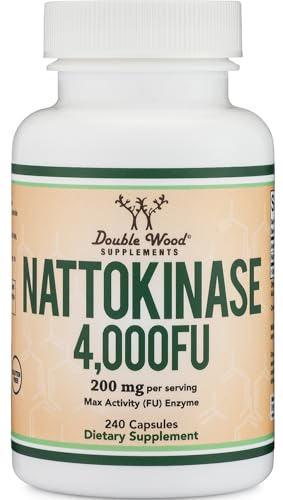
As an Amazon Associate we earn from qualifying purchases. Nattokinase is sold on an enzymatic activity claim, and independent testing has repeatedly found bottles delivering well under their labelled potency. Check that the label states fibrinolytic units (FU) per capsule rather than milligrams alone, and prefer a brand that will supply a batch-specific certificate of analysis showing the measured FU result for that lot, since GMP certification alone does not verify it.
A Note on the Evidence
The two positive randomized trials summarized here are small and short-term, and the one large, multi-year, placebo-controlled trial that has tested nattokinase found no effect on blood pressure [3]; anyone with diagnosed hypertension, a clotting disorder, or who takes anticoagulant or antiplatelet medications should consult a physician before using nattokinase, and it must be discontinued at least one week before any surgical procedure.
Frequently Asked Questions
Does nattokinase lower blood pressure?
Two randomized controlled trials found statistically significant reductions in blood pressure with nattokinase compared to placebo [1][2]. The reductions were modest and observed in trials of limited size and duration. A larger and much longer trial, running a median of three years in 265 participants, found no significant effect on blood pressure [3]. It is not established as a treatment for hypertension, and it should not replace physician-supervised care.

How might nattokinase affect blood pressure?
The exact mechanism is not fully established. Proposed pathways include reductions in plasma fibrinogen (which affects blood viscosity), modulation of von Willebrand factor and endothelial function [2], and possible influences on vascular tone. These are plausible mechanisms but have not been definitively confirmed in humans.
Is nattokinase safe to take with blood pressure medications?
This requires physician guidance on a case-by-case basis. Nattokinase has fibrinolytic and antiplatelet properties that could interact with antihypertensives, anticoagulants, and antiplatelet drugs. Do not add nattokinase to any medication regimen without first consulting a doctor.
Can I take nattokinase if I am on warfarin or aspirin?
No, not without direct physician supervision. Nattokinase has anticoagulant and antiplatelet activity that could amplify the effects of warfarin, aspirin, clopidogrel, heparin, and similar drugs, increasing the risk of serious bleeding.

How long did the blood pressure trials last?
The 2008 trial ran for eight weeks [1]. The 2016 North American trial followed participants for several months [2]. Neither study provides data on effects over years, so long-term durability of any blood pressure benefit remains unknown.
Is nattokinase FDA-approved for blood pressure or any health condition?
No. The FDA has not evaluated nattokinase for treating, curing, or preventing any disease. It is sold as a dietary supplement in the United States, which means it is not subject to the same pre-market approval process as pharmaceutical drugs. The evidence reviewed here is informational and does not constitute medical advice.
References
- Kim JY et al. Effects of nattokinase on blood pressure: a randomized, controlled trial. Hypertension research : official journal of the Japanese Society of Hypertension (2008). PMID 18971533
- Jensen GS et al. Consumption of nattokinase is associated with reduced blood pressure and von Willebrand factor, a cardiovascular risk marker: results from a randomized, double-blind, placebo-controlled, multicenter North American clinical trial. Integrated blood pressure control (2016). PMID 27785095
- Hodis HN et al. Nattokinase atherothrombotic prevention study: A randomized controlled trial. Clinical hemorheology and microcirculation (2021);78(4):339-353. PMID 33843667
These statements have not been evaluated by the Food and Drug Administration. This information is not intended to diagnose, treat, cure, or prevent any disease. Content is for informational purposes only and is not medical advice; consult a qualified healthcare provider before starting any supplement. As an Amazon Associate we earn from qualifying purchases.
