Nattokinase is a serine protease enzyme derived from natto, a traditional Japanese food made by fermenting soybeans with Bacillus subtilis. In laboratory and small human studies it has demonstrated fibrinolytic activity—meaning it can degrade fibrin, the protein scaffold of blood clots—along with modest effects on blood pressure. Capsules and tablets are widely sold as dietary supplements, but a fundamental question often goes unanswered on product labels: does the enzyme actually survive the journey from your mouth to your bloodstream?
This is not a trivial concern. Enzymes are proteins, and proteins face a hostile environment in the gastrointestinal tract—stomach acid, pepsin, and pancreatic proteases all exist specifically to break proteins down into amino acids. Understanding whether nattokinase can maintain enough structural integrity to exert fibrinolytic effects after oral ingestion is an active area of pharmaceutical research, and the honest answer is more nuanced than most supplement marketing suggests.
Key Takeaways
- Nattokinase is a protein enzyme that faces significant degradation by stomach acid and digestive proteases after swallowing, making oral bioavailability a genuine scientific challenge.
- Multiple encapsulation technologies—including chitosan/polyglutamic acid layers, alginate-gelatin-chitosan microcapsules, multi-level gel beads, and compression coating—have been studied as strategies to protect the enzyme through digestion [1][2][3][4].
- Available bioavailability research is primarily in vitro (simulated digestion models); robust human pharmacokinetic data showing how much active enzyme reaches the bloodstream from commercial supplements is limited.
- Formulation type likely matters—enteric-coated or encapsulated products may deliver more intact enzyme than uncoated powder capsules, though direct comparative data in humans is scarce.
- Nattokinase should not be combined with anticoagulants or antiplatelet drugs without physician supervision, and should be discontinued at least one week before surgery regardless of its absorption characteristics.
The Core Challenge: Why Enzymes Are Hard to Deliver Orally
When you swallow a nattokinase capsule, the enzyme must pass through an environment that is chemically designed to destroy it. Gastric pH typically sits between 1.5 and 3.5—strongly acidic conditions that can unfold and inactivate proteins before they reach the small intestine. Even if an enzyme survives the stomach, pancreatic enzymes including trypsin, chymotrypsin, and elastase continue protein digestion in the duodenum and jejunum.
For a therapeutic enzyme like nattokinase, biological activity depends entirely on maintaining its three-dimensional folded structure. Once denatured or cleaved, the enzyme loses its ability to bind and break down fibrin. This is why simply putting nattokinase powder into a gelatin capsule may not be sufficient to ensure meaningful absorption of active enzyme—and why formulation science has become an important part of nattokinase research.
Researchers have also noted that even if some intact enzyme does cross the intestinal epithelium, the quantities reaching systemic circulation may be quite small. The gut lining is a selective barrier, and large protein molecules face additional challenges at the absorption step beyond just surviving digestion.
Encapsulation With Chitosan and Polyglutamic Acid
One research approach involves wrapping nattokinase in protective polymer layers before it encounters gastric conditions. A 2024 study examined a layer-by-layer self-assembly technique that embedded nattokinase within a chitosan and γ-polyglutamic acid matrix. In vitro digestion testing in that work evaluated how well the encapsulated enzyme retained fibrinolytic activity after exposure to simulated digestive conditions [1].
Chitosan is a naturally derived polysaccharide obtained from crustacean shells. It is positively charged at low pH, which allows it to interact electrostatically with the negatively charged γ-polyglutamic acid to form a layered shell around the enzyme. The goal is to create a protective barrier that resists acidic stomach conditions while releasing the enzyme in the more neutral environment of the small intestine, where absorption is more feasible [1].

This kind of in vitro digestion modeling is a useful early step in formulation research, but it is important to note that simulated digestion does not perfectly replicate the complexity of a living human gut. Results from these experiments inform further development rather than confirming what happens in human subjects.
Sodium Alginate, Gelatin, and Chitosan Microcapsules
A 2026 process development study explored a composite microcapsule system using sodium alginate, gelatin, and chitosan together as encapsulation materials. The rationale for combining these three materials is that each contributes different protective properties—alginate forms a gel matrix, gelatin adds structural support, and chitosan provides an additional pH-responsive layer [2].
Process development research of this kind focuses on optimizing manufacturing parameters such as material ratios, crosslinking conditions, and particle size. These variables affect how reliably the capsule holds together during storage and how predictably it releases its contents under digestive conditions. Achieving consistent encapsulation efficiency is a prerequisite before any clinical testing of a delivery system can be meaningful [2].
Multi-Level Encapsulation: Fig-Like Gel Bead Structures
A 2026 study took encapsulation further by constructing what the researchers described as multi-level encapsulation structures in fig-like gel beads, combining multiple protective mechanisms rather than relying on a single polymer layer. The work analyzed how synergistic interactions between encapsulation materials could enhance nattokinase stability against the conditions encountered during digestion [3].
The concept behind multi-level encapsulation is that if one protective layer is compromised—for example by gastric acid partially disrupting an outer coat—inner layers continue to shield the enzyme. This redundancy is intended to improve the fraction of enzymatic activity that survives long enough to reach the small intestinal environment where absorption might occur [3].
It is worth emphasizing that stability during simulated in vitro digestion and actual absorption into human circulation are two separate questions. Research demonstrating that an encapsulation strategy preserves fibrinolytic activity through a digestion model is a meaningful advance, but it does not by itself confirm that the enzyme reaches the bloodstream in clinically relevant amounts.
Compression Coating for Targeted Intestinal Delivery
An earlier approach to the delivery problem, described in a 2007 study, used compression coating technology to create tablets designed to bypass the stomach and release nattokinase specifically in the intestine. The researchers examined both stabilization of the enzyme and the targeting of release to the intestinal environment [4].
Compression coating applies an outer layer of excipients—inert pharmaceutical ingredients—around a tablet core using mechanical compression rather than liquid coating processes. This can produce a tablet that remains largely intact in the acidic stomach and begins to disintegrate only when it reaches the higher pH of the small intestine. Enteric coating and delayed-release technologies operate on similar principles and are well-established in pharmaceutical manufacturing for protecting acid-sensitive drugs [4].
The fact that researchers were investigating these delivery strategies as early as 2007 reflects that the bioavailability challenge for oral nattokinase has been recognized for some time. The progression from compression-coated tablets to more sophisticated polymer encapsulation systems over the following two decades reflects ongoing efforts to improve on earlier approaches.
What the Research Does—and Does Not—Tell Us
The four studies described here are all focused on formulation strategies aimed at protecting nattokinase from digestive degradation. They represent genuine scientific progress in understanding how to engineer delivery systems that preserve enzymatic activity through simulated gut conditions. However, it is important to be clear about what this body of evidence does not yet establish.
None of these studies are large randomized controlled trials measuring nattokinase blood levels in human subjects after ingestion of a commercial supplement. The field currently lacks well-powered pharmacokinetic studies that directly measure how much intact, active nattokinase reaches systemic circulation from an orally administered dose under real-world conditions. Some small trials have reported physiological effects—such as modest reductions in certain clotting markers—after oral supplementation, which suggests some degree of absorption may occur, but the mechanism and extent remain incompletely characterized.
Consumers evaluating nattokinase products should be aware that the delivery technology in a given supplement matters. A standard uncoated capsule containing raw nattokinase powder faces different absorption challenges than an enteric-coated or encapsulated formulation. Product labels rarely provide this information in detail, and the research needed to compare commercial formulations head-to-head in human subjects has not been widely published.
🛒 Where to Buy Nattokinase
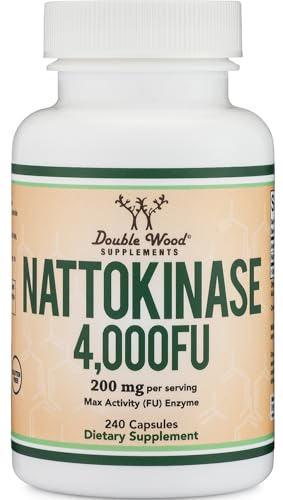
- Doctor’s Best Nattokinase 2,000 FULab-tested / studied
capsules, 100 mg NSK-SD per vcap (2,000 FU) — Most widely referenced brand in clinical and integrative medicine contexts; uses Japan Bio Science Laboratory NSK-SD ingredient; vegetarian capsules; 90 count - NOW Foods Nattokinase 100 mg
capsules, 100 mg per vcap (2,000 FU) — Mainstream GMP-certified brand; affordable entry-level option; 90 vcaps; widely available - Source Naturals Nattokinase 100 mg
capsules, 100 mg per tablet (2,000 FU) — Long-established supplement brand; competitive pricing at 60 tablets; good for budget-conscious buyers familiar with the brand - Healthy Origins Nattokinase 2,000 FU
capsules, 100 mg per vcap (2,000 FU) — Best cost-per-serving option on Amazon; 180 vcap bottle; uses NSK-SD ingredient; popular bulk buy for long-term users
As an Amazon Associate we earn from qualifying purchases. Nattokinase is sold on an enzymatic activity claim, and independent testing has repeatedly found bottles delivering well under their labelled potency. Check that the label states fibrinolytic units (FU) per capsule rather than milligrams alone, and prefer a brand that will supply a batch-specific certificate of analysis showing the measured FU result for that lot, since GMP certification alone does not verify it.

A Note on the Evidence
The human clinical evidence supporting oral nattokinase supplementation comes primarily from small, short-term trials, and the pharmacokinetics of oral absorption remain incompletely characterized; the encapsulation research cited here is largely in vitro and does not confirm clinical outcomes. Anyone on anticoagulant or antiplatelet medications, scheduled for surgery, or managing a cardiovascular or bleeding condition should consult a qualified healthcare provider before taking nattokinase supplements.
Frequently Asked Questions
Does nattokinase get destroyed by stomach acid?
Stomach acid and the enzyme pepsin can denature and inactivate nattokinase before it reaches the small intestine, which is why researchers have investigated encapsulation and coating strategies to protect it. A layer-by-layer chitosan and γ-polyglutamic acid encapsulation was studied specifically for its ability to preserve fibrinolytic activity through simulated digestive conditions [1]. Whether standard commercial capsules provide adequate protection is not firmly established by current published data.
What is enteric coating and does it help nattokinase absorption?
Enteric coating or compression coating creates a tablet or capsule shell that resists dissolution in the acidic stomach but releases its contents in the higher-pH small intestine. A 2007 study examined compression coating specifically as a method to stabilize nattokinase and target its release to the intestinal environment rather than the stomach [4]. This approach is a logical strategy for protecting acid-sensitive enzymes, though human absorption data for these formulations remains limited.
Are there newer encapsulation technologies being studied for nattokinase?
Yes. Recent research has examined increasingly sophisticated systems, including sodium alginate-gelatin-chitosan composite microcapsules [2] and multi-level encapsulation in fig-like gel bead structures designed to provide redundant protection through multiple mechanisms [3]. These are still primarily process development and in vitro studies rather than human clinical trials.
Has nattokinase absorption been measured directly in human blood?
Well-controlled pharmacokinetic studies directly measuring nattokinase enzyme activity in human plasma after oral supplementation are not well represented in the current published literature. Some small trials have observed physiological effects after oral supplementation, which implies some bioavailability, but the precise extent and the fraction of an oral dose that reaches systemic circulation in active form has not been rigorously characterized in published research.
Does the type of nattokinase product matter for absorption?
Formulation likely plays a meaningful role. Research into encapsulation and coating technologies suggests that unprotected nattokinase powder in a standard capsule faces the full force of gastric acid and digestive enzymes, while engineered delivery systems may improve how much reaches the intestine intact [1][4]. However, no published head-to-head human studies currently allow consumers to compare specific commercial products on this basis.
Is nattokinase safe to take as a supplement?
Nattokinase has meaningful fibrinolytic and antiplatelet activity, which means it carries real interaction risks. It must not be combined with warfarin, heparin, aspirin, clopidogrel, or other anticoagulants or antiplatelet agents without physician supervision, and it should be discontinued at least one week before any surgical procedure. The FDA has not approved nattokinase to treat, cure, or prevent any disease. Anyone with a clotting disorder, cardiovascular condition, or who takes blood-thinning medications should speak with a physician before using it.
References
- Liu Z et al. Layer-by-layer self-assembly embedding of nattokinase in chitosan/γ-polyglutamic acid: Preparation, fibrinolytic activity, stability, and in vitro digestion study. European journal of pharmaceutics and biopharmaceutics : official journal of Arbeitsgemeinschaft fur Pharmazeutische Verfahrenstechnik e.V (2024). PMID 38599299
- Sun J et al. Process development of nattokinase microcapsules based on a novel sodium alginate-gelatin-chitosan composite material. Preparative biochemistry & biotechnology (2026). PMID 40638075
- Cheng Y et al. Enhancing nattokinase stability through synergistic interactions:Construction and mechanism analysis of multi-level encapsulation structures in fig-like gel beads. Food research international (Ottawa, Ont.) (2026). PMID 42116475
- Law D et al. Stabilization and target delivery of Nattokinase using compression coating. Drug development and industrial pharmacy (2007). PMID 17520440
These statements have not been evaluated by the Food and Drug Administration. This information is not intended to diagnose, treat, cure, or prevent any disease. Content is for informational purposes only and is not medical advice; consult a qualified healthcare provider before starting any supplement. As an Amazon Associate we earn from qualifying purchases.
