Aspirin has been a cornerstone of cardiovascular prevention for decades, primarily because it reduces platelet stickiness and lowers the risk of clot-driven events. More recently, nattokinase—an enzyme extracted from natto, a traditional Japanese food made from Bacillus subtilis–fermented soybeans—has attracted attention as a possible natural complement or alternative. Proponents argue it works through a different and arguably broader mechanism, directly breaking down fibrin clots and activating the body’s own clot-dissolving pathways.
Comparing the two requires honesty about what each actually does and what the evidence actually shows. Aspirin has decades of large randomized trials behind it. Nattokinase has a credible biological rationale and some early research, but human data remains limited in size and duration. This article explains both mechanisms plainly, reviews the available evidence without embellishment, and outlines the genuine risks that matter most before anyone considers either option.
Key Takeaways
- Aspirin reduces platelet aggregation by irreversibly blocking COX-1; nattokinase degrades fibrin directly and may also inhibit platelet aggregation, giving it a broader but less clinically proven mechanistic reach.
- Animal studies show nattokinase can inhibit platelet aggregation and thrombus formation and may affect vascular restenosis, but large long-term human cardiovascular outcome trials do not yet exist.
- Nattokinase must not be combined with warfarin, heparin, aspirin, clopidogrel, or other anticoagulants or antiplatelets without physician supervision due to additive bleeding risk.
- The FDA has not evaluated nattokinase for treating, curing, or preventing any disease; it is not a replacement for prescribed cardiovascular therapy.
- Anyone taking prescription blood thinners or scheduled for surgery should speak with a doctor before using nattokinase and should discontinue it at least one week before any procedure.
How Aspirin Affects the Cardiovascular System
Aspirin belongs to the class of nonsteroidal anti-inflammatory drugs and works primarily by irreversibly inhibiting cyclooxygenase enzymes—COX-1 and COX-2. In platelets, COX-1 inhibition blocks the synthesis of thromboxane A2, a compound that normally promotes platelet aggregation and blood vessel constriction. Because platelets cannot synthesize new COX-1, a single dose of aspirin suppresses this pathway for the entire roughly seven- to ten-day lifespan of the platelet.
This antiplatelet effect is the main reason low-dose aspirin has been used in secondary cardiovascular prevention—for people who have already had a heart attack or ischemic stroke. It does not dissolve existing clots; it reduces the tendency of platelets to clump together and form new ones. Aspirin also has anti-inflammatory effects at higher doses, but cardiovascular regimens typically use low doses (81 mg) focused on platelet inhibition. Current clinical guidelines have moved away from recommending aspirin for primary prevention in most people without established cardiovascular disease, because bleeding risks can outweigh benefits in otherwise healthy individuals.
How Nattokinase Works: A Different Mechanism
Nattokinase is a serine protease enzyme—a protein that cleaves other proteins at specific sites. Its primary cardiovascular-relevant action is fibrinolysis: it degrades fibrin, the structural mesh that holds blood clots together. This is a meaningfully different mechanism from aspirin’s antiplatelet action. While aspirin prevents new platelets from clumping, nattokinase acts on the clot scaffold itself and may also upregulate the body’s endogenous plasminogen activators, which are proteins that convert plasminogen to plasmin—the body’s own clot-dissolving enzyme.
Nattokinase also appears to have antiplatelet properties in addition to its fibrinolytic activity. Laboratory and animal research suggests it can inhibit platelet aggregation, which means it may operate on more than one step in the clotting cascade simultaneously [1]. This dual action—fibrinolytic plus antiplatelet—is part of what makes researchers interested in it, but it is also part of what makes its interaction with anticoagulant and antiplatelet drugs potentially dangerous.


What the Available Research Actually Shows
The evidence base for nattokinase in cardiovascular health is early and largely preclinical. Animal studies have demonstrated that nattokinase can inhibit platelet aggregation and reduce thrombus formation, improving blood flow in experimental models [1]. Separately, research in a rabbit model of vascular injury found effects on restenosis—the re-narrowing of a blood vessel after a procedure—following percutaneous transluminal angioplasty [2]. These findings point to biologically plausible mechanisms, but translating animal results to human cardiovascular outcomes requires large, long-term randomized controlled trials that have not yet been completed.
Small human trials have measured nattokinase’s effects on markers such as fibrinogen levels and blood pressure, with some showing modest reductions. However, these studies are short in duration, small in sample size, and not powered to evaluate actual cardiovascular events like heart attacks or strokes. The FDA has not evaluated nattokinase as a treatment, cure, or preventive measure for any disease. Claims that nattokinase will prevent heart attacks or replace established therapy are not supported by available evidence.
Comparing the Two: Fibrinolysis vs. Platelet Inhibition
Aspirin and nattokinase target different stages of clot formation and maintenance. Aspirin acts upstream, reducing the ability of platelets to aggregate into the initial clot plug. Nattokinase acts both upstream (antiplatelet) and downstream (dissolving fibrin scaffolding), theoretically offering a broader reach in the coagulation cascade. In that narrow mechanistic sense, nattokinase’s range of action is wider.
However, mechanism alone does not determine clinical value. Aspirin’s benefits in secondary cardiovascular prevention are supported by decades of large randomized trials with hard endpoints—actual events in real patients. Nattokinase lacks this evidentiary foundation at present. A drug or supplement with a broader mechanism but no proven clinical benefit is not a preferable choice over one with a narrower mechanism and robust trial data. Until long-term human cardiovascular outcome trials for nattokinase are completed and published, the comparison is fundamentally unequal on the evidence side.
There is no established head-to-head trial comparing nattokinase directly to aspirin in humans for cardiovascular outcomes. Any claim about one being superior to the other for preventing heart attacks or strokes would go beyond what current data supports.
Safety, Drug Interactions, and Who Should Be Careful
Because nattokinase has both fibrinolytic and antiplatelet activity, combining it with anticoagulants or antiplatelet medications substantially raises bleeding risk. It must not be combined with warfarin, heparin, aspirin, clopidogrel, or other blood-thinning agents without direct physician supervision and monitoring. This is not a theoretical caution—these mechanisms stack, and excessive anticoagulation can result in serious or life-threatening bleeding.

Nattokinase should be discontinued at least one week before any surgical procedure to reduce bleeding risk during and after surgery. People with bleeding disorders, those who have recently had a stroke of the hemorrhagic type, pregnant or breastfeeding individuals, and those taking any prescription anticoagulant or antiplatelet therapy should not use nattokinase without explicit medical guidance.
Aspirin also carries meaningful bleeding risks, particularly gastrointestinal bleeding, which is why current guidelines limit its recommendation in primary prevention settings. Both agents affect hemostasis; neither should be treated as risk-free simply because one is a food-derived enzyme and the other is widely available over the counter.
Practical Considerations for Cardiovascular Support
For individuals already prescribed aspirin by a physician for secondary cardiovascular prevention—after a heart attack, stroke, or established coronary artery disease—substituting nattokinase is not currently supported by evidence and could be harmful if it leads to stopping a proven therapy. Nattokinase should not be used as a replacement for prescribed cardiovascular medications without medical consultation.
For individuals interested in nattokinase as a supplementary approach and not currently on any anticoagulant or antiplatelet therapy, the picture is different but still requires caution. The biological mechanisms are real, early animal research is supportive [1][2], and some researchers consider it worth investigating further—but the human evidence base is not yet sufficient to make confident recommendations about dosing, duration, or which populations would benefit most.
If you are considering nattokinase for cardiovascular support, the most important step is a conversation with a healthcare provider who can review your full medication list, assess your individual clotting and bleeding risk, and monitor you appropriately if you proceed.
🛒 Where to Buy Nattokinase
- Doctor’s Best Nattokinase 2,000 FULab-tested / studied
capsules, 100 mg NSK-SD per vcap (2,000 FU) — Most widely referenced brand in clinical and integrative medicine contexts; uses Japan Bio Science Laboratory NSK-SD ingredient; vegetarian capsules; 90 count - NOW Foods Nattokinase 100 mg
capsules, 100 mg per vcap (2,000 FU) — Mainstream GMP-certified brand; affordable entry-level option; 90 vcaps; widely available - Source Naturals Nattokinase 100 mg
capsules, 100 mg per tablet (2,000 FU) — Long-established supplement brand; competitive pricing at 60 tablets; good for budget-conscious buyers familiar with the brand - Healthy Origins Nattokinase 2,000 FU
capsules, 100 mg per vcap (2,000 FU) — Best cost-per-serving option on Amazon; 180 vcap bottle; uses NSK-SD ingredient; popular bulk buy for long-term users
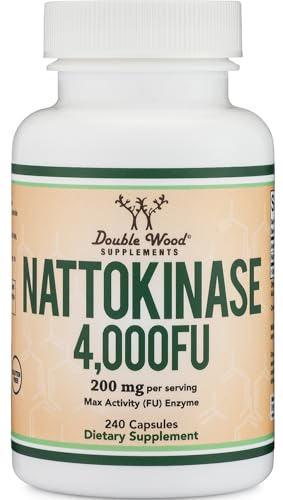
As an Amazon Associate we earn from qualifying purchases. Nattokinase is sold on an enzymatic activity claim, and independent testing has repeatedly found bottles delivering well under their labelled potency. Check that the label states fibrinolytic units (FU) per capsule rather than milligrams alone, and prefer a brand that will supply a batch-specific certificate of analysis showing the measured FU result for that lot, since GMP certification alone does not verify it.
A Note on the Evidence
The human evidence base for nattokinase remains small and short-term, and no large cardiovascular outcome trials have been completed; it is not a substitute for physician-prescribed cardiovascular therapy. Anyone on blood-thinning medication, scheduled for surgery, or managing a heart condition should consult a healthcare provider before using nattokinase—this article is informational only and does not constitute medical advice.

Frequently Asked Questions
Can nattokinase replace aspirin for heart health?
No evidence from human cardiovascular outcome trials supports replacing aspirin—especially prescribed secondary-prevention aspirin—with nattokinase. Aspirin has a well-established evidence base for people with existing cardiovascular disease; nattokinase does not. Substituting an unproven supplement for proven therapy is not recommended without medical guidance.
How does nattokinase dissolve clots differently from aspirin?
Aspirin prevents platelets from aggregating at the start of clot formation by blocking thromboxane A2 synthesis. Nattokinase is a serine protease that directly degrades fibrin—the protein mesh holding a clot together—and may also upregulate the body’s own plasminogen activators. It also appears to have antiplatelet properties of its own [1], meaning it may act at multiple points in the clotting process.

Is it safe to take nattokinase and aspirin together?
Combining nattokinase and aspirin is not recommended without physician supervision. Both have antiplatelet activity, and nattokinase also has fibrinolytic effects. Using them together could significantly increase bleeding risk. Anyone considering this combination should consult a doctor first.
What does the research show about nattokinase and blood flow?
Animal research demonstrates that nattokinase can inhibit platelet aggregation and thrombus formation, improving blood flow in experimental models [1]. Rabbit studies have also examined its effects on vascular restenosis after arterial procedures [2]. Human clinical data is more limited, consisting mainly of small, short-term trials that are not powered to assess cardiovascular events.
Who should avoid nattokinase?
People taking any anticoagulant or antiplatelet medication (including warfarin, heparin, aspirin, or clopidogrel), those with bleeding disorders, anyone who has had a hemorrhagic stroke, pregnant or breastfeeding individuals, and anyone scheduled for surgery should avoid nattokinase or use it only under direct medical supervision. It should be stopped at least one week before any surgical procedure.
Does nattokinase lower blood pressure?
Some small human trials have reported modest blood pressure reductions with nattokinase supplementation, but these studies are limited in size and duration. The FDA has not approved nattokinase for blood pressure management, and results from small trials should not be extrapolated into confident recommendations. This article’s cited evidence does not include blood pressure trial data, so no specific findings are cited here.
References
- Jang JY et al. Nattokinase improves blood flow by inhibiting platelet aggregation and thrombus formation. Laboratory animal research (2013). PMID 24396387
- Gong M et al. [Effect of nattokinase on restenosis after percutaneous transluminal angioplasty of the abdominal artery in rabbits]. Nan fang yi ke da xue xue bao = Journal of Southern Medical University (2008). PMID 18819862
These statements have not been evaluated by the Food and Drug Administration. This information is not intended to diagnose, treat, cure, or prevent any disease. Content is for informational purposes only and is not medical advice; consult a qualified healthcare provider before starting any supplement. As an Amazon Associate we earn from qualifying purchases.
