For most healthy adults, nattokinase appears to be reasonably safe at typical supplement doses, but it carries real risks for specific groups and produces noticeable side effects in some people. Like any bioactive compound, “safe” depends heavily on who is taking it, why, and alongside what other substances.
What the research says
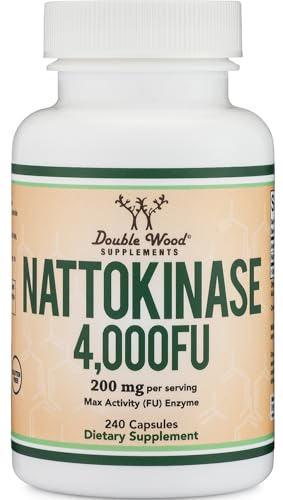
Nattokinase is a serine protease enzyme extracted from natto, a traditional Japanese fermented soybean food. Research into its safety profile is promising but limited, most human studies are short-term, involve relatively small populations, and use standardized doses typically ranging from 100 mg to 200 mg daily (roughly 2,000 FU per day). Here is what the current evidence suggests:
Common side effects in studies
Clinical trials have generally reported a low rate of serious adverse events. The side effects most frequently noted include mild gastrointestinal upset, loose stools, nausea, and stomach discomfort, particularly at higher doses or when taken on an empty stomach. Some participants in trials have also reported headache.
Bleeding risk
This is the most clinically significant safety concern. Nattokinase has demonstrated fibrinolytic (clot-dissolving) activity in human research. That is the mechanism behind its proposed cardiovascular benefits, but it also means it can reduce the blood’s ability to clot. People taking anticoagulants such as warfarin, direct oral anticoagulants like apixaban or rivaroxaban, or antiplatelet drugs like aspirin or clopidogrel face a meaningful risk of excessive bleeding if they add nattokinase without medical supervision. This combination is not theoretical, it is a documented pharmacological interaction.
Pregnancy and breastfeeding
There is essentially no safety data for nattokinase use during pregnancy or breastfeeding. The fibrinolytic activity alone is reason enough for caution, and standard guidance from healthcare providers is to avoid it during these periods.
Soy allergy
Nattokinase is derived from fermented soybeans. While the enzyme itself is largely separated from soy protein during processing, people with soy allergies should be aware of potential cross-reactivity and should check product specifications carefully.

Vitamin K interaction
Natto (the food) contains very high levels of vitamin K2, which can interfere with warfarin therapy. Most nattokinase supplements aim to remove vitamin K during extraction, but product quality varies. If you take warfarin, this distinction matters.

Quality and contamination concerns
The supplement industry is not as tightly regulated as pharmaceuticals. Nattokinase products vary considerably in actual enzyme activity, purity, and labeling accuracy. Third-party tested products from reputable manufacturers, ideally verified by organizations like NSF International or USP, reduce but do not eliminate this risk. Contamination, underdosing, and overdosing are all real possibilities with lower-quality products.
Duration of use
Long-term safety data beyond a few months is sparse. Some guidance from practitioners and product labels suggests cycling use rather than taking nattokinase continuously and indefinitely, though the evidence basis for a specific cutoff point is not firmly established.
Community Insights
Limited DataAggregated from 10 self-reported experiences collected from public Reddit discussions. Not medical advice.
This reflects self-reported user experiences from public forums, not clinical data. Individual results vary. Consult a healthcare professional.
What real users report
Online communities offer a ground-level view that clinical trials often miss. Across subreddits including r/covidlonghaulers, r/vaccinelonghauler, r/Supplements, r/Biohackers, and r/tinnitus, a number of consistent themes emerge. It is worth noting upfront that Reddit skews toward people with health challenges and people motivated to share either enthusiasm or problems, not a representative cross-section of users.
Theme 1: Genuine enthusiasm for cardiovascular and cognitive benefits
A number of users report positive experiences, particularly around circulation, blood pressure, and mental clarity. One commenter in r/NooTopics described feeling noticeably sharper cognitively since starting nattokinase at higher doses before sleep, though it is impossible to attribute this to nattokinase alone given the general complexity of supplementation routines. Users in r/Supplements and r/hypertension mention it as part of broader heart-health stacks alongside fish oil, magnesium, and vitamin K2.
Theme 2: Use in long COVID and post-vaccine recovery, mixed results
Nattokinase has attracted significant interest in long COVID communities, based on the hypothesis that microclotting or spike protein persistence may be involved in ongoing symptoms. In r/covidlonghaulers, one user whose doctor prescribed a nattokinase and lumbrokinase combination reported improvement over time, though they were careful not to attribute results solely to the enzyme. However, the broader picture from these communities is one of uncertainty, multiple users describe trying nattokinase alongside low-dose naltrexone, antivirals, antihistamines, and many other interventions without consistent relief. As one long-hauler put it, treatments in this space are “basically shots in the dark.” Another user in r/vaccinelonghauler specifically said nattokinase “made me feel bad” and did not continue. The enthusiasm that surrounded nattokinase in these communities has visibly cooled as results remained inconsistent.
Theme 3: Real and sometimes significant digestive side effects
This is where user reports add important texture that clinical papers sometimes understate. In r/vaccinelonghauler, one person reported that nattokinase gave them “mad diarrhea” and noted a common caution against taking it for more than three or four months continuously, though they acknowledged having taken it considerably longer than that. In r/Biohackers, a user described experiencing “cramps and quivers” in their right side after weeks of taking nattokinase alongside red yeast rice, in a context where their doctor was already concerned about elevated liver enzymes from a heavy supplement load. These reports do not prove nattokinase caused harm in isolation, but they are honest signals that gastrointestinal and possibly hepatic discomfort can occur, particularly in people taking many supplements simultaneously.

Theme 4: Uncertainty about sourcing, dosing, and protocols
Across communities, users frequently discuss not knowing the right dose, how long to take it, or whether their product is reliable. Nattokinase appears in “parasite cleanse” stacks in r/TooAfraidToAsk, biofilm-breaking protocols in r/Candida, and spike protein detox regimens in r/vaccinelonghauler, contexts where the evidence base is weak to nonexistent. This pattern suggests many users are reaching for nattokinase on the basis of online theory rather than clinical guidance, which increases the risk of misuse or ignoring underlying conditions that need proper diagnosis.
Theme 5: Part of large supplement stacks, complicating safety assessment
Many users reporting both benefits and side effects are taking nattokinase as one of five, ten, or even more supplements simultaneously. This makes it genuinely hard to know what is causing what. A user in r/Supplements listed nattokinase alongside liposomal NR, vitamin K2, astaxanthin, fish oil, and several vitamins, a combination where interactions are plausible and attribution of any effect is complicated.
Who should be cautious
- People taking any anticoagulant or antiplatelet medication, including warfarin, apixaban, rivaroxaban, aspirin, or clopidogrel
- Anyone scheduled for surgery or a dental procedure, as bleeding risk may be elevated
- Pregnant or breastfeeding individuals
- People with a known soy allergy
- Anyone with a bleeding disorder or low platelet count
- People with liver disease, given the limited data on hepatic effects and the concerns raised by users taking multiple hepatically-metabolized supplements
- Anyone already taking multiple supplements, where interaction complexity increases and individual attribution of side effects becomes difficult
- People substituting nattokinase for evaluated medical treatment of serious conditions like hypertension, heart disease, or long COVID
FAQ
Can nattokinase cause dangerous bleeding?
Yes, it can increase bleeding risk, particularly if combined with blood-thinning medications. For healthy people not on anticoagulants, serious spontaneous bleeding at typical doses appears uncommon based on available data, but the risk is real enough that anyone on relevant medications should not add nattokinase without talking to their prescribing clinician first.
Is it safe to take nattokinase long-term?
Honest answer: we do not have strong long-term safety data. Most studies run for weeks to a few months. Some users and practitioners suggest cycling use for this reason, but the specific duration that is “safe” versus risky is not established by evidence. Periodic check-ins with a healthcare provider make sense if you plan to use it beyond a few months.

Can nattokinase cause stomach problems?
Yes. Gastrointestinal side effects including diarrhea, loose stools, and stomach cramping are among the most commonly reported issues both in studies and by real users online. Taking it with food may reduce this for some people, but for others the GI effects persist regardless.
Is nattokinase safe if I am not on any medications?
For otherwise healthy adults not on blood thinners and without the conditions listed above, the available evidence suggests it is reasonably well tolerated at standard doses. That said, “safe for most” is not the same as “safe for you specifically”, individual responses vary, and consulting a clinician about your personal situation is always the right call before starting any new supplement with biological activity.
The user-experience section reflects themes synthesized from public discussions on Reddit communities (r/GossipDK, r/NooTopics, r/tinnitus). Individual experiences vary and are not medical advice. Consult a healthcare professional before starting or stopping any supplement.

These statements have not been evaluated by the Food and Drug Administration. This information is not intended to diagnose, treat, cure, or prevent any disease. Content is for informational purposes only and is not medical advice; consult a qualified healthcare provider before starting any supplement. As an Amazon Associate we earn from qualifying purchases.
