As we navigate the complexities of aging, concerns about cardiovascular health often come to the forefront. Many individuals over 40 seek natural strategies to support their heart and circulatory system, particularly regarding blood clot prevention and blood pressure management. The search for effective, evidence-backed supplements can be daunting, leading many to explore compounds like nattokinase.
This comprehensive guide from NattokinaseHub aims to provide a clear, clinically precise overview of nattokinase benefits, grounded in the latest research. We will examine what the science truly says about this unique enzyme, focusing on its mechanisms, proven effects, and crucial safety considerations, especially for those considering it alongside conventional therapies.
FTC Disclosure: Please note that NattokinaseHub may earn a commission from qualifying purchases made through affiliate links within this article. This helps support our research and content creation.
What is Nattokinase? A Fibrinolytic Enzyme Explained
Nattokinase is an enzyme derived from natto, a traditional Japanese fermented soybean food. It is produced by the bacterium Bacillus subtilis during the fermentation process. Unlike many enzymes, nattokinase has demonstrated significant fibrinolytic activity, meaning it can break down fibrin, a protein crucial for blood clot formation.
Its discovery and subsequent research have positioned it as a subject of considerable interest in cardiovascular health. The enzyme’s unique properties distinguish it from other natural compounds that may support circulation.
Nattokinase for Blood Clot Prevention: The Fibrinolytic Mechanism
How Nattokinase Breaks Down Fibrin
The primary mechanism by which nattokinase contributes to blood clot prevention is its direct fibrinolytic action. Research indicates that nattokinase directly hydrolyzes fibrin and fibrinogen, the precursor to fibrin. In laboratory tests this enzymatic action breaks down fibrin clots, but dissolving existing clots or preventing new ones has not been shown in people in the verified trials [4][5].
Research note: Pooled trials found nattokinase was associated with a slight increase in blood glucose compared with placebo (mean difference 0.40) [2].
Beyond direct action, nattokinase also enhances the body’s natural fibrinolytic system. In lab and animal work it appears to raise tissue plasminogen activator (tPA) activity, which converts plasminogen into plasmin, although a 3-year trial in 265 healthy adults found no effect on tPA antigen [5][6][2][7]. Plasmin is another enzyme that degrades fibrin, thus amplifying the clot-dissolving effect.[1]
Evidence from Clinical Trials
Several studies have investigated nattokinase’s impact on blood viscosity and clot markers. An uncontrolled study in 15 healthy volunteers found that fibrinogen, factor VII and factor VIII fell after two months of nattokinase [8][1]. Without a control group, these changes cannot be credited to nattokinase, and they do not show fewer clots [8].

In a crossover trial in 12 healthy young men, a single dose raised D-dimer, a marker of fibrin breakdown, at 6 and 8 hours, and all coagulation changes stayed within the normal range [9]. While promising, it is important to note that many of these studies involve relatively small sample sizes and further large-scale trials are needed to confirm these effects across broader populations.

Nattokinase and Blood Pressure Support: An ACE-Inhibiting Effect
The Renin-Angiotensin System and Nattokinase
In the 2008 trial, renin activity fell more in the nattokinase group than in placebo, which hints at an effect through the renin system, but the mechanism is not established [10]. ACE plays a crucial role in the renin-angiotensin system, which regulates blood pressure. If it did inhibit ACE, it would reduce the conversion of angiotensin I to angiotensin II, but the verified trials do not demonstrate ACE inhibition in people [10].
Any blood pressure effect in people is small and its mechanism is unconfirmed [2][10]. Its blood pressure effect has not been compared with ACE inhibitor drugs in the verified evidence [2].
Clinical Findings on Hypertension
Multiple human trials have explored nattokinase’s effect on blood pressure.[2] A 2023 meta-analysis of randomized trials found average reductions of 3.45 mmHg systolic and 2.32 mmHg diastolic compared with placebo, based on only a few small trials. A separate 3-year trial in 265 healthy adults found no effect on blood pressure [2][7].
For instance, one trial funded by the maker, in 86 adults with untreated, mildly raised blood pressure, reported 5.55 mmHg lower systolic and 2.84 mmHg lower diastolic pressure than placebo after eight weeks, although the diastolic confidence interval came close to no effect. A second trial in 79 adults, sponsored by the product distributor, found that only diastolic pressure fell and the systolic change was not significantly different from placebo [10][11]. These results are encouraging for those seeking natural adjuncts to blood pressure management, but nattokinase should not replace prescribed medication without physician consultation.
Longevity Enzyme? Nattokinase and Overall Cardiovascular Health
Beyond its direct effects on fibrinolysis and blood pressure, nattokinase may contribute to broader cardiovascular health, positioning it as a potential “longevity enzyme” in some circles. Maintaining optimal blood flow and reducing arterial stiffness are key factors in healthy aging and longevity.
Some research suggests nattokinase may also influence lipid profiles, though the evidence here is less consistent. A meta-analysis of randomized trials concluded that relatively low-dose nattokinase may have no significant lipid-lowering effect, and total cholesterol was higher in the nattokinase groups of pooled trials. The reported improvements come mainly from uncontrolled or combination-product studies [2][12][13].
A 3-year trial in 265 healthy adults found no slowing of carotid artery thickening or stiffening and no effect on blood pressure, so these long-term benefits are not shown in people [7]. This holistic support is what underpins its appeal as a longevity-focused supplement.
Nattokinase and Other Natural Cardiovascular Supports
Nattokinase is often considered alongside other natural compounds known for cardiovascular benefits. Understanding their distinct mechanisms can help in making informed decisions.
| Supplement | Primary Mechanism of Action | Key Cardiovascular Benefit |
|---|---|---|
| Nattokinase | Direct fibrinolysis, ACE inhibition, plasminogen activation | Fibrin breakdown in lab tests, small blood pressure effect in some trials [23][2] |
| Omega-3 Fatty Acids (EPA/DHA) | Anti-inflammatory, triglyceride reduction, anti-arrhythmic | Reduced inflammation, improved lipid profile, heart rhythm support |
| Coenzyme Q10 (CoQ10) | Mitochondrial energy production, antioxidant | Cellular energy for heart muscle, antioxidant protection |
| Magnesium | Vasodilation, nerve and muscle function, electrolyte balance | Blood pressure regulation, reduced muscle cramps, nerve health |
| Garlic Extract | Nitric oxide production, anti-platelet, cholesterol reduction | Blood pressure support, improved circulation, mild cholesterol lowering |
Each of these supplements offers unique benefits. Nattokinase stands out for its specific fibrinolytic properties, a mechanism not significantly shared by many other common cardiovascular aids.
Safety, Dosage, and Drug Interactions: Crucial Considerations
While generally well-tolerated, nattokinase is not without risks, particularly due to its blood-thinning properties. It is absolutely critical to discuss nattokinase supplementation with a healthcare professional, especially if you are on any medication or have pre-existing health conditions.
Bleeding Risk and Anticoagulant Interactions
The most significant safety concern with nattokinase is its potential to increase the risk of bleeding. Because it acts on fibrin and clotting, it may add to the effects of anticoagulant and antiplatelet drugs. Human interaction data are lacking, but a case report describes a cerebellar hemorrhage in a patient also taking aspirin, and a Health Canada licence says not to use it with products that affect blood coagulation [14][15][16].

Combining nattokinase with these medications can lead to an elevated risk of bruising, nosebleeds, gastrointestinal bleeding, or more severe hemorrhagic events. Patients currently on any form of anticoagulant or antiplatelet therapy should strictly avoid nattokinase unless explicitly advised and monitored by their prescribing physician. Discontinue nattokinase at least two weeks before any scheduled surgery or dental procedure.
Recommended Dosage and Administration
Nattokinase dosage is typically measured in Fibrinolytic Units (FU), which reflect its enzymatic activity.[3] Daily doses across the trials in one meta-analysis ranged from 1,200 to 8,000 FU, and a review notes that FU labels from different assay methods may not be directly comparable. Higher doses should only be considered under medical supervision [2][17].

It is generally recommended to start with a lower dose and assess tolerance. EFSA said the supplied data could not show whether active nattokinase is absorbed, so the best timing is not established [8][1]. Always adhere to the dosage instructions provided by the manufacturer or your healthcare provider.
Other Potential Side Effects
Beyond bleeding risk, nattokinase is generally well-tolerated. Some individuals may experience mild gastrointestinal upset, such as nausea or diarrhea, especially when first starting supplementation. Allergic reactions, though rare, are possible, particularly in individuals with soy allergies, as nattokinase is derived from fermented soybeans.
Choosing a Nattokinase Supplement (Affiliate Section)
When selecting a nattokinase supplement, quality and purity are paramount. Look for products that clearly state the Fibrinolytic Units (FU) per serving, as this indicates the enzyme’s activity level. Reputable brands often provide third-party testing for purity and potency.
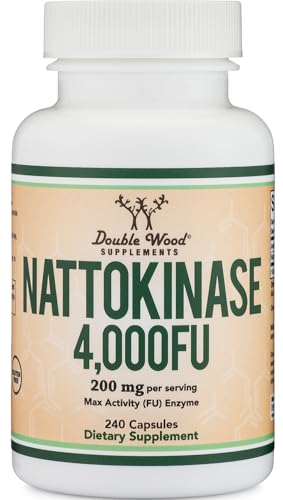
Consider products that are free from common allergens if you have sensitivities. Soy allergy is not safe to assume away: a Health Canada licence warns against use with soy allergy, and EFSA judged the allergy risk of NSK-SD to be similar to other soy-derived products [16][8]. For those seeking a high-potency option, search for nattokinase 4000 FU. If you prefer a more moderate daily intake, consider searching for nattokinase 2000 FU. For those looking for combinations, search for nattokinase serrapeptase combination supplements, as serrapeptase is another proteolytic enzyme often paired with nattokinase.
Conclusion: An Evidence-Based Perspective
Nattokinase is being studied for cardiovascular support. Small trials point to a modest blood pressure effect and lab work shows fibrin breakdown, but the longest trial, in 265 healthy adults over a median of 3 years, found no effect on artery thickening or blood pressure [2][7].
However, the science, while promising, often stems from studies with smaller cohorts. It is crucial to approach nattokinase with an evidence-first mindset, acknowledging its limitations and the necessity for ongoing, large-scale research. Safety remains the top priority; always consult a healthcare professional before incorporating nattokinase, especially if managing existing cardiovascular conditions or taking medications.

Frequently Asked Questions (FAQ)
Is nattokinase a blood thinner?
Nattokinase is not a traditional pharmaceutical blood thinner, but lab and animal studies show clot-dissolving and antiplatelet effects, and in 12 healthy young men a single dose mildly prolonged aPTT while staying within the normal range [18][9]. This means it can reduce the blood’s ability to clot and potentially increase bleeding risk, especially when combined with other anticoagulant or antiplatelet medications.
How long does it take for nattokinase to work?
Some small studies have reported changes in blood markers: fibrin degradation products rose after four weeks in 39 Korean adults, and fibrinogen fell after two months in an uncontrolled study of 15 volunteers. One trial reported a blood pressure change at 8 weeks, while a 3-year trial found none [19][8][10][7]. Individual responses can vary.
Can I take nattokinase with blood pressure medication?
You should not take nattokinase with blood pressure medication without strict medical supervision. Human data on interactions with blood pressure medicines are lacking, so an extra drop in blood pressure cannot be ruled out [14]. Always consult your doctor.
Is nattokinase safe for long-term use?
Limited long-term safety data exists for nattokinase. While generally well-tolerated in shorter studies, the potential for cumulative effects on bleeding risk with prolonged use, especially in sensitive individuals or those with underlying conditions, requires ongoing medical evaluation. Discuss long-term use with your physician.
Can I get enough nattokinase from natto food?
While natto is the source of nattokinase, the amount of active enzyme can vary significantly in the food. Supplements give a stated dose, although a review notes product activity varies hugely between products. Natto food also carries vitamin K2 (MK-7), which can interfere with warfarin, while the NSK-SD ingredient has vitamin K2 removed [20][21][22][8].
Who should avoid nattokinase?
Individuals on anticoagulant or antiplatelet medications, those with bleeding disorders, individuals awaiting surgery, pregnant or breastfeeding women, and those with severe soy allergies should avoid nattokinase. Always consult a healthcare professional before starting any new supplement.
These statements have not been evaluated by the FDA. This product is not intended to diagnose, treat, cure, or prevent any disease.
References
- Nattokinase: An Oral Antithrombotic Agent for the Prevention of Cardiovascular Disease. International Journal of Molecular Sciences (2017). PMID 28264497
- Nattokinase Supplementation and Cardiovascular Risk Factors: A Systematic Review and Meta-Analysis of Randomized Controlled Trials. Reviews in Cardiovascular Medicine (2023). PMID 39076715
- Nattokinase: production and application. Applied Microbiology and Biotechnology (2014). PMID 25348469
- Pinontoan R et al. Fibrinolytic characteristics of Bacillus subtilis G8 isolated from natto. Bioscience of microbiota, food and health (2021). PMID 34285859
- Tetsumei Urano et al. The Profibrinolytic Enzyme Subtilisin NAT Purified fromBacillus subtilis Cleaves and Inactivates Plasminogen Activator Inhibitor Type 1. Journal of Biological Chemistry (2001). PMID 11325965
- Hiroyuki Sumi et al. Natto Bacillus as an Oral Fibrinolytic Agent: Nattokinase Activity and the Ingestion Effect of Bacillus subtilis natto. Food Science and Technology Research (2004). doi:10.3136/fstr.10.17
- Hodis HN et al. Nattokinase atherothrombotic prevention study: A randomized controlled trial. Clinical hemorheology and microcirculation (2021). PMID 33843667
- European Food Safety Authority (EFSA NDA Panel) Safety of fermented soybean extract NSK-SD as a novel food pursuant to Regulation (EC) No 258/97. European Food Safety Authority (EFSA NDA Panel) (2016). source
- Yuko Kurosawa et al. A single-dose of oral nattokinase potentiates thrombolysis and anti-coagulation profiles. Scientific Reports (2015). PMID 26109079
- Kim JY et al. Effects of nattokinase on blood pressure: a randomized, controlled trial. Hypertension research : official journal of the Japanese Society of Hypertension (2008). PMID 18971533
- Jensen GS et al. Consumption of nattokinase is associated with reduced blood pressure and von Willebrand factor, a cardiovascular risk marker: results from a randomized, double-blind, placebo-controlled, multicenter North American clinical trial. Integrated blood pressure control (2016). PMID 27785095
- Chen H et al. Effective management of atherosclerosis progress and hyperlipidemia with nattokinase: A clinical study with 1,062 participants. Frontiers in cardiovascular medicine (2022). PMID 36072877
- Liu X et al. The Effect of Nattokinase-Monascus Supplements on Dyslipidemia: A Four-Month Randomized, Double-Blind, Placebo-Controlled Clinical Trial. Nutrients (2023). PMID 37836525
- Chen H et al. Nattokinase: A Promising Alternative in Prevention and Treatment of Cardiovascular Diseases. Biomarker insights (2018). PMID 30013308
- Chang YY et al. Cerebellar hemorrhage provoked by combined use of nattokinase and aspirin in a patient with cerebral microbleeds. Internal medicine (Tokyo, Japan) (2008). PMID 18310985
- Health Canada Licensed Natural Health Product NPN 80089299: Nattokinase 100 mg. Health Canada (2026). source
- Yuan Li et al. Biotechnology, Bioengineering and Applications of Bacillus Nattokinase. Biomolecules (2022). PMID 35883536
- Ja‐Young Jang et al. Nattokinase improves blood flow by inhibiting platelet aggregation and thrombus formation. Laboratory Animal Research (2013). PMID 24396387
- Jae-Bum Kim et al. Evaluation of Nattokinase for Antithrombotic Effect and Pharmacological Efficacy by a Biological Test and Clinical Trial. KSBB Journal (2011). doi:10.7841/ksbbj.2011.26.5.393
- Wei C et al. Research Progress of Nattokinase in Reducing Blood Lipid. Nutrients (2025). PMID 40507053
- Kazuhiro HOMMA et al. Treatment of Natto, a Fermented Soybean Preparation, to Prevent Excessive Plasma Vitamin K Concentrations in Patients Taking Warfarin. Journal of Nutritional Science and Vitaminology (2006). PMID 17190098
- Schurgers LJ et al. Vitamin K-containing dietary supplements: comparison of synthetic vitamin K1 and natto-derived menaquinone-7. Blood (2007). PMID 17158229
- Wu H et al. Nattokinase-heparin exhibits beneficial efficacy and safety-an optimal strategy for CKD patients on hemodialysis. Glycoconjugate journal (2019). PMID 30788657
These statements have not been evaluated by the Food and Drug Administration. This information is not intended to diagnose, treat, cure, or prevent any disease. Content is for informational purposes only and is not medical advice; consult a qualified healthcare provider before starting any supplement. As an Amazon Associate we earn from qualifying purchases.
