Nattokinase is a serine protease enzyme derived from natto, a traditional Japanese food made by fermenting soybeans with Bacillus subtilis. Because it can degrade fibrin and activate the body’s own clot-dissolving proteins, it has attracted interest as a cardiovascular supplement. The challenge for shoppers is that the supplement market is saturated with products that range from well-characterized, third-party tested extracts to loosely labeled powders of unknown potency.
This guide explains what the fibrinolytic unit (FU) measurement actually means, when a branded extract like NSK-SD may offer an advantage over generic nattokinase, and which label claims should prompt skepticism. Nothing here constitutes medical advice, and nattokinase has not been approved by the FDA to treat, cure, or prevent any disease.
Key Takeaways
- FU (Fibrinolytic Units) is the correct way to compare nattokinase potency; milligrams alone do not tell you how active the enzyme is.
- NSK-SD is a well-documented branded extract with published safety and activity data, but quality generic options exist if they carry verifiable third-party FU certification.
- Red flags include no FU disclosure, disease-treatment claims, and proprietary blends that hide individual enzyme amounts.
- Nattokinase must not be combined with warfarin, heparin, aspirin, clopidogrel, or other anticoagulants or antiplatelets without physician supervision due to additive bleeding risk.
- Discontinue nattokinase at least one week before any surgical procedure and consult a physician before use if you have any cardiovascular or bleeding condition.
What Fibrinolytic Units (FU) Mean and Why Milligrams Alone Are Not Enough
Most enzyme supplements are measured by activity rather than by raw weight, because two products can contain identical milligram amounts of protein yet deliver completely different biological effects depending on how active that protein is. For nattokinase, the standard unit of activity is the Fibrinolytic Unit (FU), sometimes written as FU/g or FU per capsule.
The FU assay measures how quickly a given quantity of enzyme dissolves a fibrin clot under defined laboratory conditions. A product labeled ‘2,000 FU’ contains enzyme that has passed a standardized activity test; a product labeled only ‘100 mg nattokinase’ tells you the weight of the powder but nothing verifiable about enzymatic activity. Shoppers who compare products by milligrams only are likely comparing incomparable things.
Most human-use formulations in the research literature and in reputable commercial products fall in the range of 2,000 FU to 4,000 FU per daily serving. There is no established consensus on an optimal dose, and the FDA has not defined a recommended intake. If a product provides only a milligram amount with no FU disclosure, that is a meaningful transparency gap.
NSK-SD: What the Branded Extract Offers Compared to Generic Nattokinase
NSK-SD is a branded nattokinase extract manufactured by Japan Bio Science Laboratory (JBSL). It is among the most studied commercial forms, partly because it has been used in several published clinical investigations and has undergone safety and identity testing. The ‘SD’ designation refers to the spray-drying process used in its manufacture, which the producer states provides consistent activity and removes vitamin K2—a relevant consideration for people on warfarin, since vitamin K2 can interfere with anticoagulation therapy.
Generic nattokinase is simply nattokinase manufactured without the NSK-SD certification. Quality among generics varies considerably. Some are produced by reputable manufacturers with third-party activity verification; others are not. The absence of a brand name does not automatically signal inferior quality, but it does mean the buyer has less public documentation to rely on when assessing consistency batch to batch.


When evaluating either form, the most useful questions are: Does the label state FU activity per serving? Is the product tested by an independent third party such as USP, NSF International, or Informed Sport? Does the certificate of analysis confirm enzymatic activity, not merely protein content? These questions apply equally to branded and generic options.
Reading the Supplement Facts Panel: Key Numbers to Check
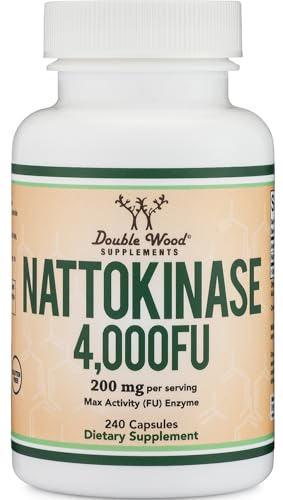
A transparent nattokinase label will state the serving size, the number of capsules per serving, the FU activity per serving (not just per gram of powder), and whether the product is standardized to that activity level. Look for language such as ‘2,000 FU per capsule’ rather than simply ‘100 mg nattokinase extract.’
The source of the enzyme matters too. Nattokinase is derived from fermented soy, so people with soy allergies should confirm whether the finished product retains soy protein. Reputable manufacturers test for residual soy allergens and will state allergen information clearly. If the label omits allergen disclosure entirely on a soy-fermented enzyme product, that is worth noting.
Enteric coating is sometimes marketed as a benefit, with claims that it protects the enzyme from stomach acid. Whether this meaningfully changes absorption of nattokinase in humans is not firmly established. An enteric coating is not inherently a sign of higher quality, nor is its absence a deficiency—but if a brand uses it as a primary selling point without supporting data, treat that claim cautiously.
Label Red Flags That Suggest a Low-Quality or Misleading Product
Several label features are reliable signals that a nattokinase product deserves extra scrutiny. First, the absence of any FU designation. If a label lists only milligrams, the manufacturer is either unaware of enzyme activity standards or is deliberately avoiding disclosures that might reveal a low-activity product. Either scenario is a concern.
Second, watch for disease claims. Nattokinase supplements are legally required to avoid stating that the product treats, prevents, or cures cardiovascular disease, blood clots, or any other condition. Phrases such as ‘dissolves dangerous clots,’ ‘replaces blood thinners,’ or ‘clinically proven to prevent heart attacks’ are not supported by the current evidence base and exceed what responsible supplement labeling should claim. The FDA has sent warning letters to nattokinase marketers for exactly this type of language.
Third, vague proprietary blends that lump nattokinase together with other enzymes without disclosing individual FU amounts make it impossible to evaluate the actual nattokinase content. Combination products are not inherently inferior, but the labeling should still allow you to determine how much active nattokinase you are getting per serving. If it does not, you cannot make an informed comparison.

Safety Considerations That Belong on Every Buyer's Checklist
Nattokinase has meaningful fibrinolytic and antiplatelet activity. Combining it with prescription anticoagulants such as warfarin or heparin, or with antiplatelet agents such as aspirin or clopidogrel, without physician supervision creates a risk of additive bleeding effects. This is not theoretical caution; it reflects the mechanism of the enzyme. Anyone on blood-thinning medication should discuss nattokinase with their prescribing physician before using any product.
Surgery represents a specific risk period. Fibrinolytic agents of any kind, including nattokinase, are generally recommended to be discontinued at least one week before any elective surgical procedure to allow normal clotting function to resume. Patients who are scheduled for surgery and currently using nattokinase should inform their surgeon and anesthesiologist.
The longer-term safety profile of nattokinase is not well characterized. Most human trials that exist are small, short in duration, and conducted in healthy or mildly affected adult populations. Pregnant and breastfeeding individuals, children, and people with active bleeding disorders or recent stroke should avoid nattokinase unless specifically directed otherwise by a physician. This is not an exhaustive safety list; individual circumstances vary.
Practical Checklist Before You Buy
Bring the following questions to any nattokinase product before purchasing. One: Does the label disclose FU activity per serving, not just milligrams? Two: Is there a certificate of analysis from a recognized third-party laboratory confirming enzymatic activity? Three: Does the manufacturer clearly address soy allergen status? Four: Is the product free of disease-treatment claims that exceed the evidence? Five: If you are considering NSK-SD specifically, does the label confirm it is the JBSL-sourced ingredient, or is the brand simply using similar terminology?
Price alone is a poor quality signal in either direction. An expensive nattokinase product is not automatically superior; a budget option is not automatically inferior. What matters is whether the manufacturer provides verifiable activity data and transparent labeling. When that information is present and confirmed by third-party testing, the product is at least meeting a minimum standard of accountability. When that information is absent or obscured, the buyer has no basis for confidence regardless of price.
🛒 Where to Buy Nattokinase
- Doctor’s Best Nattokinase 2,000 FULab-tested / studied
capsules, 100 mg NSK-SD per vcap (2,000 FU) — Most widely referenced brand in clinical and integrative medicine contexts; uses Japan Bio Science Laboratory NSK-SD ingredient; vegetarian capsules; 90 count - NOW Foods Nattokinase 100 mg
capsules, 100 mg per vcap (2,000 FU) — Mainstream GMP-certified brand; affordable entry-level option; 90 vcaps; widely available - Source Naturals Nattokinase 100 mg
capsules, 100 mg per tablet (2,000 FU) — Long-established supplement brand; competitive pricing at 60 tablets; good for budget-conscious buyers familiar with the brand - Healthy Origins Nattokinase 2,000 FU
capsules, 100 mg per vcap (2,000 FU) — Best cost-per-serving option on Amazon; 180 vcap bottle; uses NSK-SD ingredient; popular bulk buy for long-term users
As an Amazon Associate we earn from qualifying purchases. Nattokinase is sold on an enzymatic activity claim, and independent testing has repeatedly found bottles delivering well under their labelled potency. Check that the label states fibrinolytic units (FU) per capsule rather than milligrams alone, and prefer a brand that will supply a batch-specific certificate of analysis showing the measured FU result for that lot, since GMP certification alone does not verify it.

A Note on the Evidence
The human trial evidence for nattokinase is largely composed of small, short-term studies, and the FDA has not approved nattokinase for treating, preventing, or curing any disease; this article is informational only and does not substitute for medical advice. Individuals taking anticoagulant or antiplatelet medications, those with bleeding disorders, pregnant or breastfeeding individuals, and anyone preparing for surgery should consult a qualified healthcare provider before using nattokinase.
Frequently Asked Questions
What is a typical FU dose used in research settings?
Studies that have examined nattokinase in human subjects have most commonly used preparations in the range of 2,000 to 4,000 FU per day, often divided across one or two capsules. There is currently no officially established optimal dose, and the FDA has not defined a recommended daily intake for nattokinase. Doses outside this range have been used in some investigations, but buyers should be cautious of products making strong efficacy claims at either very low or very high FU levels without supporting data.
Does NSK-SD really have vitamin K2 removed, and why does that matter?
NSK-SD is produced with a process that the manufacturer states removes vitamin K2, a naturally occurring compound in natto. This matters because vitamin K2 can interact with warfarin by promoting clotting factor production, potentially undermining warfarin’s anticoagulant effect. For individuals on warfarin who are nonetheless considering nattokinase under physician guidance, a K2-free form reduces one variable of concern. That said, the fibrinolytic activity of nattokinase itself remains a separate and serious interaction risk with warfarin regardless of K2 content.
Can I use nattokinase instead of my prescribed blood thinner?
No. Nattokinase is a dietary supplement and has not been approved to replace any prescription anticoagulant or antiplatelet medication. Substituting it for warfarin, heparin, aspirin therapy, or similar drugs without physician direction could leave you with inadequate clot prevention and serious health consequences. Discuss any interest in nattokinase with your prescribing physician before making any change to your medication regimen.
Are enteric-coated nattokinase capsules meaningfully better?
Enteric coating is intended to delay dissolution until the capsule reaches the small intestine, theoretically protecting the enzyme from stomach acid. Whether this translates to a clinically meaningful difference in nattokinase absorption or activity in humans has not been firmly established in well-controlled trials. Enteric coating should not be treated as a primary quality marker; FU activity verification and third-party testing are more informative benchmarks.
Is nattokinase safe for people with soy allergies?
Nattokinase is derived from soy fermented with Bacillus subtilis, so soy protein may be present in finished products depending on the manufacturing process. Individuals with soy allergies should look specifically for products that test for and confirm the absence of residual soy allergens, or consult an allergist before use. A reputable manufacturer will address allergen status on the label or certificate of analysis.
How long before surgery should I stop taking nattokinase?
Standard guidance for fibrinolytic supplements, including nattokinase, is to discontinue use at least one week before any elective surgical procedure. This allows time for normal hemostatic function to return. Always inform your surgeon and anesthesiologist about all supplements you take, including nattokinase, well in advance of any scheduled procedure.
These statements have not been evaluated by the Food and Drug Administration. This information is not intended to diagnose, treat, cure, or prevent any disease. Content is for informational purposes only and is not medical advice; consult a qualified healthcare provider before starting any supplement. As an Amazon Associate we earn from qualifying purchases.
