Nattokinase is a serine protease enzyme derived from natto, a traditional Japanese fermented soybean food prepared with Bacillus subtilis. It has attracted research interest for its fibrinolytic activity, meaning its ability to break down fibrin, a protein involved in blood clot formation. When shoppers browse nattokinase supplements, they routinely encounter two main formats: standard capsules and enteric-coated versions. Manufacturers of enteric-coated products often claim the coating protects the enzyme from stomach acid, theoretically delivering more active enzyme to the small intestine where absorption may occur.
Whether that coating meaningfully changes outcomes in a real human digestive system is a more complicated question than the marketing suggests. Enzymes are large proteins, and how much of an orally ingested enzyme survives digestion, crosses the gut lining, and reaches systemic circulation intact is still an area of active debate in nutritional biochemistry. This article examines what is known about nattokinase’s stability, how enteric coating is supposed to work, and what the available human evidence suggests about whether coating actually matters for this particular enzyme.
Key Takeaways
- Enteric coating is theoretically designed to protect nattokinase from stomach acid, but no published human pharmacokinetic study has directly compared enteric-coated versus uncoated nattokinase bioavailability.
- Human trials demonstrating fibrinolytic and modest blood pressure effects of nattokinase have generally used uncoated capsule or tablet formats, suggesting meaningful activity survives gastric transit without coating in at least a portion of users.
- Enzyme potency expressed in fibrinolytic units (FU), product quality, storage conditions, and timing relative to meals are all variables that may influence outcomes as much as or more than coating choice.
- Nattokinase carries real drug interaction risks with anticoagulants and antiplatelets regardless of delivery format, and must be discontinued before surgery.
- The FDA has not approved nattokinase for any disease indication; most supporting human evidence comes from small, short-term trials, and this is informational content rather than medical advice.
What Nattokinase Does and How It Is Measured
Nattokinase works through two complementary pathways. First, it directly cleaves fibrin, the cross-linked protein mesh that forms the structural scaffold of a blood clot. Second, it appears to upregulate endogenous tissue plasminogen activator (t-PA) activity and downregulate plasminogen activator inhibitor type 1 (PAI-1), effectively amplifying the body’s own clot-dissolving machinery. These fibrinolytic effects have been demonstrated in human plasma studies as well as in small randomized controlled trials.
The potency of nattokinase supplements is typically expressed in fibrinolytic units (FU) rather than milligrams, because the relevant question is enzymatic activity, not raw weight. A capsule containing 2,000 FU of nattokinase may have a very different impact than one containing 2,000 mg of nattokinase powder, and most credible products lead with FU on their labels. This measurement context matters when comparing enteric-coated versus uncoated products, since any protective effect of coating would theoretically preserve a greater fraction of those FU through the acidic stomach environment.
The Case for Enteric Coating: Enzyme Stability in Stomach Acid
The theoretical argument for enteric coating rests on enzyme chemistry. Stomach pH typically ranges from 1.5 to 3.5 during active digestion, an environment harsh enough to denature many proteins. Because nattokinase is a protein-based enzyme, critics of uncoated capsules argue that a meaningful portion of its activity is destroyed before it can reach the small intestine, where gut permeability may allow small peptide fragments or intact enzyme to cross into circulation.
Enteric coatings, usually made from cellulose acetate phthalate, hydroxypropyl methylcellulose phthalate, or similar polymers, are designed to resist dissolution at low gastric pH and then dissolve at the higher pH of the duodenum and small intestine, roughly pH 5.5 and above. This delivery strategy is well-established for acid-sensitive drugs and certain probiotic formulations. The question is whether nattokinase’s activity profile makes it a strong candidate for this approach, or whether the enzyme has more acid resilience than commonly assumed.


What In Vitro and Animal Studies Suggest About Nattokinase Stability
In vitro experiments have tested nattokinase under simulated gastric conditions and produced mixed results. Some studies show significant loss of fibrinolytic activity at low pH over 30 to 60 minutes, which would support the case for enteric coating in people who have normal gastric acid output. Other in vitro work suggests the enzyme retains partial activity across a wider pH range than might be expected for a typical serine protease, possibly because of its particular three-dimensional structure.
Animal studies have generally shown that orally administered nattokinase produces measurable fibrinolytic effects in plasma, suggesting at least some bioavailable fraction survives digestion in that context. However, animal gut physiology differs meaningfully from human gut physiology in transit time, pH gradients, and enzyme exposure duration, so direct extrapolation is limited. No published in vitro or animal study directly compares enteric-coated versus uncoated nattokinase on bioavailability metrics in a way that settles the practical question for human supplementation.
Human Trial Evidence: What Format Were the Studies Using?
The small randomized human trials that have evaluated nattokinase’s cardiovascular and fibrinolytic effects are an important reference point for this debate, but they come with a critical limitation: most did not use enteric-coated formulations, and those that showed positive outcomes used standard capsule or tablet formats. If uncoated nattokinase produced statistically significant fibrinolytic or blood pressure effects in human subjects, that is indirect evidence that meaningful enzyme activity survives transit through the stomach in at least a proportion of users.
The honest inference is that enteric coating is not proven necessary for nattokinase to show biological effects in humans based on the existing published trial record. That does not mean coating provides no benefit, it may improve consistency of delivery or increase the fraction of active enzyme reaching systemic circulation, but the incremental benefit has not been quantified in a head-to-head human pharmacokinetic study comparing the two formats. Consumers and clinicians should weigh this evidentiary gap before paying a premium for enteric-coated products.
It is also worth noting that the human trials supporting nattokinase’s effects are generally small in sample size and short in duration. The FDA has not evaluated nattokinase for treating, curing, or preventing any disease, and extrapolating from small trials to confident clinical recommendations requires caution regardless of which capsule format is under discussion.
Practical Factors That May Matter More Than Coating
Several variables are likely to have a larger impact on nattokinase’s real-world performance than enteric coating status. First is whether the product is taken on an empty stomach or with food. Gastric pH rises considerably during and after a meal due to food buffering, which may naturally reduce acid-mediated enzyme denaturation without the need for coating. Some practitioners recommend taking nattokinase on an empty stomach or between meals specifically because transit to the small intestine is faster, but this advice also reduces the natural pH buffering effect, creating a tradeoff that has not been formally studied.

Second is product quality and storage. Nattokinase is a biological enzyme and its activity degrades with heat, moisture, and time. A high-FU product stored and manufactured well is likely more important than coating choice. Third is dosage in FU. If a product delivers 2,000 FU in an uncoated capsule and loses 30 percent to gastric conditions, the effective dose delivered downstream is still 1,400 FU. Whether that difference compared to a coated product changes clinical outcomes depends on dose-response relationships that are not yet well characterized for nattokinase in humans.
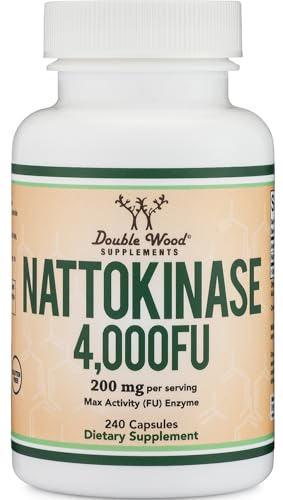
Safety Considerations Regardless of Format
Whichever format a person chooses, the safety profile and contraindications for nattokinase apply equally. Nattokinase has meaningful fibrinolytic and antiplatelet activity and must not be combined with anticoagulant medications such as warfarin or heparin, or antiplatelet agents such as aspirin or clopidogrel, without direct physician supervision. The combination of nattokinase and pharmaceutical blood thinners could increase bleeding risk substantially.
Nattokinase should be discontinued at least one week before any surgical procedure, including dental surgery, due to its effects on clotting. People with bleeding disorders, those who have recently had a stroke (particularly hemorrhagic stroke), and pregnant or breastfeeding individuals should consult a healthcare provider before using nattokinase in any form. These precautions are not format-dependent: an enteric-coated product carries the same interaction risk profile as a standard capsule once the enzyme reaches systemic circulation.
🛒 Where to Buy Nattokinase
- Doctor’s Best Nattokinase 2,000 FULab-tested / studied
capsules, 100 mg NSK-SD per vcap (2,000 FU) — Most widely referenced brand in clinical and integrative medicine contexts; uses Japan Bio Science Laboratory NSK-SD ingredient; vegetarian capsules; 90 count - NOW Foods Nattokinase 100 mg
capsules, 100 mg per vcap (2,000 FU) — Mainstream GMP-certified brand; affordable entry-level option; 90 vcaps; widely available - Source Naturals Nattokinase 100 mg
capsules, 100 mg per tablet (2,000 FU) — Long-established supplement brand; competitive pricing at 60 tablets; good for budget-conscious buyers familiar with the brand - Healthy Origins Nattokinase 2,000 FU
capsules, 100 mg per vcap (2,000 FU) — Best cost-per-serving option on Amazon; 180 vcap bottle; uses NSK-SD ingredient; popular bulk buy for long-term users
As an Amazon Associate we earn from qualifying purchases. Nattokinase is sold on an enzymatic activity claim, and independent testing has repeatedly found bottles delivering well under their labelled potency. Check that the label states fibrinolytic units (FU) per capsule rather than milligrams alone, and prefer a brand that will supply a batch-specific certificate of analysis showing the measured FU result for that lot, since GMP certification alone does not verify it.
A Note on the Evidence
Most human evidence supporting nattokinase comes from small, short-term trials, and the FDA has not evaluated it for treating, curing, or preventing any disease; this article is informational only and is not a substitute for medical advice. Anyone on anticoagulant or antiplatelet medications, facing surgery, or managing a cardiovascular condition should consult a qualified healthcare provider before using nattokinase in any form.
Does Nattokinase Need to Be Enteric Coated?
Enteric coating is marketed to protect the enzyme from stomach acid before it reaches the small intestine, but whether that meaningfully changes real-world outcomes is not settled, since nattokinase is a large protein and how much survives digestion in any format is a complex question. See the full breakdown above of what the coating claim does and does not have evidence behind it.
Frequently Asked Questions
Does enteric coating make nattokinase more effective?
There is no published head-to-head human study confirming that enteric-coated nattokinase produces stronger or more consistent fibrinolytic effects than uncoated capsules. The theoretical benefit is plausible based on enzyme chemistry, but uncoated formats have been used in the small randomized trials that document nattokinase’s biological activity in humans. The incremental benefit, if any, has not been quantified.

Can stomach acid destroy nattokinase before it works?
In vitro studies have shown that nattokinase loses some fibrinolytic activity under simulated gastric acid conditions, but the degree of loss varies across studies and may depend on exposure time and exact pH. The fact that uncoated oral nattokinase produces measurable plasma fibrinolytic effects in human studies suggests the enzyme is not entirely inactivated by gastric transit, though some activity loss likely occurs.

Should I take nattokinase with or without food to protect the enzyme?
Food raises gastric pH through buffering, which could reduce acid-mediated denaturation of nattokinase, but food also slows gastric emptying and increases enzyme exposure time in the stomach. Taking nattokinase on an empty stomach speeds transit to the small intestine but removes the buffering benefit. Neither approach has been directly compared in a clinical trial, so there is no evidence-based consensus recommendation on this timing question.
Is enteric-coated nattokinase safer than regular capsules?
Coating does not change the safety profile of nattokinase in systemic circulation. Once absorbed, the enzyme has the same fibrinolytic and antiplatelet activity regardless of how it was delivered. Drug interaction risks with warfarin, heparin, aspirin, clopidogrel, and other blood-thinning agents are identical across formats, as is the recommendation to stop use at least one week before surgery.
How is nattokinase potency measured, and why does it matter?
Nattokinase potency is measured in fibrinolytic units (FU), which reflect the enzyme’s actual clot-dissolving activity rather than the raw weight of the powder. When comparing products, FU is a more meaningful metric than milligrams because two products with the same weight could have very different enzymatic activity depending on manufacturing quality and storage. Look for FU values on labels when evaluating any nattokinase product regardless of its coating format.
Who should avoid nattokinase entirely?
People taking anticoagulant or antiplatelet medications, including warfarin, heparin, aspirin, and clopidogrel, should not use nattokinase without physician supervision due to increased bleeding risk. Those with bleeding disorders, a recent history of hemorrhagic stroke, upcoming surgery, or who are pregnant or breastfeeding should consult a healthcare provider before using nattokinase in any form. These cautions apply equally to enteric-coated and uncoated products.
These statements have not been evaluated by the Food and Drug Administration. This information is not intended to diagnose, treat, cure, or prevent any disease. Content is for informational purposes only and is not medical advice; consult a qualified healthcare provider before starting any supplement. As an Amazon Associate we earn from qualifying purchases.
