Nattokinase is an enzyme extracted from natto, a traditional Japanese food made by fermenting soybeans with Bacillus subtilis bacteria. Unlike many dietary supplements whose mechanisms remain largely speculative, nattokinase has a reasonably well-characterized biochemical profile: it is a serine protease that acts directly on fibrin, the structural protein that forms the mesh of a blood clot.
Interest in nattokinase has grown steadily among researchers and clinicians exploring non-pharmaceutical approaches to cardiovascular health. This article explains what the science currently says about how nattokinase works at the molecular level, what small human trials have measured, and where the honest limits of the evidence lie. Nothing here constitutes medical advice, and the FDA has not evaluated nattokinase for treating, curing, or preventing any disease.
Key Takeaways
- Nattokinase is a serine protease derived from Bacillus subtilis–fermented soybeans that cleaves fibrin directly, targeting the structural protein of blood clots.
- It also upregulates endogenous plasminogen activators (tPA and uPA), potentially amplifying the body’s own clot-clearing system.
- Meaningful antiplatelet activity has been observed, and small randomized trials have shown modest blood pressure reductions, though these findings are preliminary.
- Nattokinase must not be combined with warfarin, heparin, aspirin, clopidogrel, or other anticoagulants or antiplatelets without physician supervision, and should be discontinued at least one week before surgery.
- The FDA has not evaluated nattokinase for any therapeutic purpose; most human evidence comes from small, short-term trials and should not be interpreted as proof of clinical efficacy.
What Is a Serine Protease and Why Does It Matter for Clotting?
Proteases are enzymes that break down proteins by cleaving peptide bonds. Serine proteases are a large family of proteases that use a serine residue in their active site to catalyze this reaction. Many of the body’s own clot-dissolving enzymes — including plasmin, the primary fibrinolytic enzyme in human blood — are serine proteases. Nattokinase belongs to the subtilisin subfamily, a group of serine proteases produced by Bacillus species of bacteria.
This classification matters because it tells researchers something important: nattokinase has the same general enzymatic machinery the body already uses to break down clots. The question researchers have been investigating is whether an orally administered enzyme of this type can survive digestion in meaningful quantities, reach the bloodstream, and exert measurable fibrinolytic effects — a question that remains under active investigation.
Direct Fibrin Degradation: The Primary Proposed Mechanism
Fibrin is the insoluble protein network that gives a blood clot its structural integrity. When a vessel is injured, the coagulation cascade converts soluble fibrinogen into fibrin monomers, which then polymerize into long strands and cross-link to form a stable clot. Dissolving that clot requires breaking those cross-links and cleaving the fibrin strands — a process called fibrinolysis.

In laboratory and plasma studies, nattokinase has been shown to cleave fibrin directly. It targets specific peptide bonds within the fibrin polymer, fragmenting the clot mesh. This direct fibrinolytic activity distinguishes nattokinase from compounds that merely thin the blood by inhibiting platelet aggregation; nattokinase acts on already-formed fibrin, which is the structural backbone of a clot. Fibrinolytic effects have been measured in human plasma studies, providing a biochemical basis for the interest in this enzyme.
Upregulation of the Body's Own Clot-Dissolving System
Beyond acting on fibrin directly, nattokinase appears to influence the body’s endogenous fibrinolytic system. The primary natural mechanism for clearing clots is the plasminogen-plasmin pathway: plasminogen, a circulating protein, is converted into active plasmin by tissue plasminogen activator (tPA) and urokinase plasminogen activator (uPA). Plasmin then degrades fibrin throughout the clot.

Research indicates that nattokinase can upregulate endogenous plasminogen activators — meaning it may stimulate greater production or activity of tPA and uPA, thereby amplifying the body’s own fibrinolytic capacity. This dual action (direct fibrin cleavage plus enhancement of the plasminogen system) is the proposed reason some researchers believe nattokinase may have effects beyond what simple enzyme kinetics on fibrin alone would predict.
It is worth noting that this mechanism also underlies the safety concerns associated with the enzyme. Because nattokinase potentiates both intrinsic and extrinsic fibrinolysis, combining it with anticoagulants such as warfarin or heparin, or with antiplatelet agents such as aspirin or clopidogrel, could produce additive or synergistic effects on bleeding risk. Concurrent use without physician supervision is not appropriate.
Antiplatelet Activity: A Secondary Mechanism
Platelets are the first responders in clot formation. When a vessel wall is damaged, platelets adhere to the site and aggregate, forming a platelet plug that is subsequently reinforced by the fibrin network. Nattokinase has demonstrated meaningful antiplatelet activity in research settings, meaning it may reduce the tendency of platelets to clump together.
The precise molecular pathway by which nattokinase inhibits platelet aggregation is still being characterized. Proposed mechanisms include degradation of platelet surface receptors or interference with signaling molecules that drive aggregation. Whatever the pathway, this antiplatelet action reinforces the importance of the drug-interaction caution: anyone taking prescription antiplatelet medications should not add nattokinase without explicit guidance from a physician.
Blood Pressure: What Small Trials Have Found
Separate from its fibrinolytic and antiplatelet properties, small randomized trials have reported modest reductions in blood pressure associated with nattokinase supplementation. The proposed mechanism here involves degradation of fibrin and possibly other vasoactive peptides, as well as potential effects on angiotensin-converting enzyme (ACE) activity — though the ACE-inhibitory data come largely from in vitro work and should not be overinterpreted.
It is essential to contextualize these findings honestly. The human trials showing blood pressure effects are small and short-term. They do not establish nattokinase as a treatment for hypertension, and they provide no basis for stopping or adjusting prescribed antihypertensive medications. These results are hypothesis-generating, not conclusive.
Oral Bioavailability: Can the Enzyme Survive Digestion?
A longstanding skepticism about orally administered enzymes is that the digestive system will simply break them down before they reach the bloodstream. Nattokinase research has addressed this question with mixed results. Some studies suggest that a fraction of the enzyme or its active peptide fragments can survive gastric and intestinal digestion, while other work indicates that enteric-coated formulations may improve bioavailability.

The fibrinolytic effects measured in human plasma studies provide indirect evidence that something biologically active reaches the circulation after oral dosing — otherwise no plasma effect would be detectable. However, the extent to which intact nattokinase versus active breakdown peptides accounts for observed effects remains a topic of ongoing investigation. This uncertainty is one reason most supportive human trials remain small and short-term; the dose-response relationship and optimal formulation have not been fully established.
🛒 Where to Buy Nattokinase
- Doctor’s Best Nattokinase 2,000 FULab-tested / studied
capsules, 100 mg NSK-SD per vcap (2,000 FU) — Most widely referenced brand in clinical and integrative medicine contexts; uses Japan Bio Science Laboratory NSK-SD ingredient; vegetarian capsules; 90 count - NOW Foods Nattokinase 100 mg
capsules, 100 mg per vcap (2,000 FU) — Mainstream GMP-certified brand; affordable entry-level option; 90 vcaps; widely available - Source Naturals Nattokinase 100 mg
capsules, 100 mg per tablet (2,000 FU) — Long-established supplement brand; competitive pricing at 60 tablets; good for budget-conscious buyers familiar with the brand - Healthy Origins Nattokinase 2,000 FU
capsules, 100 mg per vcap (2,000 FU) — Best cost-per-serving option on Amazon; 180 vcap bottle; uses NSK-SD ingredient; popular bulk buy for long-term users
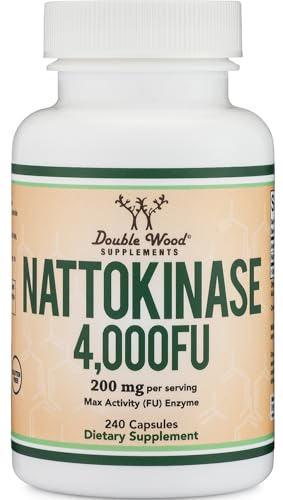
As an Amazon Associate we earn from qualifying purchases. Nattokinase is sold on an enzymatic activity claim, and independent testing has repeatedly found bottles delivering well under their labelled potency. Check that the label states fibrinolytic units (FU) per capsule rather than milligrams alone, and prefer a brand that will supply a batch-specific certificate of analysis showing the measured FU result for that lot, since GMP certification alone does not verify it.
A Note on the Evidence
Most human trials supporting nattokinase’s fibrinolytic and cardiovascular effects are small, short-term, and lack long-term safety data; meaningful clinical conclusions should not be drawn from them alone. Nattokinase has real fibrinolytic and antiplatelet activity — anyone taking blood thinners, facing surgery, or managing a cardiovascular condition must consult a physician before use.
Frequently Asked Questions
How does nattokinase differ from the body's own fibrinolytic enzymes?
The body’s primary clot-dissolving enzyme is plasmin, also a serine protease. Nattokinase is structurally distinct — it belongs to the subtilisin family produced by bacteria — but shares the general ability to cleave fibrin. Unlike tPA (tissue plasminogen activator), which works mainly by converting plasminogen to plasmin, nattokinase can degrade fibrin directly while also stimulating endogenous plasminogen activators, giving it a dual action.

Why can't nattokinase be taken with blood thinners like warfarin?
Warfarin reduces the production of clotting factors, while nattokinase actively degrades fibrin and may inhibit platelet aggregation. Combining agents that work at different points in the coagulation and fibrinolytic pathways can produce additive or unpredictable effects on bleeding risk. Because this interaction has not been rigorously studied in clinical trials, physician supervision is required before any combination.
Is there evidence that nattokinase actually reaches the bloodstream after oral dosing?
Fibrinolytic effects have been measured in human plasma following oral nattokinase administration, which provides indirect evidence that biologically active material reaches the circulation. Whether intact enzyme, active peptide fragments, or some combination is responsible remains under investigation. The degree of bioavailability and how it varies with formulation type (standard capsule vs. enteric-coated) is not yet definitively established.
Can nattokinase lower blood pressure?
Small randomized trials have reported modest reductions in blood pressure. The proposed mechanism involves degradation of vasoactive peptides and possible inhibition of angiotensin-converting enzyme activity, though the ACE-inhibitory data are primarily from lab studies. These findings are preliminary and do not support using nattokinase as a substitute for prescribed antihypertensive therapy.
Who should avoid nattokinase entirely?
Anyone on anticoagulant or antiplatelet therapy (warfarin, heparin, aspirin at any dose for cardiovascular purposes, clopidogrel, or newer direct oral anticoagulants) should not use nattokinase without explicit physician approval. It should also be discontinued at least one week before any surgical or invasive procedure due to its fibrinolytic and antiplatelet properties. Individuals with bleeding disorders, recent stroke history, or active ulcers should consult a physician before considering use.

Has the FDA approved nattokinase as a treatment for any condition?
No. The FDA has not evaluated nattokinase for treating, curing, or preventing any disease. It is sold as a dietary supplement in the United States, which means it is not required to undergo the same pre-market safety and efficacy review as pharmaceutical drugs. The existing human evidence consists primarily of small, short-term trials, and no large-scale clinical trials have confirmed therapeutic efficacy for any condition.
These statements have not been evaluated by the Food and Drug Administration. This information is not intended to diagnose, treat, cure, or prevent any disease. Content is for informational purposes only and is not medical advice; consult a qualified healthcare provider before starting any supplement. As an Amazon Associate we earn from qualifying purchases.
